Summary: AI-driven WAFs use machine learning to model normal application behavior and block attacks across large, distributed estates. Radware Cloud WAF is best for hybrid enterprise portfolios, Imperva WAF fits cloud and on-prem standardization, Cloudflare WAF works for edge-enforced managed rules, and AWS WAF fits applications already running on AWS.
What are AI-Driven Web Application Firewalls?
AI-driven Web Application Firewalls (WAFs) use machine learning and real-time behavioral analysis to secure large-scale applications and APIs from complex, evolving threats. Unlike traditional WAFs, which rely heavily on static rule sets and signature-based detection, AI-driven WAFs continuously learn from traffic patterns, adapt to new threats, and identify malicious behavior in real time. This dynamic approach enables them to respond to evolving attack techniques, including zero-day exploits, with a level of precision that manual rule updates cannot match.
Why large-scale deployments need AI-Driven WAFs
- Managing high traffic volumes: AI-driven WAFs analyze massive, distributed traffic in real time without creating security bottlenecks or excessive latency.
- Protecting large application portfolios: They learn application-specific behavior and adapt policies automatically across many apps, reducing manual tuning at scale.
- Securing distributed APIs and microservices: AI-driven WAFs continuously map APIs, learn endpoint behavior, and detect abuse across rapidly changing microservice environments.
- Supporting global application availability: Distributed enforcement and adaptive controls help maintain low latency, high availability, and consistent protection worldwide.
- Reducing manual security operations at scale: Automation helps security teams tune policies, correlate alerts, and enforce protections without proportional staffing increases.
Core capabilities of AI-Driven WAFs for large-scale deployments
- Automatic application and API discovery: Continuously identifies exposed applications, APIs, and endpoints so new assets can be brought under protection.
- Contextual attack detection: Analyzes requests, sessions, behavior, and access patterns together to detect attacks that static signatures may miss.
- Bot and automated abuse protection: Distinguishes legitimate automation from malicious bots and mitigates credential stuffing, scraping, and other automated abuse.
- API schema and endpoint protection: Learns expected API structures and usage to detect malformed requests, unauthorized activity, and anomalous endpoint access.
- Application-layer DDoS mitigation: Detects abnormal HTTP and HTTPS traffic patterns and dynamically filters or rate-limits malicious requests.
- Vulnerability-driven virtual patching for known vulnerabilities: Converts vulnerability and exposure data into runtime controls that block exploitation while permanent patches are prepared.
- Automated protection generation and enforcement: Creates, tunes, and deploys application-specific protections as threats and application behavior change.
- Cross-platform AI reasoning across WAF, API, bot, and DDoS protection: Correlates signals across protection engines to identify coordinated attacks and improve enforcement decisions.
- Centralized policy and configuration management: Provides one control point for deploying, updating, and monitoring security policies across distributed environments.
In this article:
The table below summarizes the key differences between the solutions covered in this section. We explore each one in more detail below.
| Category |
Solution |
Best For |
Key Strengths |
Things to Consider |
| Enterprise AI-driven WAF and WAAP platforms |
Radware Cloud WAF Service |
Hybrid application estates needing a managed WAF |
AI behavioral positive security model, adaptive policies |
Reporting depth and initial policy tuning |
| Enterprise AI-driven WAF and WAAP platforms |
Imperva Web Application Firewall |
Standardizing WAF across cloud and on-prem apps |
Managed rules, ML-based attack correlation |
Configuration complexity, policy customization limits |
| Enterprise AI-driven WAF and WAAP platforms |
F5 BIG-IP Advanced WAF |
Data center and hybrid deployments with L7 DoS needs |
Behavioral DoS, bot defense, API protocol security |
Complex interface, expertise and cost |
| Enterprise AI-driven WAF and WAAP platforms |
Fortinet FortiWeb |
Fortinet estates spanning hardware to SaaS |
Dual-layer ML modeling, API discovery, bot deception |
UI depth, reporting, latency under load |
| Cloud and edge-delivered AI-driven WAF services |
Cloudflare WAF |
Edge-enforced protection with managed rulesets |
Rapid network-wide rules, virtual CVE patching |
Reporting granularity, support response times |
| Cloud and edge-delivered AI-driven WAF services |
Akamai App & API Protector |
Global edge plus hybrid and multi-CDN estates |
Adaptive Security Engine, behavioral DDoS engine |
Custom rule depth, interface, pricing |
| Cloud and edge-delivered AI-driven WAF services |
AWS WAF |
Applications fronted by CloudFront, ALB or API Gateway |
Managed rule packs, bot control, automatic L7 DDoS |
AWS-only scope, inspection limits, cost visibility |
| Cloud and edge-delivered AI-driven WAF services |
Fastly Next-Gen WAF |
Distributed apps and APIs needing low-tuning detection |
SmartParse contextual detection, NLX threat feed |
Interface navigation, support responsiveness |
Managing High Traffic Volumes
Large-scale web platforms experience immense volumes of traffic, often from diverse geographic regions and user groups. Traditional WAFs may struggle to analyze this volume efficiently, leading to latency, missed threats, or excessive false positives. AI-driven WAFs, however, utilize scalable machine learning algorithms that process and analyze high traffic loads in real time, ensuring that security measures do not become a bottleneck. This scalability is essential for maintaining application performance while upholding robust security standards across all traffic.
AI-driven systems can identify traffic anomalies that indicate potential attacks, such as distributed denial-of-service (DDoS) attempts or brute force login attempts. By dynamically adjusting to fluctuating traffic patterns and detecting subtle changes that signal malicious activity, AI-driven WAFs provide continuous protection without overwhelming security teams or infrastructure resources. This proactive approach is critical for organizations with large user bases and highly trafficked digital services.
Protecting Large Application Portfolios
Enterprises often manage dozens or even hundreds of web applications, each with unique configurations, usage patterns, and risk profiles. Maintaining consistent security policies across such a portfolio is challenging with traditional WAFs, as manual policy updates can quickly become unmanageable. AI-driven WAFs address this by automatically learning the normal behavior of each application, adjusting their detection models and rules to fit individual requirements without extensive manual intervention.
AI-driven WAFs can quickly identify and respond to threats that target specific applications or exploit unique vulnerabilities. This enables organizations to deploy consistent, adaptive protection across all assets, regardless of application complexity or deployment environment. The automation and intelligence provided by AI-driven WAFs reduce the administrative burden on security teams, allowing them to focus on higher-value tasks such as incident response and security strategy.
Securing Distributed APIs and Microservices
Modern web architectures rely heavily on APIs and microservices, which are distributed across cloud environments and data centers. These components expose numerous endpoints, increasing the attack surface and making it difficult for traditional WAFs to provide comprehensive coverage. AI-driven WAFs excel in this context by continuously mapping and monitoring API interactions, learning the expected behavior of each endpoint, and flagging deviations that may signal attacks.
This capability is crucial for preventing attacks such as API abuse, data exfiltration, and business logic exploits that often bypass conventional signature-based detection. AI-driven WAFs can also adapt to changes in API schemas and microservice deployments, ensuring that security policies remain effective as the application landscape evolves. This flexibility supports agile development practices without compromising security, making AI-driven WAFs essential for organizations embracing microservices and API-driven architectures.
Supporting Global Application Availability
Global organizations must deliver applications with high availability and minimal latency to users worldwide. Downtime or slow performance caused by security controls can have significant business impacts. AI-driven WAFs are designed to operate efficiently across distributed environments, leveraging cloud-native architectures and global threat intelligence to provide consistent protection without degrading user experience.
These WAFs also help organizations maintain compliance with regional data protection regulations by intelligently routing and inspecting traffic based on geographic origin. By automatically adjusting to local threat landscapes and optimizing security policies for different regions, AI-driven WAFs support resilient, always-available applications. This approach ensures that organizations can meet both performance and security objectives at scale, even as their digital footprint expands globally.
Reducing Manual Security Operations at Scale
As application portfolios grow, manually creating policies, reviewing alerts, tuning rules, and responding to changing threats becomes increasingly difficult. AI-driven WAFs reduce this operational burden by automatically learning application behavior, generating and refining security policies, correlating related events, and adapting protections as applications change. This allows security teams to maintain effective controls across large environments without proportionally increasing staffing or administrative effort.
Automation also enables organizations to move more quickly from detection to enforcement. Instead of requiring analysts to evaluate every traffic anomaly or manually create rules for each newly identified risk, advanced systems can translate observed behavior and threat intelligence into actionable protections. Centralized analytics and cross-module correlation further reduce alert noise by grouping related activity into broader attack contexts, helping teams prioritize genuine threats and focus their attention on incidents that require human judgment.
AI-driven WAFs benefit from smarter systems to protect applications:
- Behavioral traffic analysis: By continuously monitoring user interactions, request rates, and data flows, these WAFs can identify deviations from expected patterns that may indicate malicious intent. This approach allows for the detection of sophisticated attacks, such as credential stuffing or session hijacking, which often evade traditional signature-based defenses.
- Machine learning-based attack detection: Machine learning models in AI-driven WAFs are trained on vast datasets of web traffic, both benign and malicious. These models identify attack patterns, anomalies, and previously unseen threats by analyzing features such as request headers, payloads, and user-agent strings.
- Automated anomaly detection: AI-driven WAFs use automated anomaly detection to spot irregularities in application traffic that may indicate an attack. This includes detecting unusual request rates, unexpected input values, or deviations in user session behavior. Unlike static rules, AI-based anomaly detection adapts to changes in application usage and traffic patterns, maintaining effectiveness as the environment evolves.
- Contextual attack detection: Rather than treating every HTTP request as an isolated event, these systems can analyze behavioral patterns, application workflows, access patterns, and relationships between multiple requests to determine whether apparently valid activity forms part of an attack. This is particularly useful when malicious actions use legitimate application functionality instead of obviously malformed payloads.
- Adaptive policy and rule tuning: One of the key advantages of AI-driven WAFs is their ability to automatically tune security policies and detection rules. As applications and threat landscapes change, AI algorithms adjust rulesets in real time, optimizing protection without the need for constant manual intervention. This adaptive tuning ensures that security remains effective even as attackers modify their techniques.
- Automated false-positive reduction: Excessive false positives can overwhelm security teams and disrupt legitimate user activity. AI-driven WAFs address this challenge by using machine learning to distinguish between benign and malicious traffic with greater precision. They analyze contextual data, user behavior, and historical patterns to reduce the likelihood of incorrectly blocking legitimate requests.
- AI-assisted threat investigation: AI-driven WAFs enhance threat investigation by automatically correlating security events, identifying attack patterns, and providing actionable insights. These systems use natural language processing and advanced analytics to summarize incidents, highlight root causes, and suggest remediation steps. This accelerates the investigation process and enables faster response to active threats.
- Vulnerability-driven AI protection: Findings from vulnerability scanners, application security testing, known vulnerability databases, threat intelligence, and other security tools can be analyzed alongside application exposure and exploitability to determine which weaknesses present the greatest immediate risk. The system can then translate that information into targeted controls designed to prevent exploitation of vulnerable application paths.
- Customer-specific runtime protection: The same vulnerability can create very different levels of risk across different organizations because applications, exposed endpoints, architectures, and business processes vary. Advanced AI-driven WAFs can account for this by generating runtime protections based on the vulnerabilities and exposure conditions present in a specific environment rather than depending entirely on generic signatures.
- Protect-while-you-patch automation: Patching production applications is rarely instantaneous. Critical systems may require testing, maintenance windows, dependency upgrades, or coordination between development and operations teams before a permanent fix can safely be deployed. AI-driven WAFs can help close this exposure gap by automatically generating runtime mitigations that block attempts to exploit the vulnerability while remediation proceeds.
1. Automatic Application and API Discovery
In large-scale environments, manually cataloging every web application and API is time-consuming and error-prone. AI-driven WAFs offer automatic discovery features that continuously scan network traffic and infrastructure to identify all exposed applications and APIs. This ensures comprehensive protection, even as new services are deployed or existing ones are modified.
Automatic discovery also helps organizations maintain an up-to-date inventory of their digital assets, reducing the risk of shadow IT and unprotected endpoints. By integrating this capability with security policies, AI-driven WAFs can quickly apply appropriate protections to new or previously unknown assets, minimizing exposure to threats.
2. Contextual Attack Detection
AI-driven WAFs improve attack detection by evaluating requests in context rather than matching them only against predefined signatures. They consider factors such as user identity, session history, request sequence, geographic location, device characteristics, and access patterns to determine whether activity is legitimate. This contextual analysis allows the WAF to identify attacks that appear normal when viewed as isolated requests but become suspicious when evaluated as part of a broader interaction.
Context-aware detection is particularly effective against techniques that intentionally avoid triggering traditional rules, such as:
- Business logic attacks
- Account takeover attempts
- Low-and-slow intrusion
By correlating events across applications and sessions, AI-driven WAFs make more accurate enforcement decisions while reducing unnecessary blocks of legitimate traffic.
3. Bot and Automated Abuse Protection
Automated bots generate a significant portion of web traffic, but not all bots are beneficial. AI-driven WAFs distinguish between legitimate crawlers, business automation, and malicious bots by analyzing behavior instead of relying solely on IP reputation or user-agent strings. They detect indicators such as:
- Abnormal navigation patterns
- Rapid request sequences
- Browser inconsistencies
- Attempts to evade fingerprinting
Once malicious automation is identified, the WAF can apply graduated responses such as rate limiting, CAPTCHA challenges, session validation, or request blocking. This helps prevent credential stuffing, account creation abuse, inventory hoarding, content scraping, and other forms of automated exploitation while minimizing friction for legitimate users.
Related content: Read our guide to bot protection.
4. API Schema and Endpoint Protection
AI-driven WAFs protect APIs by learning:
- Expected request structures
- Supported methods
- Parameter types
- Normal endpoint usage
Requests that deviate from the expected schema, include unexpected fields, or contain malformed payloads can be flagged or blocked before they reach the application. This reduces the risk of attacks that exploit improperly validated API inputs.
In addition to validating requests, these WAFs monitor endpoint usage to identify exposed, deprecated, or rarely used APIs that may increase the attack surface. Continuous learning allows protection to evolve alongside API changes, helping organizations secure rapidly changing environments without requiring constant manual policy updates.
5. Application-Layer DDoS Mitigation
Application-layer DDoS attacks target HTTP and HTTPS services by generating requests that consume application resources rather than network bandwidth. AI-driven WAFs detect these attacks by identifying:
- Abnormal request patterns
- Excessive resource consumption
- Coordinated behavior across large numbers of clients
This enables mitigation even when malicious requests resemble legitimate traffic. Rather than applying broad blocking rules, AI-driven WAFs use adaptive techniques such as dynamic rate limiting, traffic prioritization, and behavioral filtering. These controls preserve service availability for legitimate users while minimizing disruption during sustained attacks. As attack patterns change, mitigation policies automatically adjust to maintain effective protection.
6. Vulnerability-Driven Virtual Patching for Known Vulnerabilities
Virtual patching provides a temporary security control at the WAF layer that prevents attackers from exploiting a known vulnerability before the underlying application can be permanently fixed. AI-driven systems enhance this process by combining vulnerability findings with information about:
- Exploitability
- Application exposure
- Affected paths
- Runtime behavior
This enables protections to be created around the ways an identified weakness could be reached or exploited. For large application portfolios, vulnerability-driven virtual patching can substantially reduce remediation risk. Organizations can protect affected applications and APIs immediately while developers test software patches, update dependencies, or wait for vendor fixes. Because protections can be tailored to the actual vulnerable surface instead of relying solely on broad generic signatures, virtual patching can limit exposure without unnecessarily blocking unrelated application functionality.
7. Automated Protection Generation and Enforcement
Advanced AI-driven WAFs go beyond recommending changes by automatically turning security observations into enforceable protections. Machine learning can:
- Analyze application behavior and security requirements
- Generate application-specific policies
- Continuously adjust those policies as applications evolve
This reduces the human effort traditionally required to build granular positive and negative security rules for every application. The same automation can extend from detection through mitigation. When the system identifies a new behavioral anomaly, vulnerability, or attack technique, it can create or refine the corresponding protection and deploy it to the appropriate enforcement points.
8. Cross-Platform AI Reasoning Across WAF, API, Bot, and DDoS Protection
Sophisticated attacks rarely remain confined to a single security category. An attacker may combine automated reconnaissance, API abuse, credential attacks, application exploits, and application-layer DDoS activity as part of the same campaign. Advanced platforms therefore apply AI reasoning across multiple protection engines rather than analyzing WAF, API, bot, and DDoS events independently.
By sharing behavioral signals, threat intelligence, and attack observations across these controls, the platform can correlate seemingly unrelated events into a broader attack story. A malicious source identified through bot behavior, for example, can inform decisions elsewhere in the application security stack, while unusual API or DDoS activity can provide additional context for WAF enforcement. This cross-platform reasoning improves detection accuracy, reduces security silos, and enables coordinated protection across applications and infrastructure.
Related content: Read our article about WAAP (web application and API protection).
9. Centralized Policy and Configuration Management
Large organizations often operate applications across multiple cloud providers, data centers, and edge locations. AI-driven WAFs provide centralized management that allows administrators to define, deploy, and monitor security policies from a single interface. This helps maintain consistent protection while reducing configuration drift between environments.
Centralized management also simplifies:
- Policy updates
- Compliance reporting
- Operational oversight
AI can recommend configuration changes based on observed traffic, application behavior, and emerging threats, enabling organizations to improve security without manually reviewing every deployment. This approach supports consistent governance while reducing administrative overhead across large-scale environments.
How we selected these solutions: We shortlisted AI-driven web application firewalls based on behavioral and machine learning detection, automatic policy adaptation, API and bot protection, application-layer DDoS mitigation, and centralized management across distributed environments.
1. Radware Cloud WAF Service
Best for: Hybrid, large-scale application estates needing a managed WAF
Strengths: AI behavioral positive security model with continuous policy adaptation
Things to consider: Reporting depth and initial policy tuning require effort
Radware Cloud WAF Service is an AI-powered cloud web application firewall delivered as part of Radware's Cloud Application Protection Services. It combines a negative security model with an AI-powered behavioral positive security model that learns the patterns of legitimate user activity and blocks traffic that deviates from them.
The service covers OWASP Top 10 attacks and mitigates zero-day attacks, and it continuously adapts policies to reduce false positives. It is built on the SecurePath architecture, an API-based, out-of-path deployment that works across hybrid and cloud environments without route changes or SSL key sharing.
Key features include:
- Auto traffic learning: Analyzes application traffic, learns what legitimate behavior looks like, and blocks activity that falls outside those learned patterns.
- Application mapping: Automatically maps protected applications, detects code changes and identifies potential vulnerabilities as applications evolve.
- Adaptive policies: Continuously adapts security policies to optimize threat profiles, targeting both stronger coverage and lower false positive rates.
- Auto cross-module correlation: Uses AI to analyze threats detected across other security modules, compiles a broader attack story and preemptively blocks the sources involved.
- Automated analytics: Consolidates security alerts into manageable user activities rather than raw individual events.
- SecurePath architecture: Out-of-path, API-based deployment across virtual, public, multi-cloud, hybrid, on-premises and Kubernetes environments, with a global network of WAF points of presence positioned close to servers.
- Integrated protection modules: Adds application-layer DDoS protection, API protection, bot mitigation, account takeover protection and client-side protection to the WAF layer.
- Managed service: Provides expert emergency response through Radware's response team, alongside the automated defenses.
Limitations (as reported by users on G2):
- Reporting flexibility: Out-of-the-box reports rely on predefined templates, and teams often export data to build executive-level views.
- Initial policy tuning: Fine-tuning behavioral policies to match application traffic takes time and some in-house expertise before the learning phase settles.
- Console navigation: Some settings and event views sit under nested menus, which adds clicks when locating options.
2. Imperva Web Application Firewall

Best for: Standardizing WAF policy across cloud and on-premises apps
Strengths: Proactively managed rules and ML-based security event correlation
Things to consider: Setup complexity, customization limits and cost
Imperva Web Application Firewall protects applications and APIs across cloud, on-premises and hybrid environments. Managed rules are written and tested in production by the Imperva Threat Research team before being pushed to customers, with daily updates and real-time updates for critical threats.
Imperva states that more than 90% of its customers run the WAF in blocking mode. The product is offered in three deployment forms: Cloud WAF as a SaaS service, WAF Gateway for local deployment and data sovereignty requirements, and Elastic WAF for Kubernetes-based deployment inside the customer's own environment.
Key features include:
- Machine learning attack correlation: Attack Analytics correlates thousands of security alerts into single incident narratives with context on attack origin, method and severity.
- Proactive managed rules: Threat research staff identify new attack vectors, create and test rules in production, then push them out without customers writing custom rules.
- Multiple deployment models: Cloud WAF for SaaS delivery, WAF Gateway for legacy and sovereignty-bound applications, and Elastic WAF for Kubernetes and microservices architectures.
- Automated deployment and configuration: Automated policy creation plus a Terraform provider and modular design for managing Cloud WAF resources as infrastructure as code.
- File upload security: Upload Scan and Control validates, scans and controls uploaded files before they reach application backends.
- Enterprise SSL management: Manages SSL connections with automated certificate renewal, domain validation and centralized observability across certificates.
- Compliance controls: Logging, auditing and access controls that map to GDPR, PCI DSS, HIPAA, ISO 27001 and NIST requirements.
Limitations (as reported by users on G2):
- Configuration complexity: Initial setup and ongoing configuration are described as requiring security expertise and significant time.
- Policy customization: Several reviewers note fewer policy configuration options than they wanted, and default rule limits lower than competing products.
- Log and report access: In cloud deployments, obtaining logs can require raising support tickets, and downloading reports is described as confusing.
- Interface usability: New users report difficulty navigating the console, with options that are hard to locate.
- Licensing and cost: Licensing counts URLs across staging and production separately, and implementation and maintenance costs are seen as high in some regions.
3. F5 BIG-IP Advanced WAF

Best for: Data center and hybrid deployments needing WAF with L7 DoS
Strengths: Behavioral DoS, bot defense and application-layer encryption
Things to consider: Complex interface, expertise requirements and cost
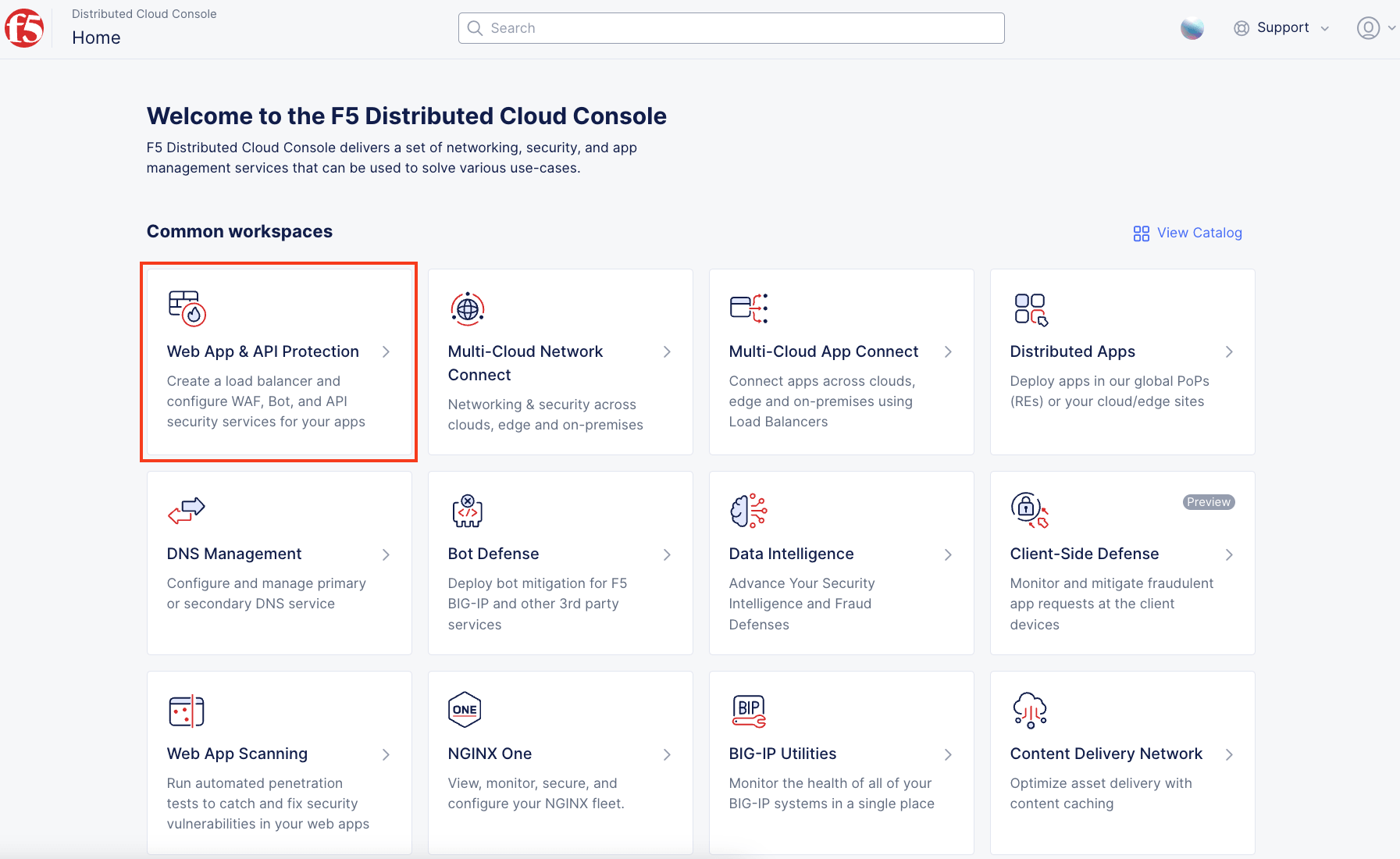
F5 BIG-IP Advanced WAF combines machine learning, threat intelligence and application analysis to detect attacks that signature and reputation-based controls miss. It provides a dedicated OWASP Top 10 compliance dashboard, guided configurations for common WAF use cases, a learning engine for policy building, and granular policies for microservices and APIs.
It can be deployed as software on any leading hypervisor in a data center or private cloud, from AWS, Microsoft Azure and Google Cloud marketplaces, or on F5 hardware for higher throughput deployments.
Key features include:
- Behavioral DoS: Behavioral analytics and machine learning drive layer 7 denial-of-service detection and mitigation without relying on static thresholds.
- Proactive bot defense: Identifies and blocks automated attacks from bots and other tools before they consume application resources.
- Stolen credential protection: Defends against brute-force attempts that use stolen credentials against login endpoints.
- API protocol security: Applies controls to GraphQL, REST/JSON, XML and GWT APIs, including the OWASP MCP Top 10 for agentic AI traffic.
- In-browser data encryption: Encrypts data at the application layer to counter data-extracting malware and man-in-the-browser attacks.
- Security as code: Declarative, API-based deployment and configuration so WAF policy can move through a CI/CD pipeline.
- Scanner and SIEM integrations: Imports DAST and SAST scan results to update signatures, and streams telemetry to SIEM, SOAR and XDR platforms.
Limitations (as reported by users on G2):
- Interface complexity: The configuration GUI is repeatedly described as complex and easy to get lost in, with requests for a more intuitive design.
- Expertise required: Deep product knowledge is needed to configure and troubleshoot policies, and misconfiguration is cited as a risk without it.
- Pricing: Cost is viewed as high and better matched to larger enterprises than to smaller organizations, with licensing changes to per-CPU noted as a pain point.
- Reporting add-ons: Advanced reporting requires the separate BIG-IQ management system rather than being included with BIG-IP.
- Maintenance and stability: Some reviewers report appliance issues and upgrade processes that reverted configurations.
Source: F5
4. Fortinet FortiWeb

Best for: Fortinet-standardized estates spanning appliances, VMs and SaaS
Strengths: Dual-layer ML modeling, API discovery and behavioral bot defense
Things to consider: Interface depth, reporting flexibility and peak latency
FortiWeb protects web applications and APIs against threats targeting known and unknown vulnerabilities. It applies a dual-layer machine learning approach that models each application individually to identify malicious patterns, reduce false positives and prioritize remediation in context, which cuts the manual tuning that traditional application learning requires.
The product spans hardware appliances from 100 Mbps to 70 Gbps of protected WAF throughput, virtual machines from 25 Mbps to 6 Gbps, container appliances, public cloud marketplaces, and FortiWeb Cloud WAF-as-a-Service running gateways in AWS regions.
Key features include:
- Dual-layer machine learning: Builds a model of each protected application to detect emerging and AI-generated zero-day attacks while limiting false positives.
- API discovery and protection: Machine learning algorithms continuously evaluate traffic to discover APIs, then generate positive security model policies per schema specification (OpenAPI, XML, JSON).
- Behavioral bot defense: Uses bot deception, biometric detection and machine learning to separate malicious automation from legitimate crawlers, without relying on blanket CAPTCHA challenges.
- Client-side protection: Policy-based detection of third-party script injection, DOM manipulation and form hijacking in the browser, addressing PCI DSS payment page script monitoring.
- FortiAI-Assist and built-in SOC agent: Support forensics and contextual decision making within the WAF console.
- Advanced analytics: Consolidates raw event data into threat pictures with recommended playbooks and threat-hunting capability.
- Hardware-based acceleration: Uses multi-core processors and hardware SSL tools for protected throughput and traffic encryption and decryption.
- Security Fabric integration: Connects with FortiGate next-generation firewalls and FortiSandbox for advanced persistent threat defense.
Limitations (as reported by users on G2):
- Initial configuration: Setting up advanced policies and custom rules is described as difficult for first-time users given the number of available options.
- Interface and customization: The UI is reported as insufficiently intuitive, with limited dashboard customization and more clicking than expected during troubleshooting.
- Reporting depth: Reporting and incident detail are described as limited, with requests for timeline-based views and richer analytics.
- Performance under load: Several reviewers note latency or slowdowns during peak traffic or when complex rule sets are applied.
- Non-Fortinet integration: Connecting to tools outside the Fortinet ecosystem requires additional configuration work.
Cloud and Edge-Delivered WAF Services
5. Cloudflare WAF

Best for: Edge-enforced protection using managed and custom rulesets
Strengths: Fast network-wide rule deployment and virtual CVE patching
Things to consider: Reporting granularity, support response and add-on cost
Cloudflare WAF inspects HTTP/S requests at the edge, using managed and custom rules to identify and block malicious payloads before they reach the application. Because it is deployed across Cloudflare's global network, enforcement happens close to the user.
When a new vulnerability such as Log4j emerges, Cloudflare's security team writes and deploys a rule across the network within hours or minutes. Managed rulesets are run against large volumes of diverse traffic and tuned against that traffic to limit blocking of legitimate users.
Key features include:
- OWASP Top 10 protection: Blocks SQL injection, cross-site scripting and related exploits targeting web applications and APIs.
- Virtual patching for CVEs: When a CVE is announced for a library or framework in use, the WAF blocks exploit attempts against that CVE ahead of code changes.
- Automated security updates: Auto-updating managed rules propagate protection against emerging threats without manual intervention from customers.
- Inline malware gateway: WAF Content Scanning routes file-upload endpoints through inspection and exposes cf.waf.content_scan.* fields so dangerous files can be quarantined or rewritten in flight.
- API-driven management: Fully managed through an API, so WAF configuration fits into existing CI/CD workflows.
- Edge enforcement: Deployed network-wide so protection is applied near the user with minimal added latency.
- Adjacent security services: Works alongside Cloudflare Bot Management, DDoS Protection, Rate Limiting, Client-Side Security and Turnstile.
Limitations (as reported by users on PeerSpot):
- Rule set currency: Reviewers have asked for updates to the ModSecurity core rule set version underpinning parts of the service.
- Logging and reporting: Log integration and reporting granularity are cited as areas needing improvement, along with notification handling.
- Support responsiveness: Response times of around 48 hours for basic requests are reported, with mixed experiences across regions.
- Add-on pricing: Bot Management is billed per request, which some organizations found expensive relative to alternatives.
- Learning curve and multitenancy: New users report a steep initial learning curve and gaps in documentation, and multitenancy capability is described as limited.
6. Akamai App & API Protector

Best for: Global edge protection extending into hybrid and multi-CDN estates
Strengths: Adaptive Security Engine, behavioral DDoS engine and self-tuning
Things to consider: Custom rule depth, interface design and pricing
Akamai App & API Protector combines a WAF with layer 7 DDoS defense, API discovery, sensitive data protection and bot controls in one product. Its core technology, the Adaptive Security Engine, learns attack patterns and adapts protections, with every request inspected in real time.
App & API Protector Hybrid extends the same WAF protections off the Akamai edge into on-premises, hybrid cloud and multi-CDN environments, covering north-south and east-west traffic so policy stays consistent across distributed architectures.
Key features include:
- Adaptive Security Engine: Learns attack patterns and continuously updates security policies from global threat intelligence, covering OWASP Top 10 threats, CVEs and API exploits.
- Machine learning self-tuning: Akamai-managed updates and machine learning-driven self-tuning reduce the manual rule and policy work security teams carry.
- Behavioral DDoS Engine: Automatically defends against sophisticated layer 7 volumetric attacks rather than relying on static rate controls.
- API discovery: Identifies exposed APIs and applies protections including the OWASP API Top 10 vulnerabilities.
- Hybrid deployment: Extends WAF enforcement beyond the CDN into on-premises, multicloud and multi-CDN environments through App & API Protector Hybrid.
- DevOps integration: Configuration changes can be automated in a CI/CD pipeline through an open API, a CLI, a Terraform provider and a public Postman collection.
- Malware protection module: Scans files at the edge to stop attackers reaching the origin.
- SIEM and dashboards: Connectors for Splunk and other providers, a SIEM integration module for forensic analysis, and AI-powered dashboards that surface anomalies and suggest changes.
- Service tiers: Available fully managed, co-managed or self-service, with an optional Security Operations Command Center support service.
Limitations (as reported by users on PeerSpot):
- WAF depth for layer 7: Some reviewers describe the WAF layer as basic for their needs and report running a second, more advanced WAF for certain applications.
- Custom rules and analytics: Custom rule options and analytics reporting visibility in the console are noted as areas needing improvement.
- Interface design: The interface is described as clunky, and configuration and monitoring are seen as complex to manage.
- Documentation and configuration timelines: Outdated documentation and delays when making configuration changes are recurring themes.
- Pricing and support response: Cost and support response times are both flagged, along with past latency issues.
7. AWS WAF

Best for: Applications fronted by CloudFront, ALB or API Gateway on AWS
Strengths: Managed rule packs, bot control and automatic layer 7 DDoS defense
Things to consider: AWS-only scope, inspection limits and cost visibility
AWS WAF lets teams create security rules that control bot traffic and block common attack patterns such as SQL injection and cross-site scripting. Rules filter web requests based on conditions including IP addresses, HTTP headers and body content, or custom URIs.
Preconfigured protection packs provide starting templates for specific industries and workload types such as APIs, PHP applications and web services, and these templates are continuously optimized. AWS states that a consolidated interface reduces security deployment configuration steps by up to 80%.
Key features include:
- Managed rules: AWS-maintained rule groups cover common threats so teams do not have to author and maintain their own signatures.
- Bot control and monetization: Monitors, blocks or rate-limits bot traffic, and can collect payments from AI bots and agents accessing content and APIs through Coinbase's x402 Facilitator, with per-content pricing, differentiated rates by bot identity and payment verification at the edge.
- Fraud prevention: Monitors login pages for unauthorized access using compromised credentials, and signup pages for fake account creation via automated bots or disposable email addresses.
- Automatic layer 7 DDoS protection: Continuously monitors and automatically mitigates application-layer DDoS events within seconds.
- Protection packs: Preconfigured templates tailored to specific industries and workload types, continuously updated without deep deployment expertise.
- Guided onboarding and consolidated visibility: A single-page setup interface activates preconfigured security defaults when launching new applications.
- Consolidated visibility: One interface combines core security functions with specialized partner protections, along with ongoing security posture recommendations.
Limitations (as reported by users on G2):
- AWS-bound scope: The service attaches to CloudFront, Application Load Balancer and API Gateway rather than EC2 directly, and does not extend to applications hosted outside AWS.
- Inspection and capacity limits: Request body inspection size caps and web ACL capacity limits mean larger payloads can go uninspected or force trade-offs in rule depth.
- Pricing transparency: The pay-as-you-go model is described as opaque, with costs rising with traffic volume, rule count and component add-ons such as bot and fraud control.
- Native dashboards: Built-in visibility is described as basic, with paid CloudWatch or S3 logging and manual queries needed to investigate and tune.
- Rule tuning and ordering: False positives require ongoing tuning, and rule order and priority management is reported as confusing.
- Regional configuration: The service is configured per AWS Region, adding work for applications spanning multiple regions.
8. Fastly Next-Gen WAF

Best for: Distributed apps and APIs needing detection with minimal tuning
Strengths: SmartParse contextual detection and the NLX collective threat feed
Things to consider: Interface navigation, support responsiveness and pricing
The Fastly Next-Gen WAF protects applications, APIs and microservices from a single solution regardless of where they run. Instead of regex pattern-matching rules that require constant tuning to avoid false positives, it uses SmartParse, a detection method that evaluates the context of each request and how it would execute to determine whether a payload is malicious or anomalous.
Deployment options include an agent-module software pair installed alongside the application, or edge and cloud-based options that require no software installation. Through a partnership with A10 Networks, it can also run through Thunder ADC hardware and virtual platforms. Fastly reports support for more than 100 cloud-native and data center platforms.
Key features include:
- SmartParse contextual detection: Evaluates request context and execution behavior in line, enabling detection from the start with near-zero tuning.
- Network Learning Exchange: A collective IP reputation feed built from anonymized, confirmed malicious activity observed across tens of thousands of distributed customer agents, shared back to all customers.
- API protection: Monitors endpoints for unexpected values and parameters and blocks unauthorized requests, with detection across SOAP, REST, gRPC, WebSockets and GraphQL, including GraphQL inspection.
- Account takeover protection: Inspects web requests and correlates anomalous activity with malicious intent to block credential stuffing and takeover attempts.
- Application-layer DDoS and rate limiting: Automatically blocks abusive automated traffic once defined thresholds for key application functions are met, with advanced rate limiting for high-volume anomalous requests.
- Flexible deployment: Hybrid SaaS model installed via agent-module pair, edge or cloud, so the same protection applies wherever applications run.
- Layer 7 visibility: Reporting and alerting feedback loops across the application and API footprint, with integrations into DevOps and security toolchains.
- Deception techniques: Built-in deception capabilities that can be applied without custom development work.
Limitations (as reported by users on G2):
- Interface navigation: The console is described as overwhelming and cumbersome to navigate, making rule setup and management time-consuming.
- Support responsiveness: Reviewers report slow responses when seeking help refining configurations.
- Pricing: Cost is described as high relative to the value some smaller teams get from the product.
- Initial setup: Older reviews describe a difficult, time-consuming setup, though reviewers note templated rules and newer features have reduced this.
- Agent maintenance and documentation: Agent updates are described as cumbersome, and documentation gaps make it harder to get full use of the WAF's capabilities.
Conclusion
AI-driven WAFs are increasingly important for protecting large application and API estates where static rules and manual tuning cannot keep pace with change. The strongest platforms combine behavioral learning, contextual detection, automated policy adaptation, bot and API protection, virtual patching, and application-layer DDoS defenses with centralized management. For large-scale deployments, the key differentiator is not simply whether a WAF uses machine learning, but whether it can continuously turn traffic, vulnerability, and threat intelligence into accurate, low-friction runtime protection across distributed environments.