As AI grows more autonomous, the real UX challenge isn't showing more information - it's deliberately designed for understanding, so people can confidently trust what AI does on their behalf.
Introduction
In our article, Inside AI SOC Xpert, we explored how AI can help security teams respond faster and make better decisions through real-time recommendations and contextual insights. That piece focused on how AI accelerates response once a decision is made; this one step back to ask how users build the understanding needed to trust those decisions in the first place.
But as AI becomes more capable, another question emerges:
How do users build enough understanding to trust those decisions in the first place?
As designers, it's tempting to think that the answer lies in visibility. If users can see more information, more activity, and more system behavior, they should be able to make better decisions.
For years, that assumption made sense.
But while working on AI-related experiences, I discovered something that initially felt counterintuitive:
Understanding often becomes harder as visibility improves.
The challenge wasn't how to show more information.
It was how to help users understand what matters.
The Assumption: More Information Creates More Understanding
For decades, digital products have followed a familiar pattern. When users need more clarity, we provide more information.
More data.
More alerts.
More metrics.
More visualizations.
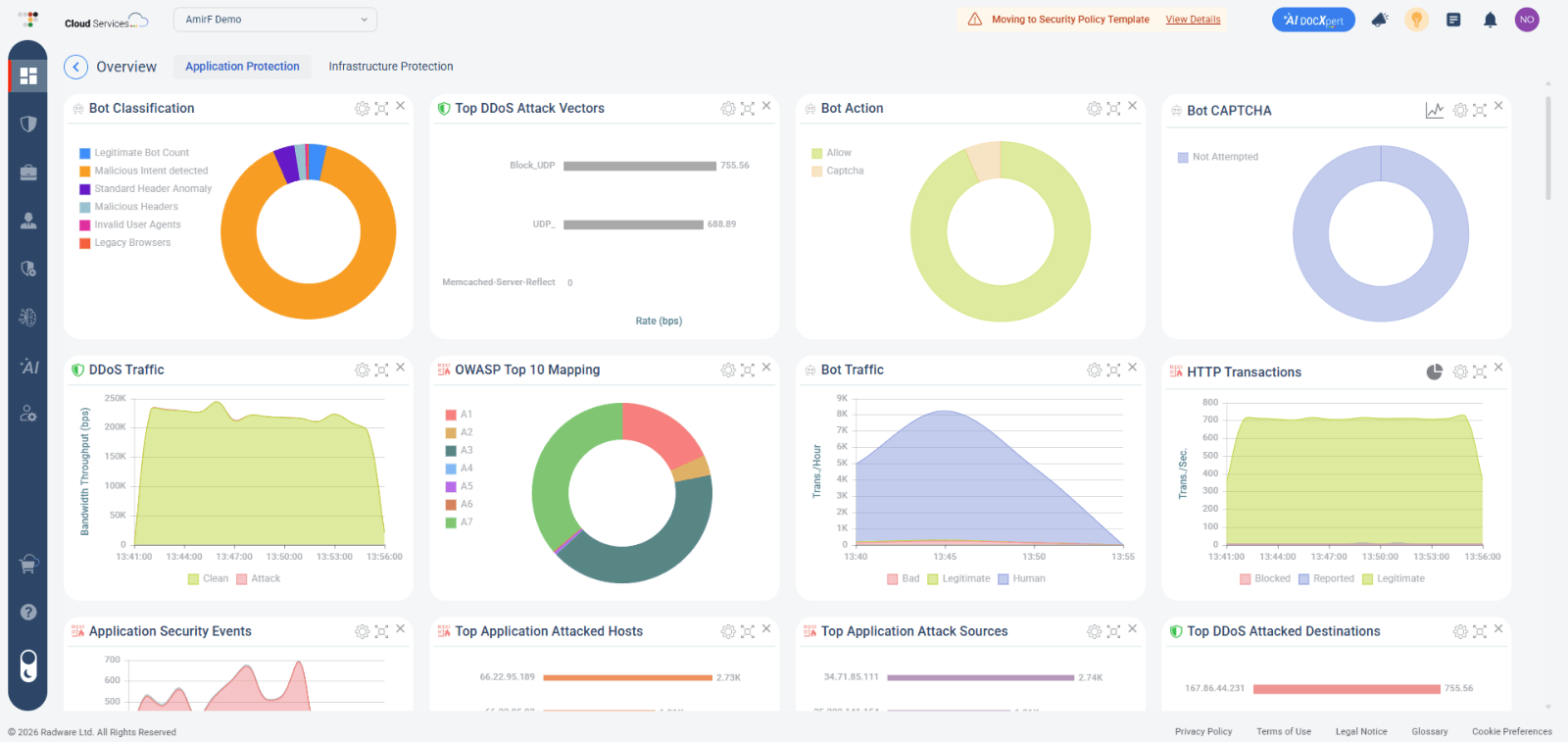
A typical security overview: every metric is visible, yet nothing signals where to look first. Complete visibility, limited understanding.
The assumption is simple: if users can see more, they can make better decisions.
In many situations, that approach works well. But AI introduces a different kind of complexity.
Unlike traditional systems that primarily present information, AI systems increasingly participate in decision-making. They generate recommendations, automate workflows, and perform actions that may happen outside the user's direct view.
As these capabilities grow, so does the amount of information that could potentially be exposed to users.
The problem is that visibility and understanding are not the same thing.
In fact, most AI systems today increase visibility but don’t reduce the decision-making burden.
They expose more data, more relationships, and more system activity - but leave users to figure out what actually matters and what to do next.
This creates a gap between seeing and understanding - and ultimately, between information and action.
When Visibility Stops Being Enough
One of the biggest lessons I learned while designing for AI-powered products was realizing that a system can be completely transparent and still be difficult to understand.
It is often possible to expose every event, action, recommendation, dependency, and system state. Yet users may still struggle to answer simple questions:
- What happened?
- Why did it happen?
- What should I pay attention to?
- What should I do next?
At some point, additional information stops creating clarity and starts competing for attention.
For security teams, this is more than a usability issue. When users struggle to understand what they're seeing, investigations take longer, confidence decreases, and decision-making becomes more difficult.
This is where UX becomes critical.
The goal is no longer to expose everything.
The goal is to help users build a mental model that allows them to understand what they are seeing and confidently decide how to respond.
In many cases, the most important design decisions are not about what to show.
They are about what not to show.
Designing for Understanding
As AI systems become more capable and autonomous, designers face a growing challenge: helping users make sense of increasingly complex environments.
Throughout my work on AI-related experiences, a few core principles consistently emerged.
Understanding Before Volume
One of the assumptions I had early on was that users primarily needed actions and more data. Over time, I realized they needed understanding first - and that understanding comes from context, not volume.
Before users can evaluate recommendations, respond to events, or make decisions, they need confidence in what they're seeing. And confidence comes from understanding why something matters, how it relates to everything else, and what deserves their attention right now.
This becomes especially important as AI systems begin generating recommendations and automating decisions. Before users can confidently accept a recommendation, they need to understand the reasoning behind it.
Transparency alone is not enough, and neither is more information. The experience must surface the right context - not the most data - to help users build trust and make informed decisions.
This perspective has shaped how we approach AI-driven security experiences at Radware.
Contrary to the common approach of maximizing visibility, we found that understanding is only achieved when users are guided toward action.
Surfacing context is not just about explanation - it’s about helping users confidently decide what to do next.
This is where many AI-driven systems fall short. They inform, but they don’t reduce the burden of decision-making.
Progressive Disclosure Over Information Overload
One of the most difficult design decisions in AI experiences is deciding what not to show.
It is often possible to expose additional details, actions, relationships, or system activity.
The challenge is doing so without overwhelming users.
Progressive disclosure helps solve this problem by revealing complexity gradually. Users start with what matters most and can explore deeper levels of information when they need it.
This approach reduces cognitive load while preserving access to rich information.
Perhaps the biggest surprise for me while working on AI-powered products and features was realizing how much activity can happen behind the scenes.
As AI becomes more capable, more actions are performed automatically. Recommendations are generated, workflows are triggered, and decisions are made with little or no direct user involvement.
This creates a new responsibility for designers.
Users do not only want to know what happened.
They want to understand why it happened.
Trust is not built through automation alone.
Trust is built when users feel they can understand the system well enough to rely on it.
The more autonomous AI becomes, the more important that understanding becomes.
Summary
The future of AI is not only about building more powerful systems.
It is also about designing systems that people can understand.
As AI continues to evolve, UX professionals will face a growing challenge: helping users navigate increasing complexity without overwhelming them with information.
Because ultimately, information creates awareness.
Understanding creates confidence.
And confidence enables better decisions.
Our job is shifting from designing what users see to designing what they understand - and that is where the next generation of AI experiences will be won.
Next time you evaluate a system, don’t ask how much it shows, ask whether it actually helps you decide what to do.