What is an Application Delivery Platform?
Enterprise application delivery platforms, including leaders like Radware, F5, Cloudflare, Akamai, and AWS, enhance application performance, security, and availability by optimizing traffic, accelerating content delivery, and securing infrastructure across hybrid and multi-cloud environments. These solutions typically include load balancing, web application firewalls (WAF), and API management to ensure high performance and reduce, or eliminate, downtime.
By abstracting the complexity of application delivery, these platforms enable enterprises to maintain seamless user experiences, regardless of traffic spikes, geographic distribution, or evolving security threats.
These platforms typically include hardware, software, or cloud-based components that work together to manage how applications are accessed and consumed. As organizations adopt multi-cloud and hybrid strategies, the role of application delivery platforms has expanded to provide consistent services across diverse environments, ensuring that applications remain accessible, performant, and secure under any circumstances.
In this article:
1. Application Delivery Controllers (ADCs)
Application delivery controllers (ADCs) are the central components of most application delivery platforms. They manage and direct incoming application traffic, distributing requests across multiple servers to ensure no single resource is overwhelmed. ADCs also provide features such as SSL offloading, web application firewall (WAF) integration, and application-layer security, which protect applications from common vulnerabilities and attacks.
Beyond basic traffic management, ADCs can:
- Perform deep packet inspection
- Optimize TCP connections
- Support routing based on content or user attributes
These capabilities improve application performance and security. Modern ADCs are available as physical appliances, virtual appliances, or cloud-native services, allowing enterprises to deploy them according to their infrastructure and scalability requirements.
2. Load Balancing
Load balancing is a fundamental feature of application delivery platforms, distributing incoming requests evenly across multiple servers or resources. This ensures that no single server becomes a bottleneck, maintaining response times and preventing service degradation during peak usage. Load balancers can operate at different network layers, such as layer 4 (transport) or layer 7 (application), offering various routing and health check mechanisms.
In enterprise environments, load balancing also supports redundancy and failover, improving service resilience. Load balancers can use algorithms that account for various metrics to make routing decisions:
- Server health
- Session persistence
- Application-specific metrics
The flexibility to handle different protocols and workloads is important for supporting web, mobile, and API-based services.
3. Content Delivery Networks (CDNs)
Content delivery networks (CDNs) are distributed networks of proxy servers and data centers that cache and deliver web content closer to users. By serving static assets such as images, videos, and scripts from edge locations, CDNs reduce latency and improve load times for geographically dispersed audiences. CDNs also help offload traffic from origin servers, freeing resources for dynamic content processing.
For enterprises, CDNs offer features like:
- DDoS protection
- Web application firewalls
- Real-time analytics
These capabilities accelerate content delivery and provide insight into user behavior and traffic patterns. As applications grow more complex and global, CDNs help maintain consistent performance and reliability at scale.
4. Application Delivery Networks (ADNs)
Application delivery networks (ADNs) extend the concept of CDNs by optimizing the delivery of static and dynamic application content. ADNs combine acceleration technologies, such as WAN optimization and protocol optimization, with routing to ensure fast and reliable application access regardless of user location. They support complex, interactive, and transaction-heavy enterprise applications.
ADNs also integrate security and monitoring features, providing centralized control over application delivery policies and user access. This approach enables enterprises to manage performance, security, and compliance requirements from a single platform. As businesses move toward cloud and hybrid architectures, ADNs help bridge on-premises and cloud environments, ensuring connectivity and user experiences.
5. Security Layers
These platforms incorporate multiple layers of defense, including:
- Web application firewalls (WAFs)
- DDoS mitigation
- SSL/TLS encryption
- Bot management
By inspecting and filtering traffic at various points, security layers prevent unauthorized access, data breaches, and service disruptions caused by cyber threats.
In addition to perimeter defenses, modern application delivery platforms support granular access controls, user authentication, and compliance enforcement. Security features can be centrally managed and updated to address vulnerabilities. Integration with security information and event management (SIEM) systems allows enterprises to monitor, detect, and respond to incidents in real time.
6. Monitoring and Analytics
Monitoring and analytics are critical for maintaining the health and performance of enterprise applications. Application delivery platforms provide visibility into traffic patterns, application response times, error rates, and user behavior. These insights enable IT teams to identify bottlenecks, optimize configurations, and resolve issues before they impact end users.
Platforms offer various features to support operational monitoring and planning, including:
- Real-time dashboards
- Customizable alerts
- Historical reporting
By using analytics, enterprises can make decisions about capacity planning, security posture, and application architecture. Integration with third-party monitoring tools and APIs enhances visibility and enables automated responses to changing conditions.
Learn more in our detailed guide to application performance monitoring.
7. Integration with DevOps and CI/CD Pipelines
Modern application delivery platforms integrate with DevOps practices and CI/CD (continuous integration/continuous deployment) pipelines. Automation APIs, configuration templates, and support for infrastructure as code enable teams to deploy, update, and scale applications consistently. This integration reduces manual intervention, accelerates release cycles, and minimizes configuration drift.
By aligning application delivery with DevOps workflows, enterprises can implement automated testing, blue/green deployments, and canary releases. Continuous monitoring and feedback loops enable rapid detection and remediation of issues, ensuring that applications remain stable and performant.
8. Multi-Cloud and Hybrid Deployment Support
Multi-cloud and hybrid deployment support is increasingly important as enterprises diversify infrastructure to optimize cost, resilience, and flexibility. Application delivery platforms enable consistent traffic management, security, and monitoring across public clouds, private clouds, and on-premises environments.
These platforms provide tools for:
- Orchestrating deployments
- Managing failover between cloud providers
- Enforcing centralized policies
Application delivery platforms help enterprises avoid vendor lock-in, optimize resource use, and support business continuity in distributed environments.
Prakash Sinha
Prakash Sinha is a technology executive and evangelist for Radware and brings over 29 years of experience in strategy, product management, product marketing and engineering. Prakash has held leadership positions in architecture, engineering, and product management at leading technology companies such as Cisco, Informatica, and Tandem Computers. Prakash holds a Bachelor in Electrical Engineering from BIT, Mesra and an MBA from Haas School of Business at UC Berkeley.
Tips from the Expert:
In my experience, here are tips that can help you better operationalize enterprise application delivery platforms:
1. Design around user journeys, not services: Build delivery policies around checkout, login, search, claims submission, or other critical paths. This exposes whether the platform is protecting the business transaction, not just keeping individual services online.
2. Use latency budgets per tier: Assign a maximum latency contribution to DNS, edge, WAF inspection, ADC processing, origin response, and third-party calls. Without budgets, every team assumes the delay belongs somewhere else.
3. Separate failover from disaster recovery: Failover should handle local service degradation in seconds; disaster recovery should handle regional or platform-level loss with controlled data and dependency recovery. Treating them as one mechanism often causes unstable failbacks.
4. Create negative health checks: Do not only check whether a server responds. Check whether it is returning stale content, dependency errors, queue saturation, bad build versions, or failed authentication flows.
5. Version delivery policies like code: WAF rules, cache rules, routing logic, TLS profiles, and bot policies should move through review, testing, and rollback just like application code. Many outages come from "minor" console edits no one can reproduce.
Application Delivery Controllers
1. Radware Alteon
Radware Alteon is an enterprise-grade application delivery controller (ADC) that combines load balancing, application acceleration, traffic management, and security services in a single platform. It helps organizations deliver applications consistently across on-premises, private cloud, public cloud, and hybrid environments while improving performance, availability, and operational efficiency. Alteon uses application-aware traffic management, automation, and integrated security capabilities to optimize application delivery and ensure business continuity.
General features include:
- Application-aware load balancing: Distributes traffic using Layer 4-7 intelligence, application health checks, and policy-based routing to optimize application availability and performance.
- Traffic management and application delivery: Manages application traffic, session persistence, content switching, and traffic optimization across data center and cloud environments.
- Hybrid and multicloud deployment support: Provides consistent application delivery services across physical, virtual, private cloud, public cloud, and hybrid infrastructures.
- Application acceleration and optimization: Improves application responsiveness through traffic optimization, SSL offloading, caching, compression, and connection management capabilities.
- Automation and operational simplicity: Supports centralized management, orchestration, and automation to simplify ADC deployment and day-to-day administration.
Enterprise features include:
- Integrated application security: Combines application delivery with web application security capabilities to help protect applications against threats and unauthorized access.
- High availability and business continuity: Ensures application uptime through redundancy, failover mechanisms, health monitoring, and traffic resiliency features.
- SSL/TLS offloading and encryption management: Offloads encryption processing from application servers to improve performance and reduce infrastructure overhead.
- Advanced analytics and visibility: Provides monitoring, reporting, and application performance visibility to help administrators identify issues and optimize delivery policies.
- Scalable enterprise architecture: Supports high-throughput application environments and enables organizations to scale application delivery services as demand grows.
2. F5 BIG-IP

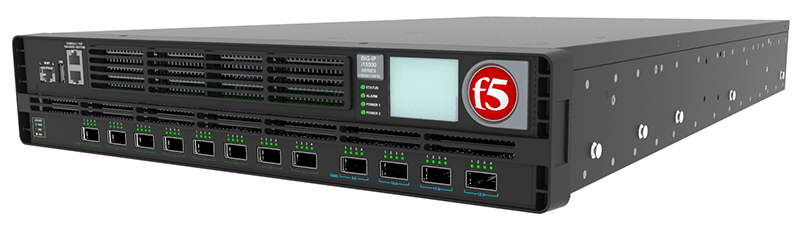
F5 BIG-IP is an enterprise-grade application delivery controller that unifies traffic management, security, and application services into a single platform. It ensures applications stay available, fast, and secure across on-premises, cloud, and edge environments. The platform is programmable and integrates with DevOps workflows, allowing teams to automate traffic handling and enforce policies.
General features include:
- Load balancing and traffic management: Distributes traffic using static and dynamic policies.
- Application services suite: Combines L4–L7 services such as load balancing, DNS, and security into a single platform.
- Hybrid and multicloud support: Delivers applications across on-premises, cloud, and edge environments with a unified set of services and policies.
- Programmability and automation: Enables traffic control through tools like iRules for customization of routing, security, and performance behavior.
- DevOps and ecosystem integration: Connects with CI/CD pipelines, analytics platforms, and third-party tools.
Enterprise features include:
- Application and API security: Protects against zero-day vulnerabilities, layer 7 DoS attacks, and bot traffic.
- Identity-based access control: Secures application access using identity and context-aware policies.
- DDoS and network protection: Defends against distributed denial-of-service attacks targeting applications and network infrastructure.
- Encrypted traffic visibility: Provides policy-based decryption and encryption to inspect traffic and route it through security tools.
- DNS security and scalability: Maintains DNS availability during high query volumes or attacks.
Source: F5
3. NetScaler ADC

NetScaler ADC is an application delivery controller that scales application delivery across on-premises, cloud, and hybrid environments. Built on a single software code base, it provides consistent behavior across hardware, virtual machines, containers, or bare metal deployments. NetScaler focuses on traffic management, performance, and integrated security.
General features include:
- Consistent cross-platform deployment: Uses a single code base and software architecture across hardware, virtual, containerized, and bare-metal deployments.
- Intelligent L4–L7 traffic management: Routes traffic based on request details such as URLs, cookies, and application data.
- High-performance architecture: Uses a one-pass processing design to reduce latency and CPU usage.
- Dynamic traffic scaling: Supports scaling across hybrid and multicloud environments with clustering.
- Load balancing: Makes routing decisions at the application layer, such as per HTTP request.
Enterprise features include:
- Granular traffic segmentation and routing: Directs traffic using request inspection, including headers and payload data, with load balancing algorithms and health checks.
- Integrated application security: Protects against SQL injection, cross-site scripting, and buffer overflow exploits.
- DDoS and traffic surge protection: Mitigates denial-of-service attacks and handles traffic spikes.
- Optimization and offloading capabilities: Offloads SSL processing, compression, caching, and TCP optimization.
- Policy-driven traffic control: Uses a policy engine with expressions and actions to define how traffic is filtered, routed, or modified.
4. Cloudflare CDN

Cloudflare CDN is a global content delivery network delivered as a SaaS platform that accelerates and secures application delivery through a distributed edge network. Operating across hundreds of locations, it routes user requests through an anycast network to the nearest data center, reducing latency.
General features include:
- Global anycast network: Routes user requests to the nearest data center using a distributed network.
- Edge content caching: Stores static and dynamic content closer to users.
- SaaS delivery model: Provides CDN capabilities as a managed service.
- Reverse proxy architecture: Acts as an intermediary between clients and origin servers.
- Consistent user experience: Delivers content from the closest edge location.
Enterprise features include:
- High availability and resiliency: Runs services across all data centers for redundancy.
- DDoS protection at scale: Mitigates large-scale attacks using a global network.
- Tiered caching architecture: Retrieves content from other edge locations instead of the origin when possible.
- Smart routing (Argo): Uses routing and network intelligence to select paths between edge nodes and origin servers.
- Bandwidth and cost optimization: Reduces egress traffic and origin requests.
5. Amazon CloudFront

Amazon CloudFront is a global content delivery network (CDN) that accelerates the delivery of static and dynamic content by caching it at edge locations worldwide. It routes user requests through the AWS backbone to the nearest edge location, reducing latency. By integrating with AWS services and providing built-in security, caching, and edge compute capabilities, CloudFront enables organizations to deliver digital experiences without managing infrastructure.
General features include:
- Global edge network: Uses distributed points of presence (PoPs) to deliver content with low latency.
- Edge caching mechanism: Stores content at edge locations for faster delivery.
- Origin integration flexibility: Supports Amazon S3, AWS services, and custom HTTP servers.
- AWS backbone routing: Uses the AWS global network to reduce network hops.
- Automated content delivery configuration: Uses distributions to define caching and delivery behavior.
Enterprise features include:
- Integrated security controls: Provides encryption, access controls, and DDoS protection through AWS Shield Standard.
- Edge compute capabilities: Executes custom logic at the edge using serverless features.
- Dynamic content and API acceleration: Optimizes delivery for dynamic workloads with persistent connections and protocol support.
- High availability and redundancy: Caches content across multiple edge locations.
- Cost optimization features: Reduces bandwidth and infrastructure costs through caching and consolidated requests.
6. Akamai CDN

Akamai CDN is a global content delivery and application acceleration platform that improves the performance, reliability, and scalability of web applications and APIs. It uses a distributed network to deliver content to users across devices and locations while providing real-time insights and automation capabilities.
General features include:
- Global content delivery network: Uses a distributed CDN to deliver applications and APIs with low latency and high availability.
- Application and API acceleration: Optimizes delivery of dynamic and API-driven content.
- Real-time user experience monitoring: Collects user data to provide visibility into performance across devices, networks, and geographies.
- Consistent performance across devices: Optimizes delivery for different device types and network conditions.
- Scalable infrastructure: Supports high traffic volumes and global audiences.
Enterprise features include:
- Intelligent traffic management: Uses global traffic management and load balancing to route users and prevent outages.
- API performance optimization: Improves API reliability and speed for large-scale deployments.
- Load testing (CloudTest): Provides distributed load testing to validate performance under real-world conditions.
- Low-latency data streaming (DataStream): Provides real-time data feeds for integration with monitoring and analytics tools.
- Dynamic content optimization (Ion): Applies automated optimizations to improve website performance.
Related content: Read our guide to application performance tools.
Conclusion
As enterprises navigate increasingly complex hybrid and multi-cloud environments, application delivery platforms have become foundational infrastructure rather than optional enhancements. The right platform brings together traffic management, security, performance optimization, and observability into a unified layer that sits between users and the applications they depend on.