What Are API Security Solutions?
API security solutions protect, detect, and remediate risks across the entire API lifecycle (from design to production) using specialized tools for discovery, runtime protection, and testing. Leading solutions such as Radware, Akamai, and Salt Security block OWASP Top 10 threats, stop behavioral attacks, and use AI/ML to uncover hidden APIs.
Key components of effective API security include:
- API discovery: Automatically uncovering all APIs, including shadow, zombie, and legacy endpoints.
- Runtime protection: Utilizing AI/ML to establish behavioral baselines, detecting anomalies and stopping behavioral threats like Broken Object Level Authorization (BOLA) in real time.
- Posture management: Ensuring compliance with security standards (e.g., GDPR, PCI DSS) and validating configurations.
- API testing: Integrating with CI/CD pipelines to run automated, advanced tests for vulnerabilities before deployment.
- Authentication/authorization: Implementing OAuth, OpenID Connect, and JWT to ensure only authorized users access data.
In this article:
API Discovery
API discovery is the process of identifying and cataloging all APIs running within an organization's environment, including those that are undocumented or “shadow” APIs. This is critical because organizations often lose track of APIs as they proliferate across different teams and business units, leading to security blind spots.
API discovery tools use techniques like traffic analysis, integration with gateways, and scanning code repositories to build a comprehensive inventory of active and dormant APIs. Accurate API discovery lays the foundation for effective security. Without knowing which APIs exist, security teams cannot monitor usage, enforce policies, or detect anomalies.
Runtime Protection
Runtime protection refers to the set of mechanisms that monitor and defend APIs during their active operation. These protections analyze live API traffic to detect and mitigate threats in real time, such as injection attacks, credential stuffing, and abuse of business logic.
Runtime protection often relies on machine learning and behavioral analysis to identify deviations from normal API usage patterns, allowing for rapid detection of both known and emerging threats. Effective runtime protection is essential because many API attacks exploit runtime vulnerabilities or attempt to bypass static security controls.
Posture Management
API posture management focuses on assessing and improving the security configuration of APIs throughout their lifecycle. This includes evaluating authentication settings, encryption standards, input validation, and adherence to security best practices.
Posture management tools perform regular scans and audits to identify misconfigurations, excessive permissions, and policy violations that could lead to vulnerabilities. Proactive posture management helps organizations maintain a strong security baseline and reduce the risk of accidental exposure.
API Testing
API testing in the context of security involves automated and manual assessments to uncover vulnerabilities before APIs are deployed or updated. Security testing tools simulate various attack scenarios, such as injection, broken authentication, or excessive data exposure, to identify weaknesses that could be exploited by attackers.
These tests are integrated into the software development lifecycle to catch issues early and ensure that security is built into every release. Regular API security testing is crucial because APIs often evolve rapidly, introducing new functionality or modifying existing endpoints. Each change presents a potential risk if not properly tested.
Authentication/Authorization
Authentication and authorization ensure that only legitimate users and systems can access or modify API resources. Authentication verifies the identity of a user or application, typically through mechanisms like API keys, OAuth tokens, or mutual TLS. Authorization controls what authenticated users are allowed to do, enforcing fine-grained access policies to prevent unauthorized actions.
Robust authentication and authorization mechanisms are necessary to defend against common API threats such as credential theft, privilege escalation, and data exfiltration. Weak or misconfigured controls can lead to significant security incidents, including unauthorized access to sensitive data or critical operations.
WAAP (Web Application and API Protection)
1. Radware
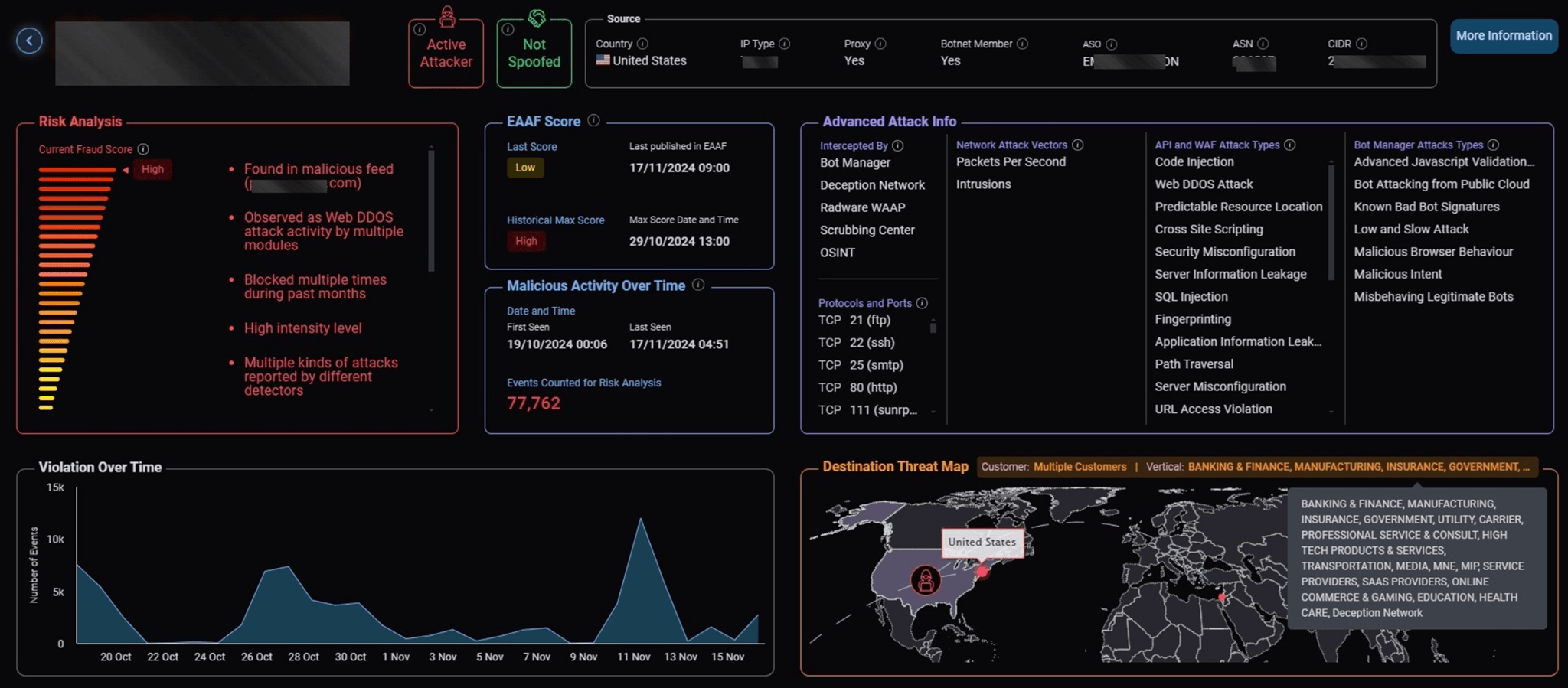
Radware’s Cloud Application Protection Service is a unified WAAP platform that protects web applications and APIs with integrated WAF, API security, bot management, client-side protection, and application-layer DDoS defense. It uses AI-driven behavioral algorithms to automatically update policies, reduce false positives, and adapt protections across on-prem, hybrid, cloud, and Kubernetes environments.
Key features include:
- Unified WAAP coverage: Combines web application protection, API security, bot mitigation, and application-layer DDoS defenses in a single integrated service.
- API discovery and business logic defense: Discovers APIs, maps traffic continuously, and helps stop sophisticated API attacks and business logic abuse in real time.
- Adaptive policy automation: Uses AI-driven behavioral-based algorithms to update security policy automatically and maintain strong protection with minimal false positives.
- Bot and account takeover mitigation: Detects and mitigates bad bots, automated abuse, and large-scale account takeover attempts across websites, mobile apps, and APIs.
- Flexible deployment: Protects consistently across private/public cloud, hybrid, on-prem, and Kubernetes environments.
Source: Radware
2. Akamai App & API Protector

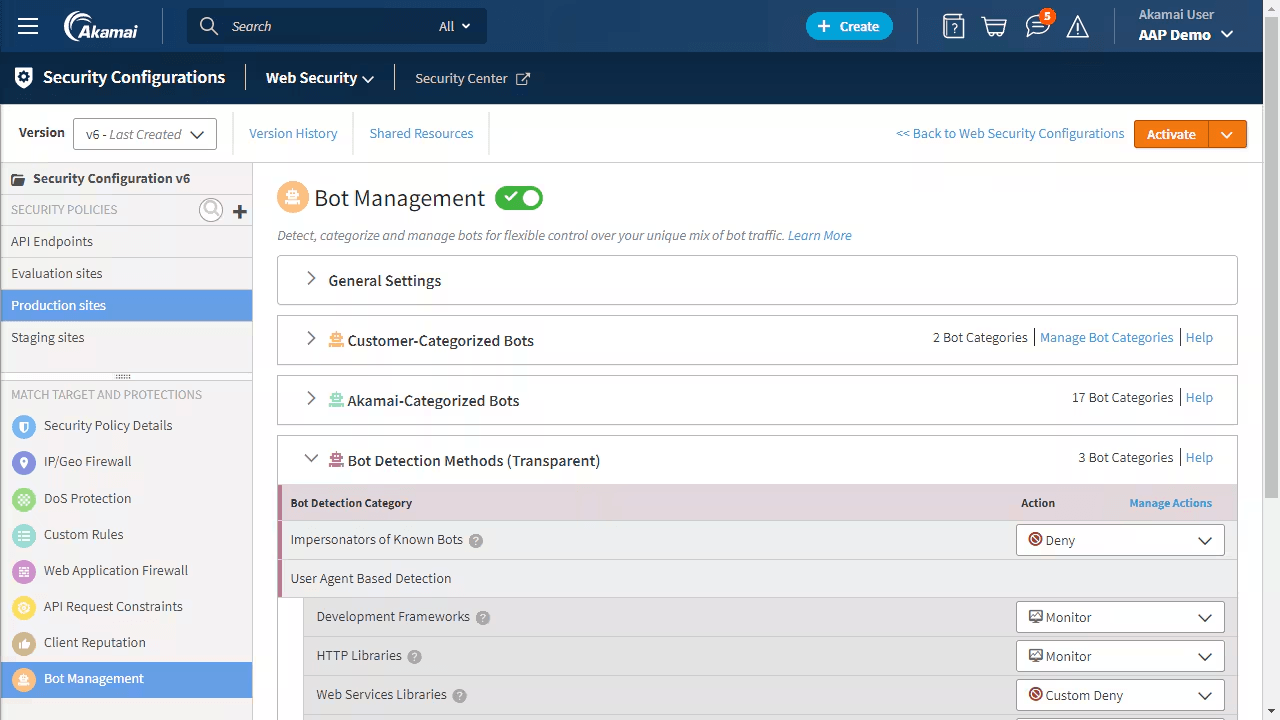
Akamai App & API Protector is a unified platform that secures applications and APIs by combining multiple protection layers into a single solution. It uses a web application firewall as its foundation and augments it with traffic inspection, adaptive threat detection, and automated defenses.
Key features include:
- Unified WAF and API protection: Combines web application firewall capabilities with API security controls, allowing a single system to protect both traditional web apps and modern API endpoints
- Request inspection: Analyzes every incoming request as it happens to detect and block threats such as injection attacks, bot traffic, and API abuse before they reach backend systems
- Adaptive security engine: Learns from observed traffic and attack patterns, then adjusts protection rules dynamically to defend against new and evolving threats without manual tuning
- Automated updates and self-tuning: Continuously updates security rules and automatically optimizes configurations using machine learning, reducing the need for manual intervention
- DDoS protection: Includes both application-layer (L7) and behavioral DDoS defenses to detect and mitigate sophisticated and large-scale attacks
Source: Akamai
3. F5 Distributed Cloud WAAP

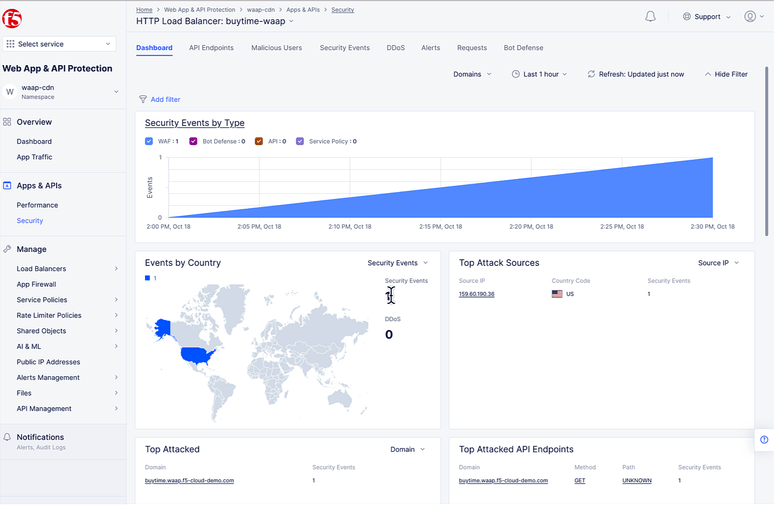
F5 Distributed Cloud WAAP is an integrated security solution that protects applications and APIs by combining multiple defenses into a single platform. It brings together web application firewall capabilities, API security, bot mitigation, and DDoS protection to reduce the need for separate tools and simplify operations.
Key features include:
- Integrated WAAP platform: Combines WAF, API security, bot defense, and DDoS mitigation into a single solution, reducing tool sprawl and simplifying management across environments
- WAF protection: Uses a web application firewall as the central enforcement layer to block common exploits and emerging threats, including OWASP Top 10 vulnerabilities and zero-day attacks through virtual patching
- Full lifecycle API security: Discovers, catalogs, and secures APIs from development through runtime, using behavior analysis to detect abuse and protect sensitive data and business logic
- Automated API discovery and visibility: Identifies unknown or unmanaged APIs to eliminate blind spots and improve governance across hybrid and multicloud architectures
- Bot and automation defense: Detects and mitigates malicious bots and automated attacks using multiple signals, helping prevent fraud, account takeover, and abuse while minimizing impact on legitimate users
Source: F5
API Security Platforms
4. Salt Security
Salt Security is an API security platform that focuses on providing visibility, posture governance, and threat protection across an organization’s API ecosystem. Its Illuminate™ platform maps APIs into a unified security graph, giving teams a view of how APIs interact and where risks exist.
Key features include:
- API discovery and visibility: Continuously identifies all APIs in production, including shadow, deprecated, and third-party APIs, without requiring manual tagging or agents
- API inventory: Maintains an up-to-date view of the entire API landscape, helping teams understand exposure and eliminate blind spots across environments
- API security graph (Illuminate™): Maps APIs into an interconnected graph that shows relationships, data flows, and dependencies, enabling faster risk identification and analysis
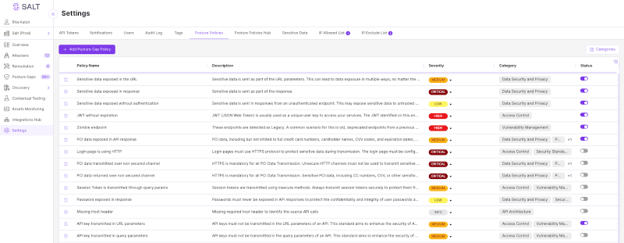
- API posture management and compliance: Continuously evaluates API configurations against standards like PCI DSS, GDPR, NIST, and SOC 2 to identify gaps and enforce governance
- Policy enforcement at scale: Uses centralized policy controls to fix misconfigurations, prevent drift, and maintain consistent security posture across all APIs
Source: Salt Security
5. Wallarm

Wallarm is an API security platform that helps discover, protect, monitor, and test APIs across modern and distributed environments. It provides continuous visibility into the API attack surface by automatically inventorying APIs and mapping their structure from live traffic. The platform combines threat prevention with behavioral analysis, enabling it to block API attacks, bots, and DDoS activity.
Key features include:
- End-to-end API security: Combines discovery, protection, response, and testing capabilities into a single system to secure APIs throughout their lifecycle
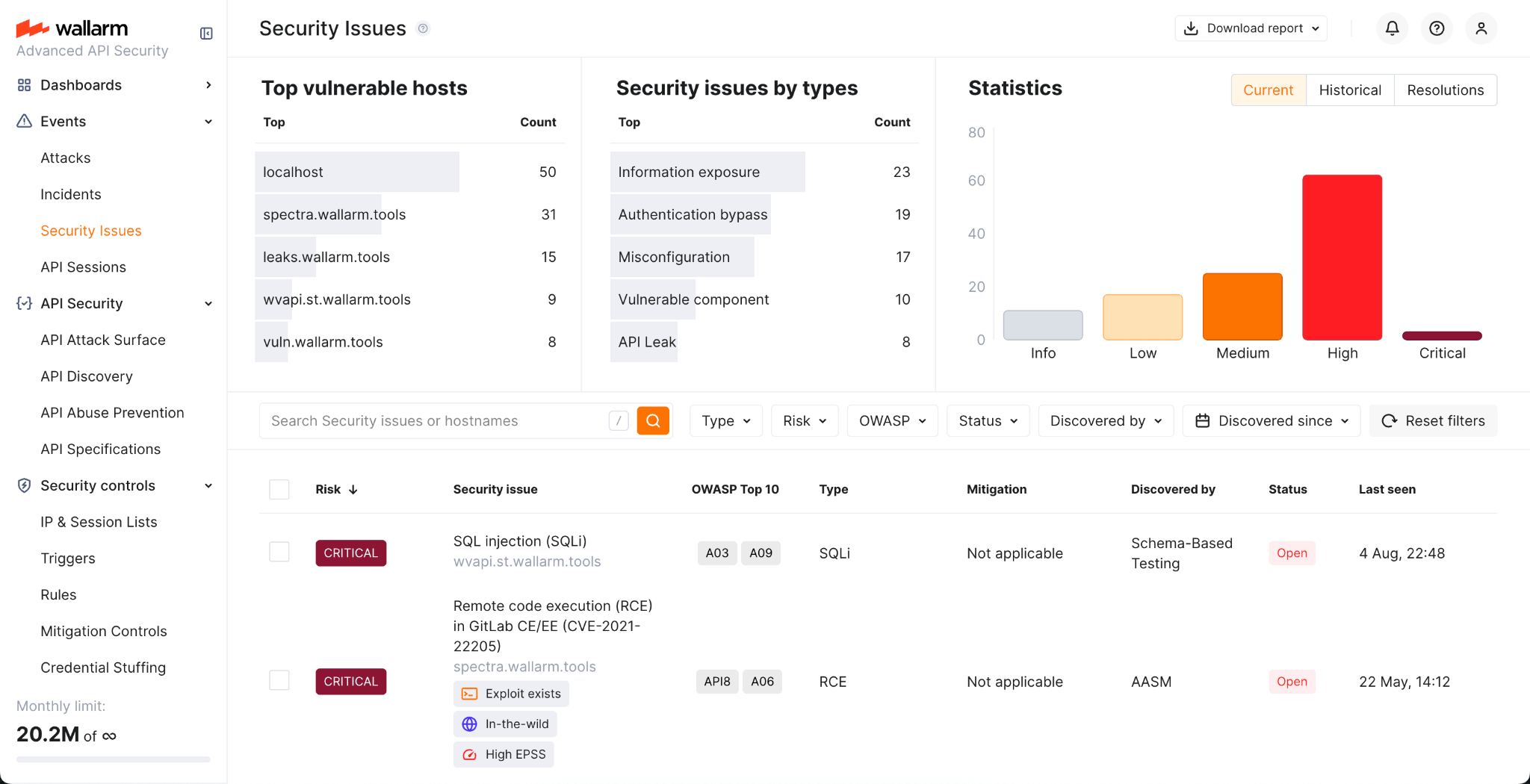
- Automated API discovery and inventory: Identifies all APIs and services from traffic, including undocumented endpoints, while continuously tracking changes in the API landscape
- API topology mapping: Reconstructs application and API structure based on observed traffic, helping teams understand dependencies and attack surfaces
- Sensitive data detection: Monitors how sensitive data is used and exposed across APIs to reduce compliance risks and prevent data leakage
- Threat protection: Blocks API attacks as they happen, including OWASP API Top 10 threats, account takeover attempts, and abuse of business logic
Source: Wallarm
6. Akto

Akto is an API security platform that uses AI-driven agents to automate the discovery, testing, and protection of APIs across their lifecycle. It takes a code-to-runtime approach, continuously analyzing APIs from development through production to identify risks and enforce security controls.
Key features include:
- AI-driven API security agents: Uses autonomous AI agents to perform discovery, testing, monitoring, and threat detection, reducing reliance on manual security processes
- Code-to-runtime coverage: Secures APIs across the lifecycle, from development and testing to runtime protection in production environments
- Automated API discovery and inventory: Continuously identifies and catalogs all APIs across infrastructure, including undocumented and shadow APIs
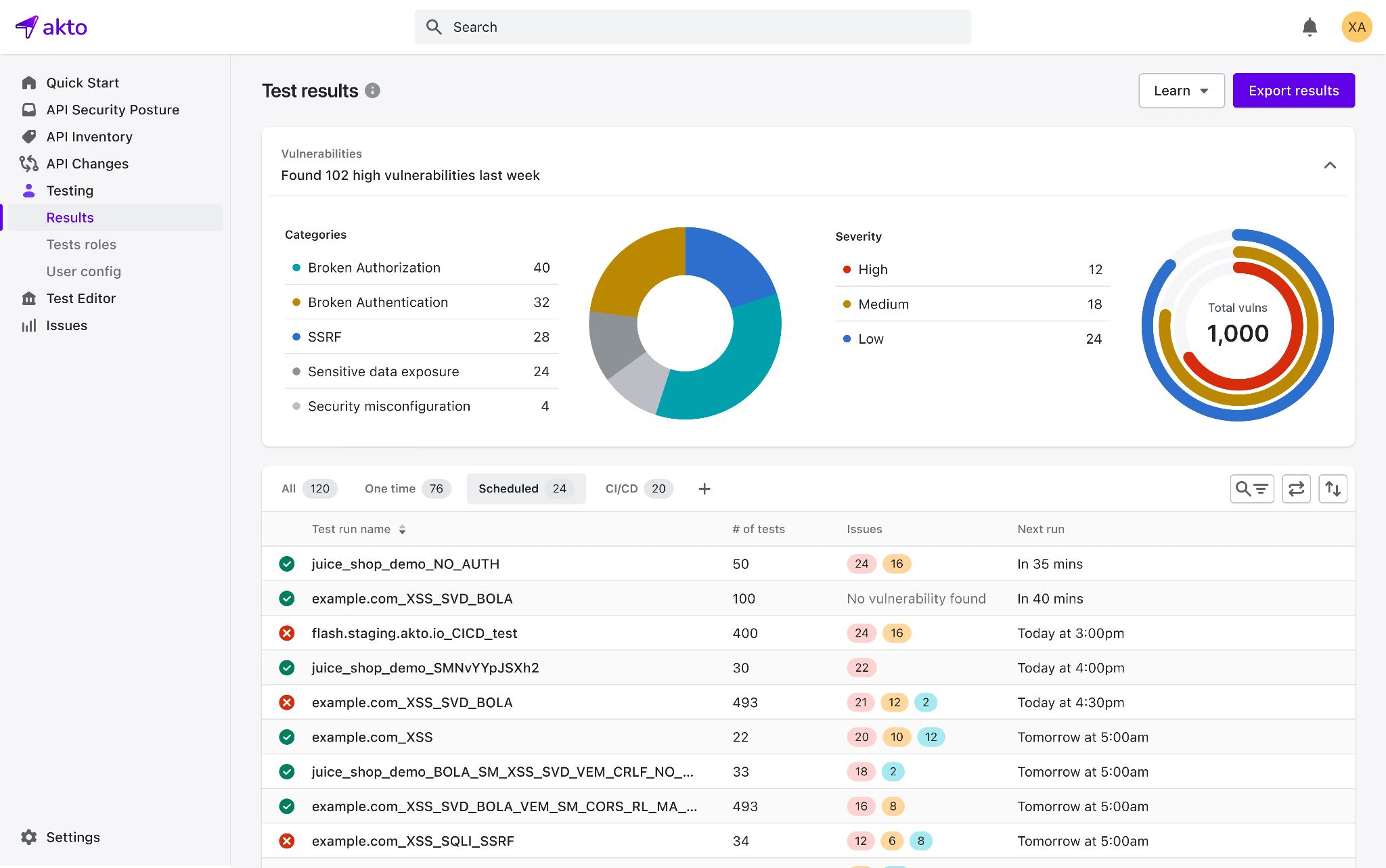
- API security testing: Provides over 1000 pre-built security tests covering OWASP Top 10 and business logic vulnerabilities, with CI/CD integration
- API security posture management: Continuously monitors API configurations and risks, helping teams assess and improve their overall security posture
Source: Akto
API Gateways
7. Apigee

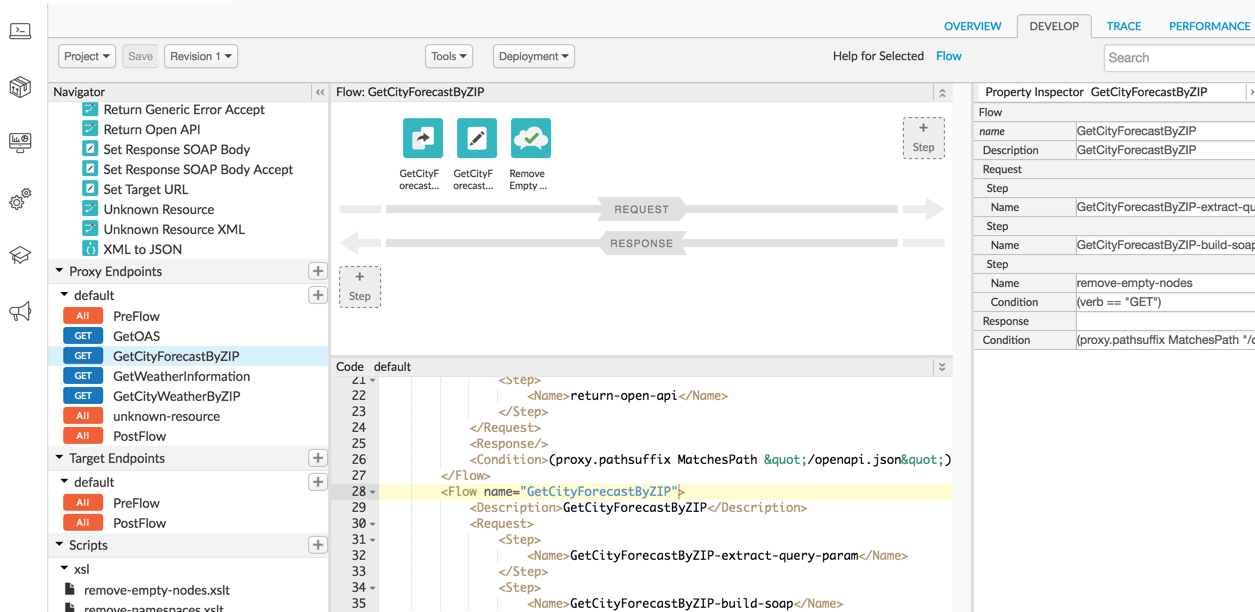
Apigee is Google Cloud’s API management platform that enables organizations to build, manage, and secure APIs through a centralized proxy layer. This proxy sits between backend services and client applications, providing a consistent interface while handling key concerns such as security, traffic control, and data transformation.
Key features include:
- API proxy layer: Acts as an intermediary between clients and backend services, enabling centralized control over security, traffic, and data handling without changing backend code
- Policy-based API management: Provides a wide range of configurable policies for security, rate limiting, quotas, caching, data transformation, and fault handling
- Multi-protocol support: Supports REST, gRPC, SOAP, and GraphQL APIs, allowing flexibility in designing and managing different API architectures
- Security controls: Secures APIs through authentication, authorization, and traffic management policies applied at the proxy level
- Traffic management and rate limiting: Controls API usage with quotas and rate limits to prevent abuse and ensure fair consumption of services
Source: Apigee
8. Cloudflare API Gateway

Cloudflare API Gateway, powered by API Shield, is a platform that combines API management, security, and development capabilities into a single solution. It uses Cloudflare’s global network to route, secure, and monitor API traffic while enforcing strong authentication and validation controls.
Key features include:
- Integrated API gateway and security: Combines API routing, management, and security controls into a single platform, reducing the need for separate tools
- Protection against OWASP API risks: Defends against common API vulnerabilities such as injection attacks and improper asset management using built-in security mechanisms
- Strong authentication and validation: Supports JWT validation, mutual TLS (mTLS), and schema validation to enforce secure access and ensure request integrity
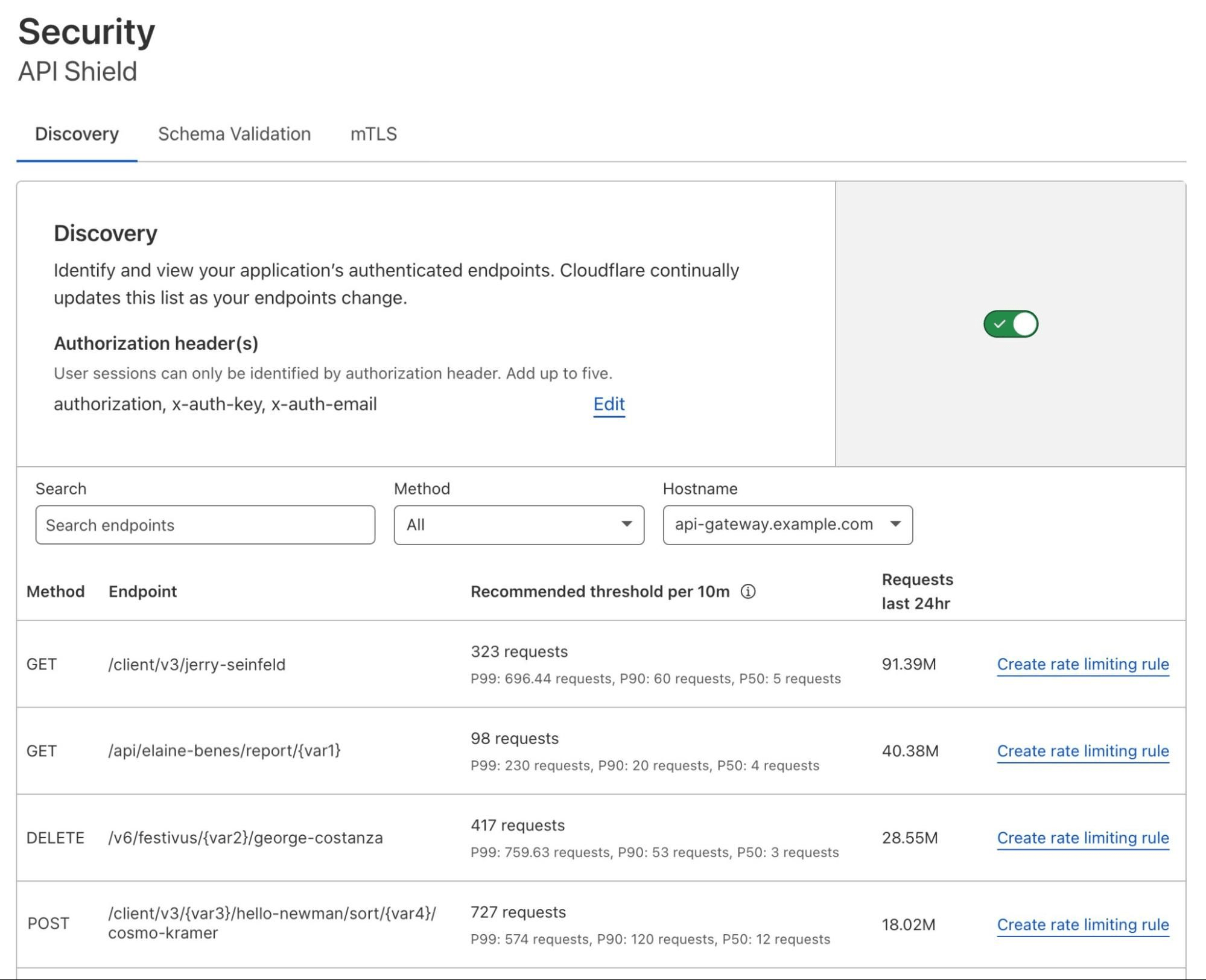
- API endpoint discovery and visibility: Identifies and monitors all API endpoints, including shadow APIs, to reduce blind spots and improve control over the API surface
- Posture management and risk insights: Monitors API authentication status and highlights security risks, helping teams detect misconfigurations and enforce best practices
Source:
Cloudflare
9. Gravitee

Gravitee API Gateway is an event-native API management solution that handles both synchronous and asynchronous APIs. It enables organizations to manage the API lifecycle while supporting event-driven architectures alongside traditional API patterns. The gateway processes large volumes of traffic efficiently and provides a unified layer for applying policies.
Key features include:
- Event-native API gateway: Supports both synchronous APIs (REST, SOAP) and asynchronous APIs (Kafka, MQTT, WebSockets), enabling unified management of traditional and event-driven architectures
- High performance and scalability: Built on Java to handle high-throughput traffic, delivering faster performance for enterprise-scale API workloads
- Policy-based API management: Offers a range of pre-built policies for security, traffic control, and data transformation, which can be configured via UI, API, or Kubernetes operator
- Protocol mediation and transformation: Enables communication between different protocols (e.g., REST to SOAP, MQTT to HTTP), helping integrate legacy systems with modern services
- Centralized governance across gateways: Manages APIs across multiple gateways and brokers under a single control plane, ensuring consistent policy enforcement and visibility