Summary: AI security solutions for cloud infrastructure use machine learning to monitor, detect and mitigate threats across cloud environments. Radware is best for AI-driven application, API and DDoS protection; Wiz for agentless posture visibility; Cortex Cloud for code-to-SOC coverage; Microsoft Defender for Cloud for Azure-centric estates.
What Are AI-Driven Security Solutions for Cloud Infrastructure?
AI security solutions for cloud infrastructure refer to technologies that use artificial intelligence and machine learning to monitor, analyze, and protect cloud environments. These solutions are designed to detect threats, automate responses, and adapt to evolving risks in cloud-based systems.
Unlike traditional security tools, AI-driven platforms can process vast amounts of data from multiple sources, learning from patterns and behaviors to recognize suspicious activity faster and more accurately. They work across public, private, and hybrid cloud setups, providing unified protection regardless of the underlying architecture.
Key features to look for:
- Real-time DDoS detection and automated mitigation: Uses behavioral and traffic analysis to identify DDoS attacks as they emerge and automatically apply filtering, rate limiting, or traffic scrubbing.
- Behavioral analysis of network and application traffic: Establishes normal traffic patterns and detects anomalies that may indicate compromised workloads, lateral movement, or malicious application activity.
- Classification and trust management of AI crawlers and agent traffic: Identifies legitimate AI agents and crawlers, distinguishes them from impersonators or malicious bots, and applies access policies based on trust level.
- Automated API discovery and inventory: Continuously identifies APIs across cloud environments, including shadow and undocumented endpoints, and records their exposure, usage, and sensitivity.
- Web application firewall protection: Combines managed rules and behavioral analysis to block web attacks such as SQL injection, XSS, malicious bots, and emerging application-layer threats.
- Detection of API abuse and business logic attacks: Analyzes API call sequences and user behavior to detect misuse of legitimate functionality, including scraping, workflow manipulation, and automated account abuse.
- Consistent protection across hybrid and multi-cloud environments: Applies centralized monitoring and security policies across public clouds, private clouds, and on-premises infrastructure.
- AI-assisted incident prioritization, root-cause analysis, and response recommendations: Correlates alerts and cloud context to identify high-risk incidents, reconstruct likely attack paths, determine root causes, and recommend appropriate remediation actions.
- Automated virtual patching and vulnerability-driven runtime protection: Creates targeted runtime controls for exposed vulnerabilities, blocking exploitation while permanent patches are tested and deployed.
In this article:
The table below summarizes the key differences between the solutions covered in this guide. We explore each of them in more detail in the sections that follow.
| Category |
Solution |
Best For |
Key Strengths |
Things to Consider |
| AI-Driven Cloud Application and Infrastructure Protection |
Radware Cloud Application Protection Services |
Unified AI-driven WAF, bot, API and application DDoS protection |
Integrated protection modules that share attack data in real time |
Reporting and dashboards can require time to learn and navigate |
| AI-Driven Cloud Application and Infrastructure Protection |
Cloudflare WAF |
Edge-delivered WAF with managed rulesets and fast zero-day coverage |
Machine learning attack scoring and continuous managed rule updates |
Advanced rules and higher-tier pricing add complexity and cost |
| AI-Driven Cloud Application and Infrastructure Protection |
Akamai App & API Protector |
Edge WAF with bot, API and Layer 7 DDoS defenses in one product |
Adaptive Security Engine with automated updates and self-tuning |
Config pushes are slow and bot tuning needs vendor support time |
| AI-Driven Cloud Application and Infrastructure Protection |
F5 Web Application and API Protection |
Consistent app and API security across data center, cloud and edge |
Converges WAF, API security, bot defense and DDoS in one platform |
Integration with F5 on-prem products and cost are sticking points |
| AI-Powered Cloud Workload and Posture Security Platforms |
Wiz |
Agentless visibility and risk prioritization across cloud and AI |
Security Graph correlates context to surface exploitable attack paths |
Code scanning maturity and runtime false positives are raised by users |
| AI-Powered Cloud Workload and Posture Security Platforms |
Palo Alto Networks Cortex Cloud |
Code-to-cloud-to-SOC coverage on one converged security platform |
Autonomous AI agents that resolve risks across AppSec and SecOps |
Complex cloud integration and cost are raised by reviewers |
| AI-Powered Cloud Workload and Posture Security Platforms |
CrowdStrike Falcon Cloud Security |
Runtime cloud detection and response backed by adversary intelligence |
Agent and agentless coverage with real-time control plane visibility |
Query performance and integration effort come up in user reviews |
| AI-Powered Cloud Workload and Posture Security Platforms |
Microsoft Defender for Cloud |
CNAPP coverage for hybrid and multicloud estates from code to runtime |
Contextual risk prioritization and attack path analysis at scale |
Ingestion-based licensing costs and support access draw comments |
Expanding Multi-Cloud Attack Surfaces
The shift to multi-cloud strategies has expanded the attack surface organizations must defend. Each cloud provider introduces unique configurations, APIs, and management tools, increasing the complexity of security oversight. As enterprises distribute workloads across multiple clouds, maintaining visibility and control becomes more challenging, creating gaps that attackers can exploit. These expanded environments require security solutions that can correlate events and risks across different platforms seamlessly.
How AI-driven security solutions help: These solutions aid in managing this complexity by providing unified monitoring and analysis. They aggregate data from various cloud providers, normalizing it to deliver a holistic view of the environment. This enables security teams to detect lateral movement, misconfigurations, and policy violations that might go unnoticed in siloed systems. As multi-cloud adoption continues to rise, AI-powered security is key to maintaining consistent protection and reducing blind spots.
Related content: Read our article about the best application security solutions.
Increasingly Sophisticated Cloud Attacks
Attackers are continually developing more advanced methods to breach cloud environments. Modern threats include credential theft, privilege escalation, and the exploitation of cloud-specific vulnerabilities, such as insecure APIs or misconfigured storage buckets. These attacks are often automated and can bypass traditional defenses by mimicking legitimate behavior or leveraging trusted cloud services. The sophistication of these tactics demands equally advanced detection and response mechanisms.
How AI-driven security solutions help: They use machine learning to identify subtle indicators of compromise that human analysts might miss. They analyze vast datasets for anomalies, correlate events across multiple layers, and adapt to new attack techniques without relying solely on predefined rules. This adaptability is essential for keeping pace with evolving threats and minimizing the window of exposure. As cloud attacks grow in complexity, AI is critical for detecting and mitigating threats before they cause significant damage.
Growth of Machine and Non-Human Identities
Cloud environments increasingly rely on non-human identities such as service accounts, bots, and APIs to automate tasks and support integrations. These machine identities often have broad permissions and access to sensitive resources, making them attractive targets for attackers. Managing and securing these identities is challenging, as their activity can be difficult to distinguish from legitimate automated processes.
How AI-driven security solutions help: They aid in profiling machine identities and establishing behavioral baselines. They monitor for unusual patterns, such as unexpected access requests or privilege changes, which may indicate compromise. By continuously analyzing activity and adapting to changes, AI can quickly detect and respond to threats involving non-human identities, reducing the risk of unauthorized access and data breaches in the cloud.
Continuous Analysis of Cloud Activity
AI-powered security solutions provide continuous monitoring of cloud activity, ingesting logs, network flows, and application events in real time. This ongoing analysis is essential for detecting subtle or low-and-slow attacks that may unfold over days or weeks. Unlike periodic manual reviews, continuous monitoring ensures that emerging threats are identified as soon as they appear, allowing for immediate investigation and response.
The scale and complexity of cloud environments make manual analysis impractical. AI automates the correlation of millions of data points, filtering out noise and highlighting genuinely suspicious activity. This reduces alert fatigue for security teams and enables them to focus on meaningful incidents. Continuous analysis not only improves threat detection but also supports compliance efforts by maintaining a detailed audit trail of all cloud activity.
Behavioral Baselines and Anomaly Detection
AI security solutions establish behavioral baselines for users, devices, and applications within the cloud. By learning what constitutes normal activity, AI can identify deviations that may indicate compromise, such as unusual login times, access from atypical locations, or abnormal resource usage. This approach is more effective than static rules, which may miss novel or sophisticated attacks that do not match known patterns.
Anomaly detection powered by AI reduces the risk of false positives and improves the accuracy of threat identification. It adapts to changes in the environment, continuously refining its understanding of normal behavior as workloads and usage patterns evolve. This dynamic approach enables organizations to detect insider threats, account takeovers, and other subtle attacks that traditional security tools often overlook.
Automated Threat Prioritization
The sheer volume of alerts generated in cloud environments can overwhelm security teams, leading to missed or delayed responses. AI addresses this challenge by automatically assessing the severity and potential impact of detected threats. It analyzes contextual factors such as asset criticality, user roles, and historical behavior to prioritize incidents that pose the greatest risk to the organization.
Automated threat prioritization enables security teams to focus their efforts where they are needed most, reducing response times and improving overall security posture. AI-driven systems can also recommend or initiate remediation actions for lower-priority incidents, further reducing manual workload. This targeted approach ensures that critical threats are addressed promptly, minimizing the potential for damage.
Real-Time Incident Response
AI security solutions enable real-time incident response by automating the detection, analysis, and mitigation of threats as they occur. When suspicious activity is identified, AI can trigger predefined response actions such as isolating affected resources, revoking credentials, or blocking malicious traffic. This rapid response capability is essential for minimizing the impact of attacks in fast-moving cloud environments.
Real-time incident response also improves collaboration between security and operations teams. AI-driven platforms can generate detailed incident reports, provide actionable insights, and integrate with existing workflows for simplified remediation. By reducing the time from detection to containment, AI helps organizations limit the scope of breaches and maintain business continuity in the face of evolving threats.
Predictive Risk Analysis
Predictive risk analysis uses AI to anticipate potential security issues before they are exploited. By analyzing historical data, threat intelligence, and current cloud configurations, AI models can identify patterns that may indicate emerging risks. This proactive approach enables organizations to address vulnerabilities and misconfigurations before they are targeted by attackers.
AI-driven predictive analysis also supports strategic decision-making by highlighting trends and forecasting future threats. Security teams can use these insights to prioritize investments, update policies, and strengthen defenses in anticipation of evolving risks. As cloud environments continue to grow in complexity, predictive risk analysis becomes an invaluable tool for maintaining a strong security posture.
AI-Assisted Incident Investigation and Response
AI can accelerate incident investigation by correlating alerts, logs, identity activity, network events, and configuration changes into a single attack timeline. Instead of requiring analysts to manually connect events across cloud services, AI can identify affected resources, trace the likely attack path, and summarize the actions performed by a compromised identity. This helps teams determine the scope and root cause of an incident faster.
AI can also support response by recommending remediation based on the incident context. For example, it can suggest revoking exposed credentials, terminating suspicious sessions, isolating workloads, or removing excessive permissions. Organizations can require analyst approval for high-impact actions while automating well-defined responses, reducing investigation time without giving AI unrestricted control over cloud resources.
Automated Creation of Vulnerability-Specific Protections
AI can help translate newly discovered vulnerabilities into targeted protections before organizations can fully patch affected systems. It can analyze vulnerability details, affected software versions, exploit behavior, and threat intelligence to identify cloud resources at risk. Security tools can then use this information to generate controls designed to detect or block exploitation attempts.
These protections can include web application firewall rules, intrusion detection signatures, workload controls, or monitoring queries tailored to a specific vulnerability. Such controls provide temporary risk reduction when immediate patching is not practical. Generated protections should still be tested to ensure they do not block legitimate traffic or introduce operational problems.
Automated Rule and Security Policy Generation
AI can generate security rules and policies from cloud configurations, observed activity, threat intelligence, and organizational requirements. For example, it can identify recurring risky behavior and propose identity policies, network restrictions, detection rules, or configuration controls that address the associated attack path. This reduces the manual effort required to translate security findings into enforceable controls.
Policy generation can also help maintain consistency across multi-cloud environments where providers use different policy formats and security models. AI can map a common security requirement to provider-specific controls and identify gaps between existing policies and the intended security posture. Security teams should validate generated rules before deployment, particularly when they can affect production access or availability.
Auto Continuous Tuning of Security Policies
Cloud environments change frequently as teams deploy workloads, modify permissions, and introduce new services. Static security policies can quickly become outdated, generating excessive alerts or failing to cover new risks. AI can continuously evaluate policy performance against current configurations and activity, identifying rules that are too broad, too restrictive, or no longer relevant.
Based on this analysis, AI can recommend adjustments to thresholds, permissions, detection logic, and enforcement conditions. It can also identify unused privileges and recurring false positives that indicate opportunities for tighter or more accurate controls. Continuous tuning keeps policies aligned with actual cloud usage while reducing alert noise, but significant policy changes should remain subject to testing and approval.
1. Real-Time DDoS Detection and Automated Mitigation
AI enhances distributed denial-of-service (DDoS) protection by identifying attack patterns as they develop rather than relying only on predefined signatures or traffic thresholds. Machine learning models analyze request rates, traffic sources, protocol behavior, and historical baselines to distinguish legitimate traffic spikes from malicious flooding attempts. This allows organizations to detect application-layer and network-layer DDoS attacks earlier, even when attackers vary their techniques.
Once an attack is detected, AI-driven platforms can automatically trigger mitigation measures without waiting for manual intervention. These actions may include:
- Rate limiting
- Traffic filtering
- IP reputation enforcement
- Redirecting traffic through scrubbing services
Automated mitigation reduces downtime, maintains application availability, and enables security teams to focus on more complex incidents while the attack is contained.
Related content: See our overview of DDoS mitigation tools.
2. Behavioral Analysis of Network and Application Traffic
AI security solutions continuously analyze network and application traffic to understand how users, services, and workloads normally communicate. Instead of inspecting individual events in isolation, they identify patterns across:
- Connections
- Protocols
- Request volumes
- Application behavior
This provides context that helps distinguish expected activity from suspicious behavior. Behavioral analysis is particularly effective for detecting threats that do not match known attack signatures. AI can identify unusual data transfers, unauthorized service-to-service communication, or abnormal application requests that may indicate compromised workloads or lateral movement.
3. Classification and Trust Management of AI Crawlers and Agent Traffic
AI crawlers and autonomous agents generate traffic that can resemble both legitimate automation and malicious bots. Security solutions can classify this traffic using behavioral signals, request patterns, identity information, headers, cryptographic verification, and known crawler data. This helps distinguish approved AI services from:
Once classified, organizations can apply different trust policies to each type of agent. Approved agents may receive normal access, while unknown or high-risk agents can be rate limited, challenged, restricted from sensitive endpoints, or blocked. Continuous monitoring is important because agent behavior and identities can change, requiring trust decisions to be updated as new evidence becomes available.
4. Automated API Discovery and Inventory
Modern cloud environments often contain hundreds or thousands of APIs, many of which are created rapidly during application development. AI-powered security tools automatically discover APIs by analyzing network traffic, application gateways, and cloud infrastructure. This helps organizations maintain an accurate inventory without relying solely on manual documentation.
An up-to-date API inventory improves visibility and reduces the risk of unmanaged or forgotten endpoints. Security teams can identify elements that increase the attack surface, such as:
- Shadow APIs
- Outdated versions
- Publicly exposed interfaces
AI also classifies APIs based on their function, sensitivity, and usage patterns, making it easier to prioritize security controls and ongoing monitoring.
5. Web Application Firewall Protection
AI strengthens web application firewall (WAF) capabilities by improving how malicious requests are identified and filtered. Traditional WAFs depend heavily on static rules, which require regular updates to recognize new attack techniques. AI complements these rules to detect suspicious activity that may not match existing signatures by analyzing:
- Request behavior
- Payload characteristics
- Application context
This adaptive approach improves protection against threats such as SQL injection, cross-site scripting (XSS), and automated bot attacks while reducing false positives. AI-enabled WAFs can adjust protection based on changing traffic patterns and application behavior, allowing legitimate users to access services with fewer interruptions while blocking evolving attack methods.
6. Detection of API Abuse and Business Logic Attacks
Many attacks target legitimate API functionality rather than software vulnerabilities. Attackers may exploit business processes by bypassing rate limits, manipulating workflows, or abusing valid user permissions. These business logic attacks are difficult to detect because the requests often appear legitimate when evaluated individually.
AI identifies these threats by analyzing the following over time:
- Sequences of API calls
- User behavior
- Transaction patterns
It can detect unusual usage that suggests credential abuse, automated account creation, excessive data extraction, or manipulation of application workflows. By understanding normal business operations, AI provides an additional layer of protection against attacks that traditional rule-based systems frequently miss.
7. Consistent Protection Across Hybrid and Multi-Cloud Environments
Organizations commonly operate workloads across public clouds, private clouds, and on-premises infrastructure. This diversity creates inconsistent security policies and fragmented visibility if each environment is managed independently. AI security solutions unify monitoring across these platforms, providing centralized analysis regardless of where applications and data reside.
By correlating telemetry from multiple cloud providers and infrastructure types, AI detects threats that span different environments. Security teams gain:
- Consistent policy enforcement
- Standardized risk assessment
- A consolidated view of incidents across the entire infrastructure
This unified approach simplifies operations while reducing security gaps created by hybrid and multi-cloud deployments.
8. AI-Assisted Incident Prioritization, Root-Cause Analysis, and Response Recommendations
AI helps security teams prioritize incidents by combining alerts with context such as asset sensitivity, exploitability, identity privileges, exposure, and observed attacker activity. Related events can be grouped into a single incident instead of appearing as separate alerts. This allows analysts to focus first on threats with a credible path to sensitive systems or data.
For investigation, AI can reconstruct attack paths and identify likely root causes by correlating:
- Logs
- Configuration changes
- Network activity
- Identity events
It can then recommend actions such as revoking credentials, isolating workloads, blocking malicious traffic, or correcting misconfigurations. These recommendations give analysts a faster starting point while allowing high-impact remediation actions to remain subject to human approval.
9. Automated Virtual Patching and Vulnerability-Driven Runtime Protection
Virtual patching protects vulnerable applications when a software patch cannot be deployed immediately. AI-driven security tools can analyze vulnerability information, exploit techniques, application behavior, and runtime telemetry to create targeted protections. Without modifying the vulnerable application itself, these controls can block exploitation attempts at the:
- WAF layer
- API gateway
- Network layer
- Workload layer
Vulnerability-driven runtime protection also connects vulnerability findings with actual exposure and application activity. A platform can prioritize an internet-facing vulnerability with active exploit attempts over an unreachable vulnerable package. Automated protections reduce the exposure window while teams test and deploy permanent patches, but generated controls should be monitored for false positives and removed or adjusted after the vulnerability is fixed.
How we selected these solutions: We shortlisted AI security solutions for cloud infrastructure based on real-time threat detection, automated mitigation, behavioral analysis of network and application traffic, API discovery and protection, posture and workload visibility, and consistent policy enforcement across hybrid and multi-cloud environments.
AI-Driven Cloud Application and Infrastructure Protection
1. Radware Cloud Application Protection Services
Best for: Unified AI-driven WAF, bot, API and application DDoS protection
Strengths: Integrated protection modules that share attack data in real time
Things to consider: Reporting and dashboards can require time to learn and navigate
Radware Cloud Application Protection Services combines a web application firewall, bot management, API protection, application-layer DDoS mitigation and client-side protection into a single cloud-delivered service. Integrated protection modules share attack data with each other and react together, and Radware's AI layers connect those engines into one solution.
The service covers on-premises, Kubernetes, hybrid and public cloud environments, and applies an automated positive security model to reduce exposure to zero-day attacks. It also extends to generative AI usage through the Radware LLM Firewall, which applies protection at the prompt level before requests reach the model.
Key features include:
- AI-driven behavioral DDoS mitigation: Detects and mitigates HTTP-based application-layer DDoS assaults using AI-driven, behavioral-based algorithms aimed at shortening time to detection and mitigation.
- Automated WAF policy generation: Updates security policy automatically using AI-driven behavioral algorithms, covering OWASP lists for web application security, API security, client-side security, automated threats and LLM security.
- API auto-discovery and business logic analysis: Discovers APIs automatically, applies continuous AI-driven mapping and analysis of business logic, and mitigates API assaults in real time.
- Bot management across web, mobile and APIs: Filters good and bad bot activity on websites, mobile apps and APIs, and detects large-scale distributed account takeover attempts using behavioral analysis.
- Client-side supply chain protection: Protects end-user data during interactions with third-party services in the application supply chain.
- Consistent cross-cloud enforcement: Applies the same level of security regardless of where apps are hosted across private and public clouds, with cross-platform AI reasoning connecting engines and enforcement-point integration extending coverage to third-party services.
- Managed service and AI-driven SOC: Includes a managed service with a 24x7 Emergency Response Team, an AI-driven SOC offering, and actionable analytics with customizable controls.
Limitations (as reported by users on G2):
- Reporting depth: Some users would like more customizable dashboards and report templates, and occasionally export data to build executive-level summaries.
- Learning curve for advanced tuning: Teams new to the platform report needing time to become comfortable with behavioral policies and fine-grained bot settings.
- Initial policy tuning effort: Aligning policies fully to application traffic can take longer than the basic onboarding steps.
2. Cloudflare WAF

Best for: Edge-delivered WAF with managed rulesets and fast zero-day coverage
Strengths: Machine learning attack scoring and continuous managed rule updates
Things to consider: Advanced rules and higher-tier pricing add complexity and cost
Cloudflare WAF inspects HTTP and HTTPS requests at the network edge and applies managed and custom rules to identify and block malicious payloads before they reach the application. It runs across Cloudflare's global network, so enforcement happens close to the user, and it is deployed with a DNS change rather than new infrastructure.
The WAF is managed through the dashboard or fully via API, which lets teams push rule changes as part of CI/CD workflows. It sits alongside Cloudflare's other edge security services, including DDoS protection, rate limiting, bot management and client-side security, on the same network.
Key features include:
- Managed rulesets with zero-day coverage: Cloudflare's security team writes and deploys rules network-wide within hours or minutes when a new vulnerability such as Log4j emerges, so protection can land before customers patch their own code.
- OWASP Top 10 and CVE virtual patching: Blocks SQL injection, cross-site scripting and similar exploits against web applications and APIs, and blocks exploit attempts targeting announced CVEs in libraries and frameworks.
- Machine learning attack scoring: Requests are scored by Cloudflare's machine learning models, with WAF attack score, XSS, SQLi and RCE scores available as signals inside rules.
- Custom rules and rate limiting: Teams build their own rules against request attributes and apply rate limits by IP or header attribute, with actions including block, log, challenge and custom responses.
- File upload content scanning: File-upload endpoints can be routed through WAF content scanning, with the returned scan fields used to quarantine or rewrite dangerous files inline.
- API-first configuration: Fully managed via API with Terraform integration, and logs can be pushed or pulled into an existing SIEM.
- Low false positive tuning at scale: Managed rulesets are run against large volumes of diverse traffic before deployment, which is used to reduce blocking of legitimate users.
Limitations (as reported by users on G2):
- Rule tuning complexity: Fine-tuning WAF rules and bot settings to avoid false positives takes time, particularly for dynamic applications.
- Tiered feature access: Several advanced security capabilities sit behind higher-priced plans, and users describe the pricing structure as hard to map to specific needs.
- Troubleshooting visibility: It is not always immediately clear which rule triggered a block, so investigations often require digging through logs and events.
- Support access on lower tiers: Users on non-enterprise plans report limited direct support channels and slower response times.
- Interface navigation: The breadth of settings and frequent dashboard changes make some options harder to locate.
3. Akamai App & API Protector

Best for: Edge WAF with bot, API and Layer 7 DDoS defenses in one product
Strengths: Adaptive Security Engine with automated updates and self-tuning
Things to consider: Config pushes are slow and bot tuning needs vendor support time
Akamai App & API Protector is a web application firewall solution that inspects every request in real time to defend against DDoS attacks, web application and API attacks, and malicious bots. Its Adaptive Security Engine learns attack patterns and adapts to future threats, and Akamai manages rule updates on the customer's behalf.
The product runs on Akamai's edge platform. App & API Protector Hybrid extends WAF coverage off the edge into on-premises, hybrid cloud and multi-CDN environments, securing north-south and east-west traffic under one set of policies.
Key features include:
- Adaptive Security Engine: Learns attack patterns and adapts protections automatically, pushing defenses for zero-days and CVE-based exploits without manual rule authoring.
- Behavioral DDoS Engine: Provides a Layer 7 capability set that automatically defends against sophisticated volumetric and application-layer DDoS attacks.
- Automated API discovery: Discovers APIs and applies sensitive data protections, lowering the effort of identifying undocumented endpoints and vulnerabilities.
- Machine learning self-tuning: Adjusts policies using machine learning so teams spend less time manually tuning rules.
- Hybrid and multi-CDN coverage: App & API Protector Hybrid extends WAF protections into on-premises, hybrid cloud and multi-CDN deployments for consistent policy enforcement across distributed architectures.
- AI-powered dashboards: Surface anomaly and threat detection information and suggest actionable improvements.
- DevOps and SIEM integration: Configuration changes can be automated in a CI/CD pipeline through an open API, CLI or Terraform provider, with connectors for Splunk and a SIEM integration module.
- Edge malware scanning: An optional malware protection module scans files at the edge before they reach the origin.
Limitations (as reported by users on PeerSpot):
- Configuration propagation time: Pushing a configuration across the network takes around twenty minutes, and rolling it back takes roughly the same again.
- Bot management tuning effort: Getting bot detection tailored to an application requires substantial fine-tuning, often with vendor support involvement.
- Reporting visibility: Analytics and reporting in the console are described as needing more depth, and custom rule capabilities could be more flexible.
- Documentation and support gaps: Reviewers report outdated documentation, including undocumented rule precedence behavior that was difficult to diagnose.
- Cost: Pricing is viewed as high and reviewers suggest it could be reduced.
4. F5 Web Application and API Protection (WAAP)

Best for: Consistent app and API security across data center, cloud and edge
Strengths: Converges WAF, API security, bot defense and DDoS in one platform
Things to consider: Integration with F5 on-prem products and cost are sticking points
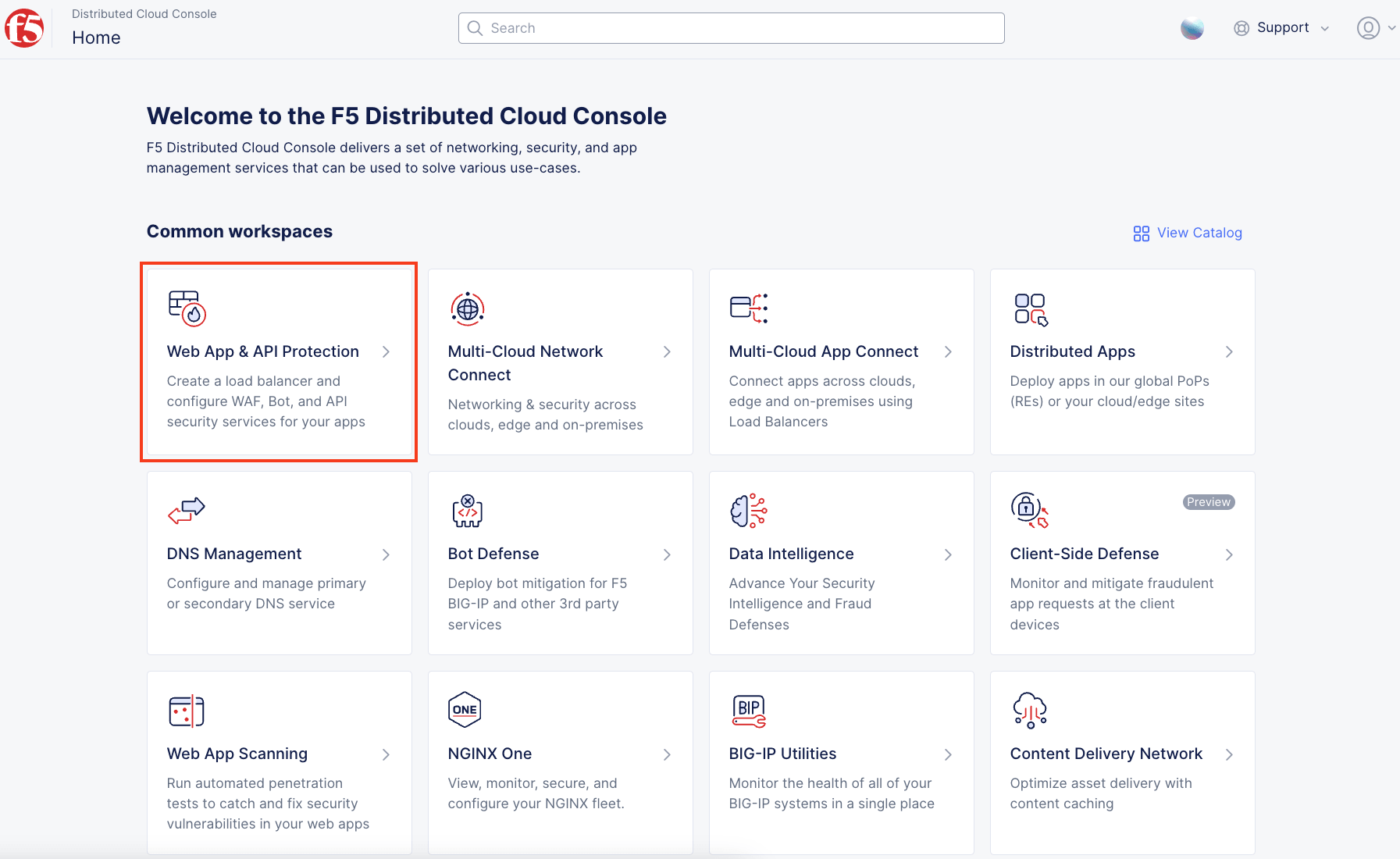
F5 Web Application and API Protection converges WAF, API security, bot management and DDoS mitigation into an integrated solution built on the F5 Application Delivery and Security Platform. It applies the same protections across on-premises data centers, public cloud and edge locations, with centralized policy management and reporting.
F5 delivers WAAP through several enforcement points, including the SaaS-based F5 Distributed Cloud WAF, BIG-IP Advanced WAF for on-premises deployments, and F5 WAF for NGINX in containerized environments such as Kubernetes. A SaaS-delivered managed WAF service is also available.
Key features include:
- WAF as the core enforcement point: Blocks common and emerging application-layer exploits and applies virtual patching to mitigate OWASP Top 10 issues and zero-day risks while fixes are developed.
- Full lifecycle API security: Discovers and catalogs API endpoints, baselines normal API behavior, and combines schema or definition-based validation with behavioral monitoring and anomaly detection to address issues such as broken object level authorization.
- Multi-signal bot defense: Distinguishes human traffic from automated attacks using client, device, browser, identity and behavior signals, applying step-up challenges only where needed.
- Multi-vector DDoS mitigation: Combines SaaS mitigation through F5 Distributed Cloud with on-premises controls in BIG-IP AFM and lightweight Layer 7 protection for NGINX.
- Continuous external attack surface assessment: F5 Web Application Scanning identifies exposed web apps and APIs and runs automated testing to uncover vulnerabilities for prioritized remediation.
- Client-side defense: Monitors and blocks malicious browser-side scripts and third-party resources associated with data skimming.
- Distributed Cloud platform services: Bundles multicloud networking, a global backbone network, a 24x7 security operations center and DNS and CDN services alongside the security modules.
Limitations (as reported by users on PeerSpot):
- Integration with on-premises F5 products: Reviewers cite connecting the distributed cloud services to other F5 products, such as the on-premises WAF, as the main friction point.
- Implementation effort: Deployment is described as involving implementation challenges rather than being a straightforward rollout.
- Cost for smaller organizations: Users say the pricing is not workable for small players and is considered expensive in some regional markets.
- Console availability: One reported incident involved roughly thirty minutes of downtime across the distributed cloud console.
Source: F5
AI-Powered Cloud Workload and Posture Security Platforms
5. Wiz

Best for: Agentless visibility and risk prioritization across cloud and AI
Strengths: Security Graph correlates context to surface exploitable attack paths
Things to consider: Code scanning maturity and runtime false positives are raised by users
Wiz is a cloud and AI security platform that connects to cloud environments via API and inventories what is running across virtual machines, containers, serverless functions, PaaS services, repositories, pipelines, AI models and agents. It gathers this data agentlessly, so there is no per-workload deployment or ongoing maintenance step.
The platform's core is the Wiz Security Graph, which analyzes relationships between resources and surfaces the pathways most likely to lead to a breach. Findings are grouped into a single prioritized list of toxic combinations rather than isolated alerts from separate scanners.
Key features include:
- Agentless cloud and AI inventory: Connects via API and discovers technologies across PaaS platforms, virtual machines, containers, serverless functions, models, agents, repositories and pipelines using multiple detection methods.
- Security Graph queries and visualization: Analyzes relationships between technologies in the environment and lets teams query them from a single console with graph visualization.
- Attack path analysis: Produces a prioritized list of toxic combinations of cloud and AI risk with a high probability of exploitation, alongside the recommended next action.
- Cloud threat intelligence: Provides out-of-the-box coverage for threats targeting cloud and AI environments and identifies which resources are affected.
- Runtime protection with the Wiz Sensor: Adds real-time threat detection on top of agentless telemetry, including detection of prompt injection, rogue agents and malicious AI behavior at runtime.
- Code-to-cloud correlation: Traces running cloud resources back to the code, pipeline and developer that created them, and generates one-click pull request fixes in the version control system.
- AI-assisted code scanning: Scans code with an engine that interprets codebase context to surface business logic vulnerabilities that pattern-matching engines miss.
- Workflow orchestration and RBAC: Automates detection-to-ownership-to-remediation sequences on a no-code canvas, and groups resources by ownership through projects, services and a role-based access control framework.
Limitations (as reported by users on PeerSpot):
- Code scanning and developer workflows: Users note that code scanning and developer-facing workflows are less mature than the platform's posture management capabilities.
- Secret detection scope: Reviewers would like secret detection extended into full lifecycle management rather than detection alone.
- Identity coverage across accounts: Identity and access management coverage in multi-account environments is cited as an area needing strengthening.
- Runtime false positives: Runtime threat detection generates false positives that users would like reduced.
- Scoring transparency and tenancy: Attack path scoring and risk modeling could be more transparent, and access control and tenant separation more fine-grained.
- Interface responsiveness: Loading the graph and navigating between views can take longer than expected.
6. Palo Alto Networks Cortex Cloud

Best for: Code-to-cloud-to-SOC coverage on one converged security platform
Strengths: Autonomous AI agents that resolve risks across AppSec and SecOps
Things to consider: Complex cloud integration and cost are raised by reviewers
Cortex Cloud is the current version of Palo Alto Networks' cloud security offering, formed by merging Prisma Cloud with the company's cloud detection and response technology on the Cortex platform. It brings application security, cloud posture security, cloud runtime security and security operations into one product rather than separate consoles.
The platform applies autonomous AI agents that act on risks from code through to the SOC, and works with Cortex XSIAM to extend detection and response from enterprise environments into the cloud.
Key features include:
- Cloud posture security: Combines CSPM, CIEM, DSPM, AI-SPM, compliance and vulnerability management, applying code and runtime context to every finding rather than producing a flat misconfiguration list.
- SmartGrouping and SmartScore: Consolidates disjointed signals into holistic cases and scores them by real-world exposure and production behavior to set remediation order.
- Cloud runtime security: Uses a performance-optimized agent to capture deep behavioral telemetry, interpret attacker intent and contain threats as they execute.
- Cloud detection and response: Natively integrates the unified Cortex XDR agent with additional cloud data sources to stop attacks in real time.
- Application security: Unifies data across native and third-party scanners, software supply chains, cloud infrastructure and runtime, covering ASPM, IaC security, software composition analysis and secrets security.
- Container, Kubernetes and serverless coverage: Includes cloud workload protection, container and Kubernetes security, API security and serverless security modules.
- Cloud attack surface management: Adds external attack surface visibility through Cortex Xpanse alongside posture findings.
- SOC convergence: Connects with Cortex XSIAM, XDR and XSOAR so cloud detections feed the same operations workflows as enterprise detections.
Limitations (as reported by users on PeerSpot, reviewing the platform under its former Prisma Cloud name):
- Cloud integration complexity: Connecting the platform across cloud environments is described as complex during rollout.
- Automation capabilities: Reviewers rate automation as average relative to the rest of the feature set.
- Runtime coverage gaps: Runtime protection support is reported as limited for some platforms, including Windows Server workloads.
- Cost: Pricing is considered high in some regional markets, with reviewers suggesting cost adjustments.
- Uneven module depth: Users note that posture management is strong but coverage is not uniform across every cloud use case.
7. CrowdStrike Falcon Cloud Security
Best for: Runtime cloud detection and response backed by adversary intelligence
Strengths: Agent and agentless coverage with real-time control plane visibility
Things to consider: Query performance and integration effort come up in user reviews
CrowdStrike Falcon Cloud Security combines agentless visibility with the Falcon sensor to protect cloud workloads from code through to runtime. It pairs posture management with real-time detection and response, and correlates cloud signals with endpoint and identity telemetry inside the same platform.
Detections are mapped to known adversaries and their tactics using CrowdStrike threat intelligence, which tracks more than 281 global adversaries and manages over 300 million real-time indicators.
Key features include:
- Real-time cloud detection and response: Provides visibility into cloud control plane activity with real-time detections across multi-cloud environments, unified with endpoint and identity signals for cross-domain correlation.
- Agentless posture management with risk context: Enriches cloud risk detections with adversary intelligence and graph-based context so exploitable exposures are prioritized ahead of theoretical ones.
- Adversary intelligence mapping: Maps detections to tracked adversaries and their techniques rather than presenting undifferentiated alerts.
- Application-aware vulnerability prioritization: Uses application code analysis at runtime to identify which vulnerabilities are reachable and which business-critical applications they affect.
- AI workload and agent security: Extends visibility to AI infrastructure from code to cloud, including how business applications depend on AI models and run AI agents.
- Unified agent and agentless deployment: Runs the Falcon sensor for runtime protection alongside agentless scanning in one platform, extending to containerized workloads and Kubernetes services.
- Investigation tooling: Includes Application Explorer, Adversary Risk Intel and Timeline Explorer for evaluating and investigating cloud risk.
Limitations (as reported by users on PeerSpot):
- Remediation coverage: Reviewers would like the product to extend further into the remediation path rather than stopping at detection.
- Query performance: Running queries across logs during threat hunting has been taking longer over recent releases.
- Integration effort: Integration is described as more involved where data volumes are large.
- Update testing: Users would like more testing carried out before updates are pushed automatically.
- Interface: The user interface is raised as an area needing improvement.
8. Microsoft Defender for Cloud

Best for: CNAPP coverage for hybrid and multicloud estates from code to runtime
Strengths: Contextual risk prioritization and attack path analysis at scale
Things to consider: Ingestion-based licensing costs and support access draw comments
Microsoft Defender for Cloud is a cloud-native application protection platform covering hybrid and multicloud environments. It brings together cloud security posture management, workload protection and DevOps security in one product, spanning the application lifecycle from source code through to running infrastructure.
Findings surface in the Microsoft Defender portal alongside other Microsoft security signals, and the product integrates with GitHub Advanced Security, Microsoft Sentinel, Defender XDR, Security Exposure Management and Security Copilot.
Key features include:
- Multicloud posture management: Provides end-to-end visibility across hybrid and multicloud environments, with contextual insights used to prioritize the most critical risks and remediate at scale.
- Attack path analysis: Identifies attack paths spanning cloud infrastructure, AI workloads, agents, APIs and data stores, prioritizing by contextual risk rather than raw finding counts.
- Cloud workload threat detection: Delivers cloud-native threat detection and response across infrastructure, applications and sensitive business data, integrated into the Defender portal.
- DevOps security: Unifies security across multicloud and multi-pipeline environments to catch vulnerabilities, misconfigurations and secrets in code before they reach production.
- Secure infrastructure-as-code: Checks infrastructure-as-code templates and container images to stop risky misconfigurations reaching production environments.
- AI workload protection: Covers AI workloads and agents, including surfacing jailbreak attempts against generative AI applications and where they originated.
- Storage malware scanning: Adds malware scanning for cloud storage as part of workload protection.
- Built-in remediation workflows: Includes workflows for remediating findings at scale from code through to runtime.
Limitations (as reported by users on PeerSpot):
- Licensing cost: Users describe the license price as high from an ingestion cost perspective, particularly for smaller companies.
- Deployment effort: Migrating workloads onto the platform is reported as challenging because of application dependencies and prerequisites.
- Support access: Reaching Microsoft support is described as difficult, with slow initial responses.
- Pricing model complexity: The module-based pricing structure is seen as cost-competitive within the Microsoft ecosystem but complex to plan against.
Conclusion
AI security has become an essential layer of cloud infrastructure protection as organizations adopt multi-cloud architectures, AI workloads, APIs, and increasingly autonomous systems. The most effective platforms combine behavioral analysis, posture management, runtime protection, API security, and automated threat detection to provide continuous visibility across cloud environments. By correlating security context, prioritizing exploitable risks, and automating investigation and mitigation where appropriate, these solutions help organizations strengthen cloud resilience, reduce operational complexity, and respond more quickly to evolving threats without sacrificing scalability.