Summary: Cloud-based WAFs filter malicious traffic before it reaches your apps and APIs. Best overall: Radware Cloud WAF; Cloudflare for edge speed; Imperva for low false positives; Akamai for all-in-one edge defense.
What is a Cloud-Based Web Application Firewall (WAF)?
Cloud-based Web Application Firewall solutions provide a strong layer of security for web applications by inspecting and filtering malicious traffic before it reaches the application servers. These solutions are delivered as a service, eliminating the need for on-premises hardware and simplifying deployment. Key benefits include protection against common web attacks like OWASP Top 10 vulnerabilities, DDoS attacks, and API-specific threats.
By acting as a gatekeeper between users and the application, a cloud-based WAF inspects incoming and outgoing requests in real-time, effectively mitigating threats before they reach the web server. Cloud-based WAFs support a wide range of deployment models, including reverse proxy, inline, and transparent modes, offering flexibility to integrate with diverse application architectures.
Key features of cloud-based WAFs include:
- Protection against OWASP Top 10 attacks: Cloud WAFs are designed to identify and block common web application vulnerabilities like SQL injection, cross-site scripting (XSS), and broken authentication.
- DDoS mitigation: Many cloud WAF solutions offer built-in or optional DDoS protection, absorbing and mitigating large-scale attacks that can overwhelm applications.
- Bot protection: It identifies and filters malicious bots through techniques like fingerprinting, behavior analysis, and rate limiting.
- API security: Cloud WAFs are crucial for securing APIs, which are increasingly targeted by attackers. They provide features like API discovery, threat detection, and bot management.
- AI-powered threat detection: Some advanced cloud WAFs utilize AI and machine learning to detect and block sophisticated attacks, including zero-day exploits, by analyzing traffic patterns and behavior.
- LLM/GenAI protection: Cloud WAFs secure AI endpoints from prompt injection, data exfiltration, and misuse by enforcing input/output controls and usage limits.
- Scalability and flexibility: Cloud WAFs can easily scale to handle fluctuating traffic volumes and can be deployed across various environments, including public clouds, private clouds, and hybrid setups.
- Reduced operational overhead: As a service, cloud WAFs reduce the need for managing and maintaining on-premises hardware and software, freeing up IT resources.
- Customizable policies: Cloud WAFs allow for the creation of custom security rules based on application needs and traffic patterns, enabling more precise and effective protection.
- Integration with DevOps: Cloud WAFs can be integrated into CI/CD pipelines, allowing for automated security checks and deployments as part of the development process.
Editor's note: This article has been updated to cover recent market trends and current information about tools to reflect features and capabilities in 2026.
In this article:
The table below summarizes the key differences between the cloud-based WAF solutions covered in this article. We explore each of them in more detail in the sections that follow.
| Category |
Solution |
Best For |
Key Strengths |
Things to Consider |
| Dedicated Application and API Protection Platforms |
Radware Cloud WAF |
Automated app and API protection with low false positives |
Positive and negative security models with auto policy tuning |
Advanced modules and behavioral insights can require expert tuning |
| Dedicated Application and API Protection Platforms |
Imperva Cloud WAF |
Deploying in block mode with near-zero false positives |
Managed, pre-tested rules and ML-driven attack correlation |
Initial configuration and tuning can require security expertise |
| Dedicated Application and API Protection Platforms |
Fortinet FortiWeb |
WAF, API, and bot defense in multiple form factors |
Dual-layer machine learning with Security Fabric integration |
Configuration and scaling can be complex and hardware-dependent |
| Dedicated Application and API Protection Platforms |
F5 BIG-IP Advanced WAF |
Securing apps and APIs across cloud, on-prem, and hybrid |
Behavioral L7 DoS defense and app-layer data encryption |
Configuration and management require deep F5 expertise |
| CDN and Edge-Delivered WAFs |
Cloudflare WAF |
Edge-deployed protection with minimal latency |
Network-wide rule deployment and auto-updating rulesets |
Advanced rule and bot setup can be complex to tune |
| CDN and Edge-Delivered WAFs |
Akamai App & API Protector |
Edge-first protection consolidating WAF, API, bot, and DDoS |
All-in-one edge defense with self-tuning adaptive engine |
Less granular customization and higher cost for SMBs |
| CDN and Edge-Delivered WAFs |
AWS WAF |
AWS workloads needing managed-rule WAF with bot control |
Managed rule packs and consolidated AWS-native configuration |
Native rules are basic; advanced needs add-ons and tuning |
Market Size and Growth
The web application firewall market is projected to grow to USD 22.05 billion by 2031, representing a 14.9% compound annual growth rate (CAGR).
Cloud-based deployments dominate the market. Cloud WAF solutions account for 64.11% of total revenue. Hybrid deployments are gaining traction and are expected to grow at 15.57% CAGR through 2031, as organizations combine cloud flexibility with on-premises data-residency requirements.
Key Market Drivers
Several industry trends are accelerating adoption of WAF technologies:
- Rising API attacks: API endpoints now generate the majority of malicious traffic. In 2024 alone, systems logged 150 billion API-specific attack events. At the same time, Layer 7 DDoS traffic increased 94% between early 2023 and late 2024, reaching more than 1.1 trillion requests per month.
- The shift to cloud-native architectures and microservices: Organizations running Kubernetes often deploy thousands of short-lived containers that create temporary endpoints. Modern WAF platforms now spin up protection instances in under 150 milliseconds, allowing security controls to match the speed and scale of these environments.
- Global data-protection regulations: Regulations such as GDPR, DORA, CCPA, China's PIPL, and Brazil's LGPD require stronger monitoring and faster breach reporting. These requirements increase the need for WAF platforms that provide real-time inspection, detailed logging, and automated compliance reporting.
Industry Adoption Patterns
Different industries adopt WAF solutions based on their risk and regulatory requirements. The financial services sector accounts for 23.54% of total demand, driven by requirements such as PCI DSS v4.0, which treats WAF protection as a baseline security control.
The healthcare sector is projected to grow the fastest, with a 15.68% CAGR through 2031. Updated HIPAA guidance requires capabilities such as virtual patching and integration with security monitoring platforms.
Retail, energy, and defense sectors also deploy WAF solutions to address sector-specific risks such as bot-driven fraud, protection of industrial systems, and classified network requirements.
Basic WAF Vendors
Basic WAF vendors offer entry-level protection focused on blocking common attack patterns using predefined rule sets, often aligned with the OWASP Top 10. These solutions typically use signature-based detection to block known threats such as SQL injection, cross-site scripting (XSS), and remote file inclusion.
In addition to core protections, basic WAFs may include limited rate limiting, IP reputation-based blocking, basic geo-blocking, and simple bot mitigation, usually through CAPTCHA challenges or JavaScript validation. Some may offer minimal API protection, such as enforcing schema validation or basic access controls. However, these features are often static and lack advanced behavioral analysis or threat intelligence integration.
These WAFs are often used by smaller organizations or teams that need basic protections without complex configuration or high cost. While suitable for addressing known vulnerabilities, they generally do not adapt well to targeted or sophisticated attacks.
Advanced WAF Vendors
Advanced WAF vendors deliver what is often categorized as Web Application and API Protection (WAAP). These platforms go beyond traditional rule-based detection by incorporating machine learning, threat intelligence, and behavioral analysis to identify and mitigate zero-day threats, bots, and complex attacks.
Capabilities typically include advanced bot management (e.g., device fingerprinting, behavioral biometrics), granular API protection (including schema validation, abuse detection, and rate enforcement), and layered DDoS defense. They also provide integrated threat feeds, real-time analytics, custom rule engines, and automation via DevSecOps pipelines.
These solutions are designed for organizations that require high levels of application security across large or complex environments. They adapt to evolving threats through continuous learning and integration with broader security ecosystems. Advanced WAFs are often delivered with SLA-backed support and compliance tooling, making them suitable for enterprises with regulatory or performance requirements.
Learn more in our detailed guide to web application firewall architecture.
Protection Against OWASP Top 10 Attacks
Cloud-based WAFs defend against critical web threats listed in the OWASP Top 10, including SQL injection, cross-site scripting (XSS), and broken access controls. They apply preconfigured and dynamic rule sets, often enriched with up-to-date threat intelligence, to identify and block attack attempts in real time.
Many solutions also incorporate behavioral and anomaly detection to identify new or obfuscated attacks that static signatures may miss. These models learn from traffic patterns across multiple deployments, enabling faster mitigation of emerging threats. Centralized updates allow consistent protection across multi-cloud or hybrid environments without manual tuning.
DDoS Mitigation
Cloud-based WAFs mitigate DDoS attacks by leveraging distributed infrastructure to absorb large volumes of malicious traffic without affecting application availability. They use techniques like rate limiting, protocol validation, and behavioral heuristics to separate harmful traffic from legitimate requests, stopping volumetric or application-layer attacks at the edge.
SLAs often guarantee DDoS resilience up to defined thresholds, giving organizations confidence in uptime even during large-scale attacks. With auto-scaling capacity and real-time threat feeds, cloud WAFs adapt to evolving attack tactics and ensure seamless protection without manual intervention.
Bot Protection
WAFs use fingerprinting, behavioral analysis, and reputation scoring to detect malicious bots. They distinguish good bots from bad actors by analyzing interaction patterns, enforcing CAPTCHAs, or applying rate limits.
Advanced bot mitigation counters scraping, fraud, and automated attacks while minimizing impact on user experience. Policy controls allow teams to tune responses based on bot type, source, or behavior.
API Security
Cloud WAFs safeguard APIs by inspecting request structures and enforcing policies such as schema validation, rate limiting, and access control. They can detect and block attacks targeting REST, GraphQL, and other API types, preventing abuse, unauthorized data access, or injection-based exploits.
Security teams can define granular rules for different endpoints, apply behavioral monitoring to detect misuse, and automate protections for newly added APIs. This is critical as API usage expands across partner integrations, mobile apps, and microservices, where traditional perimeter defenses fall short.
AI-Powered Threat Detection
Cloud-based WAFs use AI and machine learning to detect novel and sophisticated threats that traditional signature-based methods miss. By analyzing traffic patterns, these systems can establish baselines, flag anomalies, and recognize behaviors associated with zero-day exploits or evasive attack techniques.
Continuous learning from diverse environments allows AI-powered WAFs to adapt quickly to new threats. They can auto-generate detection rules and reduce false positives, improving alert quality and enabling security teams to respond more effectively and efficiently.
LLM/GenAI Protection
As AI interfaces become common, WAFs offer protections for LLM endpoints to prevent prompt injection, data leaks, or manipulation. These include filtering inputs, limiting response exposure, and detecting adversarial behavior.
AI-specific rulesets help detect abuse patterns unique to LLMs, such as prompt chaining or content extraction. These controls are essential for safely deploying GenAI features without compromising integrity or compliance.
Customizable Policies
Cloud WAFs allow teams to tailor security rules to their application logic, compliance mandates, or threat models. This includes options like custom rule sets, IP lists, header-based controls, and request manipulation.
Built-in interfaces and automation tools enable quick policy changes, testing, and deployment without downtime. Customization helps optimize protection, reduce friction for legitimate users, and align security posture with evolving business needs.
Integration with DevOps
Modern WAFs integrate directly into CI/CD workflows, ensuring application security is enforced early and consistently throughout the development pipeline. APIs, IaC support, and plugins enable developers to embed security policies as part of build and deploy processes.
Automated updates to WAF rules and configurations minimize manual work and reduce deployment delays. This alignment supports rapid iteration while maintaining strong application defenses and reducing the risk of introducing vulnerabilities into production.
Real-Time Visibility and Reporting
Cloud WAFs offer dashboards, logs, and analytics that provide real-time visibility into traffic behavior, attack trends, and policy performance. This helps security teams quickly identify threats, misconfigurations, or emerging risks.
Customizable alerts and detailed reports support incident response, audit requirements, and executive reporting. Ongoing visibility ensures that WAF policies stay aligned with evolving threats and application changes.
Scalability and Flexibility
Cloud-based WAFs scale automatically to accommodate traffic spikes without requiring hardware changes or reconfiguration. They distribute workloads across multiple regions and data centers to maintain high availability, helping organizations deliver reliable service even during peak demand or attack scenarios.
These WAFs also integrate with a wide range of deployment models, from traditional monoliths to containerized and serverless environments. Centralized policy management and compatibility with hybrid or multi-cloud setups make it easy to maintain consistent security across diverse infrastructures.
Reduced Operational Overhead
Cloud-based WAFs reduce operational complexity by offloading infrastructure management to the service provider. Organizations no longer need to provision, patch, or maintain physical appliances or self-hosted virtual instances. Updates, scaling, and failover are handled automatically by the provider, freeing IT teams to focus on higher-priority tasks.
Management interfaces are typically centralized and user-friendly, enabling rapid policy deployment and configuration across multiple environments. Built-in automation, threat intelligence updates, and support for DevSecOps integration further streamline operations. This lowers both the total cost of ownership and the administrative burden of application security.
Related content: Read our guide to WAF security.
How we selected these tools: We shortlisted cloud-based web application firewall solutions based on their protection against OWASP Top 10 attacks, DDoS mitigation, bot management, API security, AI-powered threat detection, and support for cloud, hybrid, and multi-cloud deployment.
1. Radware Cloud WAF

Best for: Automated app and API protection with low false positives.
Strengths: Positive and negative security models with automated policy tuning.
Things to consider: Advanced modules and behavioral insights can require expert tuning.
Radware Cloud WAF is delivered as part of Radware's Cloud Application Protection Service and protects web and mobile applications and APIs. It combines a negative security model, which blocks known attack signatures, with an AI-powered positive security model that learns the legitimate behavior of each application. This dual approach blocks traffic that deviates from normal behavior while limiting false positives.
The service stops OWASP Top 10 attacks and mitigates zero-day exploits, and it automatically learns application behavior to fine-tune security policies over time. It is delivered through a global network of WAF points of presence located close to application servers, and it deploys across virtual, public, multi-cloud, hybrid, on-premises, and Kubernetes environments.
Key features include:
- Auto traffic learning: Analyzes incoming traffic, learns what legitimate behavior looks like for each protected application, and blocks activity that falls outside those patterns. This continuous learning feeds the positive security model and reduces reliance on manual signature updates.
- Application mapping: Automatically maps the structure of protected applications, detects when application code changes, and identifies potential vulnerabilities introduced by those changes. This keeps protection aligned with applications as they are updated.
- Adaptive security policies: Continuously and automatically adapts security policies to match the current threat profile of each application. The aim is to maintain protection while reducing false positives as application behavior and attacks change.
- Bot, API, and account protection: Uses device fingerprinting and AI-powered API discovery to detect bot-driven abuse and API exploitation, with additional modules for account takeover protection and client-side protection.
- Auto cross-module correlation: Analyzes threats across other security modules using AI to compile a broader picture of an attack and preemptively block malicious sources. Automated analytics consolidate alerts into manageable user activities.
- Managed service and flexible deployment: A managed service team provides emergency response, and built-in DDoS protection is included across virtual, public, multi-cloud, hybrid, on-premises, and Kubernetes environments.
Limitations (as reported by users on G2):
- Reporting flexibility: Some users would like more flexible, higher-level reporting and dashboards out of the box, and occasionally export data to build executive summaries.
- Onboarding effort: A few reviewers note that initial setup and policy fine-tuning is most efficient when handled by experienced staff.
- Modular packaging: Certain advanced capabilities, such as the DDoS module, are delivered as separate add-ons, and some users would prefer more transparent packaging.
2. Imperva Cloud WAF

Best for: Deploying in block mode with near-zero false positives.
Strengths: Managed, pre-tested rules and machine-learning attack correlation.
Things to consider: Initial configuration and tuning can require security expertise.
Imperva Cloud WAF is a SaaS-based application security service that protects web applications and APIs and is managed through the Imperva Management Console. It uses managed rules that are written and tested in production by the Imperva Threat Research team before they are pushed to customers, along with machine learning and threat intelligence to identify attack patterns.
The service blocks OWASP Top 10 threats such as SQL injection and cross-site scripting and operates with near-zero false positives, which allows most customers to run it in blocking mode. Automated policy creation and rapid rule propagation reduce manual tuning, and it protects applications across public, private, and hybrid cloud environments.
Key features include:
- Proactive managed rules: Imperva Threat Research continuously identifies new threats, creates and tests rules in production, and pushes them to customers with daily and real-time updates. This removes the need for teams to research threats and write custom rules themselves.
- Machine learning detection: Machine learning identifies attack patterns and correlates security events. Attack Analytics groups thousands of alerts into incident narratives with context such as attack origin, methods, and severity, reducing alert fatigue.
- OWASP Top 10 protection in block mode: Out-of-the-box rules tested in production allow deployment in blocking mode from the start, with over 90% of customers running in block mode. Near-zero false positives support these blocking decisions.
- Automated deployment and management: An Imperva Terraform provider automates Cloud WAF deployments using Infrastructure as Code, with a modular design for managing resources across environments. Multiple sites are managed behind a single dashboard.
- Enterprise SSL and file-upload controls: Full SSL connection management handles automated certificate renewal and domain validation, while Upload Scan and Control validates, scans, and controls files before they reach application backends to address malicious uploads.
- Flexible deployment options: Beyond Cloud WAF, Imperva offers WAF Gateway for legacy applications with data sovereignty needs and Elastic WAF, a Kubernetes-deployed WAF for cloud-native and DevOps environments.
Limitations (as reported by users on G2):
- Configuration complexity: Setup and configuration is time-consuming and requires technical expertise, which can be challenging for teams new to the platform.
- False positives: Some reviewers report legitimate traffic being flagged as malicious and find tuning the settings to resolve it difficult.
- Interface navigation: The dashboard is described as having many options that are not always easy for new administrators to navigate.
- Cost and licensing: Implementation and maintenance are seen as expensive, and licensing counts staging and production URLs separately, which raises cost across environments.
- Customization limits: Reviewers wanted more policy configuration options and a higher default rule limit, along with broader testing options for new rules.
3. Fortinet FortiWeb

Best for: WAF, API, and bot defense across multiple form factors.
Strengths: Dual-layer machine learning with Security Fabric integration.
Things to consider: Configuration and scaling can be complex and hardware-dependent.
Fortinet FortiWeb is a web application firewall that protects web applications and APIs against OWASP Top 10 threats, bots, and DDoS attacks. It uses a dual-layer machine learning approach that models the behavior of each application to identify anomalies and detect zero-day attacks while reducing false positives.
FortiWeb includes API discovery and protection, bot mitigation, client-side security, and advanced threat analytics, and it integrates a built-in SOC agent and FortiAI-Assist to support investigation. It is available as hardware appliances, virtual machines, container appliances, public cloud marketplace listings, and a SaaS offering called FortiWeb Cloud WAF-as-a-Service, and it integrates with the Fortinet Security Fabric.
Key features include:
- Dual-layer machine learning detection: Models each application's behavior to identify malicious patterns, including AI-generated zero-day attacks, while minimizing false positives and prioritizing remediation contextually. This reduces the management overhead of traditional application learning.
- API discovery and protection: Machine learning continuously evaluates traffic to automatically discover APIs and generate a positive security model policy for each schema specification such as OpenAPI, XML, and JSON. API security integrates into the CI/CD pipeline.
- Bot mitigation: Uses bot deception, biometric detection, and machine learning to distinguish malicious bots from legitimate ones such as search engines and monitoring tools, aiming to avoid unnecessary CAPTCHAs and challenges that affect user experience.
- Client-side protection: Monitors scripts running on payment pages to address PCI DSS requirements and detects third-party script injection, DOM manipulation, and form hijacking within the browser. This covers threats that arise after content is delivered to the client.
- Security Fabric integration and analytics: Integrates with FortiGate next-generation firewalls and FortiSandbox to defend against advanced persistent threats, and provides threat analytics with recommended playbooks and threat-hunting, supported by FortiAI-Assist for forensics.
- Multiple form factors and SaaS: Available as hardware with hardware-based acceleration, virtual machines, container appliances, and public cloud marketplace listings. FortiWeb Cloud WAF-as-a-Service runs gateways in AWS regions to scrub traffic in-region using predefined policies.
Limitations (as reported by users on G2):
- Scaling tied to hardware: Expanding high availability and scale can require additional hardware investment, which some reviewers found made growth harder than expected.
- Support response times: Some reviewers reported slow support responses, which delayed resolution of issues.
- Configuration complexity: Initial configuration and policy tuning take time, particularly for teams that are new to web application firewalls.
- Third-party integration: Connecting FortiWeb to non-Fortinet tools can be confusing, and some reviewers found customization options limited.
- Cost: Several reviewers flagged the solution as more expensive than some comparable products.
4. F5 BIG-IP Advanced WAF
Best for: Securing apps and APIs across cloud, on-prem, and hybrid.
Strengths: Behavioral L7 DoS defense and application-layer data encryption.
Things to consider: Configuration and management require deep F5 expertise.
F5 BIG-IP Advanced WAF protects applications, APIs, and data against attacks such as zero-day vulnerabilities, application-layer denial-of-service, threat campaigns, application takeover, and bots. It combines behavioral analytics, machine learning, threat intelligence, and application-layer encryption to identify attacks that signature and reputation-based tools miss.
It provides a dashboard for OWASP Top 10 compliance, guided configurations for common use cases, a learning engine for policy building, and granular policies for microservices and APIs. The product can be deployed as software on hypervisors and private clouds, through public cloud providers including AWS, Azure, and Google Cloud, or on F5 hardware, and it extends protection to Model Context Protocol traffic used by agentic AI.
Key features include:
- Behavioral analytics and L7 DoS mitigation: Behavioral analytics and machine learning provide Layer 7 denial-of-service detection and mitigation and identify attack patterns that evade signature-based defenses. This targets application-layer attacks that can bypass reputation-based security.
- API protocol security: Secures APIs across multiple formats including GraphQL, REST/JSON, XML, and GWT, and granular security policies can be applied to microservices and individual API endpoints.
- In-browser data encryption: Encrypts data at the application layer to protect against data-extracting malware and man-in-the-browser attacks. This protects sensitive information entered in the browser.
- Security as code: Declarative, API-based deployment and configuration allows security policies to be delivered as code and integrated into CI/CD pipelines, supporting automation across development workflows.
- Credential and bot protection: Protects against brute-force attacks that use stolen credentials and provides proactive bot defense against automated attacks and malicious tools, covering OWASP Top 10 concerns including top MCP vulnerabilities.
- Flexible deployment and integrations: Runs as software on hypervisors and private clouds, through AWS, Azure, and Google Cloud marketplaces, or on hardware. It integrates with DAST and SAST scanners to update signatures and streams telemetry to SIEM, SOAR, and XDR platforms.
Limitations (as reported by users on G2):
- Complex management interface: Many reviewers describe the configuration interface as cumbersome and easy to get lost in, and several would like a usability overhaul.
- Expertise requirement: Properly configuring, maintaining, and troubleshooting the WAF requires deep, often F5-certified, knowledge, and misconfigurations are likely without it.
- Cost and licensing: The product is repeatedly described as expensive and better suited to large enterprises, and the shift from perpetual to per-CPU licensing drew criticism.
- Stability and update issues: Some reviewers reported the appliance OS hanging and updates that reverted configurations.
- Documentation gaps: Best-practice guidance can be hard to find without F5 training, and advanced reporting requires a separate BIG-IQ system.
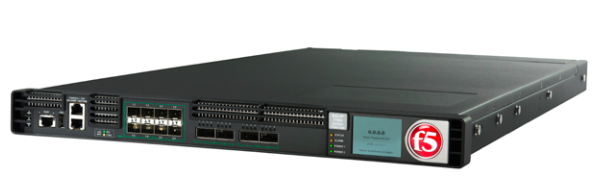
Source: F5
CDN and Edge-Delivered WAFs
5. Cloudflare WAF

Best for: Edge-deployed protection with minimal latency.
Strengths: Network-wide rule deployment and auto-updating managed rulesets.
Things to consider: Advanced rule and bot setup can be complex to tune.
Cloudflare WAF inspects HTTP and HTTPS requests at the edge of Cloudflare's global network, using managed and custom rules to identify and block malicious payloads before they reach an application. Because it is deployed across the entire network close to users, protection is enforced with very low added latency.
When a new vulnerability emerges, Cloudflare's security team can write and deploy a rule across the network within hours or minutes, often before customers patch their own code. Managed rulesets are run against large volumes of diverse traffic so they can be tuned to limit false positives, and the WAF is fully managed via API and fits into CI/CD workflows.
Key features include:
- OWASP Top 10 protection: Blocks OWASP Top 10 vulnerabilities such as SQL injection and cross-site scripting that target web applications and APIs, combining managed rules with customizable policies.
- Virtual patching for CVEs: When a CVE is announced for a library or framework, the WAF blocks exploits targeting that specific CVE, providing a protection layer while developers patch underlying code.
- Network-wide zero-day response: New rules can be written and deployed across the global network in hours or minutes when a vulnerability such as Log4j emerges, extending protection to customers quickly.
- Inline malware gateway: File-upload endpoints can be routed through WAF Content Scanning, which returns fields that allow dangerous files to be quarantined or rewritten on the fly. This adds inspection of uploaded content.
- Automated security updates: Auto-updating security rules use the network's scale and threat intelligence to protect against emerging threats without manual intervention, with low false positive rates from tuning against diverse traffic.
- Edge deployment and API management: The WAF runs on infrastructure that powers a large share of internet traffic, enforcing protection near the user with minimal latency, and it is fully managed via API for integration into developer workflows.
Limitations (as reported by users on G2):
- Interface learning curve: The interface is considered complex and takes time to learn and customize effectively.
- Pricing and billing: Users find pricing confusing and hard to map to the right plan, and some reported billing errors, duplicate charges, and difficulty cancelling subscriptions.
- Rule and bot setup effort: Configuring WAF rules and bot management is described as time-consuming and difficult to navigate, requiring significant tuning.
- Support responsiveness: A recurring complaint is that support can be hard to reach and slow to respond, including during high-priority incidents.
- Cost for smaller customers: Pricing escalates beyond the entry tier, and some small-business users feel the value does not justify the cost.
6. Akamai App & API Protector

Best for: Edge-first protection consolidating WAF, API, bot, and DDoS.
Strengths: All-in-one edge defense with a self-tuning adaptive engine.
Things to consider: Less granular customization and higher cost for smaller teams.
Akamai App & API Protector is a web application firewall delivered on Akamai's edge platform that identifies vulnerabilities and mitigates threats across web and API architectures. It is an all-in-one solution that combines WAF, Layer 7 DDoS defense, API discovery, sensitive data protection, and bot controls.
Its Adaptive Security Engine learns attack patterns and adapts protections to evolving threats, including OWASP Top 10 vectors, CVEs, and API exploits, while machine learning drives self-tuning to reduce manual effort. Every request is inspected in real time, the Behavioral DDoS Engine defends against volumetric attacks, and protection can be extended beyond the CDN with App & API Protector Hybrid for on-premises, hybrid cloud, and multi-CDN environments.
Key features include:
- Adaptive Security Engine: Learns attack patterns and automatically pushes the latest application and API defenses, including zero-day and CVE protections, updating security policies based on global threat intelligence.
- All-in-one protections: Combines WAF, Layer 7 DDoS defense, API discovery, sensitive data protection, and bot controls in a single solution, consolidating protections that are often spread across separate tools.
- Behavioral DDoS Engine: Provides automated defense against sophisticated volumetric and application-layer DDoS attacks, stopping threats at the edge before they reach origin infrastructure.
- API discovery and self-tuning: Automatically discovers APIs and uses machine learning-driven self-tuning to identify vulnerabilities and reduce false positives, lowering the effort of maintaining policies.
- DevOps integration: Configuration changes can be automated in a CI/CD pipeline through an open API, a CLI, or a Terraform provider, with a public Postman collection for testing, and a SIEM integration module and Splunk connectors support detection and forensics.
- Hybrid deployment and malware scanning: App & API Protector Hybrid extends WAF protection to on-premises, hybrid cloud, and multi-CDN environments, and a malware protection module scans files at the edge to prevent attackers from reaching the origin.
Limitations (as reported by users on PeerSpot):
- Limited customization: Predefined policies simplify setup, but advanced users find the control less granular than on-premises WAFs or some cloud competitors, and custom rules can be difficult to use.
- Cost for smaller organizations: The solution is consistently cited as pricier than competitors such as AWS WAF and F5, which can be a barrier for small and mid-size enterprises.
- Management console: The web interface and management console are described as not always intuitive and somewhat clunky to navigate.
- Setup and alert noise: Defining policies across diverse APIs is complex and time-consuming, with high alert noise until proper baselining is completed.
- Analytics clarity: Some reviewers want better analytics and clearer dashboards and reporting.
7. AWS WAF
Best for: AWS workloads needing managed-rule WAF with bot control.
Strengths: Managed rule packs and consolidated AWS-native configuration.
Things to consider: Native rules are basic; advanced needs add-ons and tuning.
AWS WAF is a web application firewall that protects web applications and APIs from common exploits using security rules that control bot traffic and block attack patterns such as SQL injection and cross-site scripting. It offers managed rules maintained by AWS, along with preconfigured protection packs tailored to workload types such as APIs, PHP applications, and web services.
A consolidated interface reduces security configuration steps, and guided onboarding activates preconfigured defaults. AWS WAF can filter requests based on conditions such as IP addresses, HTTP headers and body, or custom URIs, and it can monitor login and signup pages to address account takeover and fake account creation, while also providing automatic Layer 7 DDoS monitoring and mitigation.
Key features include:
- Managed rules and protection packs: AWS-maintained managed rules and preconfigured protection packs provide protection templates for specific workload types such as APIs, PHP applications, and web services, and these templates are updated to reflect current security needs.
- Custom request filtering: Rules can filter web requests based on conditions such as IP addresses, HTTP headers and body, or custom URIs, allowing targeted control over which traffic reaches an application.
- Bot traffic control: Bot traffic can be monitored, blocked, or rate-limited, and AI bots and agents can be charged for accessing content and APIs through Coinbase's x402 Facilitator with per-content pricing and payment verification at the edge.
- Account takeover and fraud prevention: Login pages can be monitored for unauthorized access using compromised credentials, and signup pages can be monitored for fake account creation using automated bots or disposable email addresses.
- Automatic Layer 7 DDoS protection: Continuously monitors and automatically mitigates application-layer DDoS events within seconds, designed to respond without manual intervention.
- Consolidated configuration and visibility: A single interface combines core security functions with partner protections and reduces deployment configuration steps by up to 80%, turning security data into actionable insights and ongoing recommendations.
Limitations (as reported by users on G2):
- Configuration learning curve: Users find setting up and navigating AWS WAF challenging, especially when getting started.
- Pricing predictability: Pricing is hard to understand, particularly for newcomers, and costs are a recurring concern as usage grows.
- Basic native rule set: The built-in rules are described as fairly basic; stronger DDoS mitigation requires the separate AWS Shield service and more sophisticated protection often needs third-party rule sets.
- Visibility into managed rules: Because AWS manages the WAF and its managed rule groups, some users report limited visibility and control over what is blocked.
- Dashboards and documentation: Default dashboards and metrics are seen as underpowered, and the documentation can be complex during initial implementation.
Conclusion
Cloud-based WAF solutions provide a comprehensive and adaptive defense layer for modern web applications and APIs. By combining scalable infrastructure, real-time threat detection, and advanced security features such as AI-driven analysis, bot mitigation, and client-side monitoring, these platforms address a wide range of attack vectors. Their integration with DevOps workflows, support for multi-cloud deployments, and reduced operational overhead make them a strategic choice for organizations seeking to enhance web application security without increasing complexity.