Summary: WAF services filter and block malicious HTTP/S traffic to protect web apps and APIs. Best for: Radware (automated hybrid protection), Cloudflare (low-latency edge), Imperva (confident block mode), AWS WAF (AWS-native).
What are Web Application Firewall Services?
Web application firewall (WAF) services monitor, filter, and block HTTP/S traffic to and from web applications. Their core function is to protect web applications from threats, including common cyberattacks such as SQL injection, cross-site scripting (XSS), and application-layer DDoS attacks. Unlike traditional firewalls that operate at the network level, WAFs deeply analyze web traffic and enforce rules that detect and mitigate malicious activity targeting application vulnerabilities.
WAF services can be deployed in various ways, including cloud-based, on-premises, or hybrid models, depending on organizational needs and infrastructure. They provide a critical security layer, especially for businesses exposing APIs and web apps to the internet. By acting as an intermediary between users and web servers, WAFs block attack attempts, help maintain application availability, protect sensitive data, and meet regulatory compliance standards.
Editor's note: This article has been updated to cover recent market trends and current information about tools to reflect features and capabilities in 2026.
In this article:
The table below summarizes the key differences between the web application firewall services covered in this article. We explore each solution in more detail in the sections that follow.
| Category |
Solution |
Best For |
Key Strengths |
Things to Consider |
| Cloud-Native/ CDN-Integrated |
Radware Cloud WAF |
Teams wanting automated, managed cloud WAF across hybrid environments |
Automated policy generation and integrated app protection modules |
Advanced features and tuning can require security expertise |
| Cloud-Native/ CDN-Integrated |
Cloudflare WAF |
Organizations wanting edge-deployed WAF with minimal latency |
Fast rule deployment and low-latency global edge enforcement |
Pricing and rule configuration can be complex to manage |
| Cloud-Native/ CDN-Integrated |
Akamai App & API Protector |
Enterprises securing apps and APIs across edge and hybrid setups |
Adaptive engine with all-in-one WAF, API, bot and DDoS defense |
Configuration and custom rules can be complex and costly |
| Cloud-Native/ CDN-Integrated |
AWS WAF |
Teams protecting AWS-hosted apps with managed rules |
Native AWS integration with managed rules and bot control |
Rule management and pricing can be complex to handle |
| Cloud-Native/ CDN-Integrated |
Azure WAF |
Organizations running web apps on Azure infrastructure |
Managed rules, centralized policies and Azure-native integration |
Setup and console can be complex for non-experts |
| Enterprise/ Hybrid/ Appliance |
Imperva WAF |
Enterprises needing WAF across cloud, hybrid and on-prem |
Tested managed rules enabling confident block-mode deployment |
Configuration and licensing can require expertise |
| Enterprise/ Hybrid/ Appliance |
F5 BIG-IP Advanced WAF |
Enterprises needing flexible WAF across hardware and cloud |
Behavioral L7 DoS defense and app-layer data encryption |
Configuration is complex and suits larger teams |
| Enterprise/ Hybrid/ Appliance |
Fortinet FortiWeb |
Teams wanting ML-based WAF across appliances and cloud |
Dual-layer ML detection with bot and API protection |
Scaling and support response can need attention |
Market Size and Growth Outlook
The web application firewall market is valued at USD 11.01 billion and is projected to reach USD 22.05 billion by 2030. This reflects a compound annual growth rate (CAGR) of 14.9% over the forecast period. The expansion is driven by increasing API-targeted attacks, stricter privacy regulations, and the continued migration of enterprise workloads to public cloud platforms
Key Growth Drivers
The rise of cloud-native and microservices architectures is also accelerating adoption. Containers, service meshes, and auto-scaling workloads require security controls that integrate into CI/CD pipelines and Kubernetes environments. Vendors are embedding WAF policies directly into development workflows, aligning with DevSecOps practices.
Stricter global data protection regulations further contribute to growth. GDPR enforcement in Europe, CCPA amendments in the United States, and updated HIPAA guidance have elevated WAF deployment from a security enhancement to a compliance requirement. Organizations increasingly seek solutions with built-in reporting aligned to regulatory mandates.
Edge and CDN integration is another driver. Vendors are deploying WAF engines at edge locations to filter traffic closer to users, reducing latency and infrastructure load. This approach supports performance-sensitive applications such as e-commerce, streaming, and AR services.
Restraints and Challenges
Despite strong growth, several factors constrain broader adoption. High false-positive rates remain a key concern. Misconfigured rule sets can block legitimate traffic, with some studies indicating up to 15% of valid requests may be affected. This risk is particularly problematic for eCommerce environments.
There is also a global cybersecurity workforce shortage, with a reported gap of four million professionals. Advanced WAF tuning requires expertise in application logic and attack patterns, which many organizations lack. As a result, demand for managed services is increasing.
Additional challenges include the cost of inspecting encrypted QUIC and HTTP/3 traffic and competition from open-source WAF solutions in price-sensitive markets.
Technology and Investment Direction
Vendors are investing heavily in artificial intelligence to reduce false positives and improve detection of zero-day threats. Machine-learning models deployed at the edge help analyze Layer 7 traffic in real time while maintaining low latency.
There is also a shift toward unified platforms that combine WAF, bot mitigation, DDoS protection, and content delivery capabilities. This convergence reduces operational complexity and aligns with enterprise demand for integrated security stacks.
Customizable Rulesets
Customizable rulesets allow organizations to tailor security policies to specific applications or business needs. Administrators can define what constitutes suspicious or unwanted behavior, such as blocking specific IP addresses, restricting certain request types, or creating exceptions for trusted traffic sources. Most enterprise WAFs offer graphical interfaces for editing rules and the flexibility to use industry-standard rule languages or templates.
Custom rulesets provide granular control over traffic and can be updated quickly to respond to newly discovered vulnerabilities or active attack campaigns. When configured effectively, they help minimize false positives, legitimate traffic incorrectly flagged as malicious, while tightening restrictions on known or emerging threats. The ability to update rules without downtime ensures minimal disruption to business operations when threat environments change.
Learn more in our detailed guide to WAF rules
Real-Time Monitoring and Logging
WAF services continuously observe web traffic, automatically identifying suspicious patterns such as unusual request rates, malformed payloads, or access attempts to sensitive endpoints. This visibility allows security teams to respond to incidents as they happen, reducing the risk of compromise and minimizing potential damage.
Comprehensive logging complements real-time monitoring by preserving a detailed record of web interactions, including both blocked and allowed traffic. These logs are critical for post-incident investigations, compliance audits, and ongoing security assessments. Providing access to rich logging data, WAFs enable organizations to track trends, identify persistent threats, and refine security policies based on actual attack data and observed behavior patterns.
Automated Threat Detection
Automated threat detection uses technologies such as signature-based detection, heuristic analysis, and machine learning algorithms to identify and block attacks without manual intervention. By continuously analyzing incoming traffic, WAF services can detect known exploit patterns and emerging threats that match predefined criteria or statistical models. This automation is vital for defending against large-scale and fast-evolving attacks that could overwhelm manual defenses.
The effectiveness of automated threat detection hinges on the regular updating of threat intelligence and detection signatures. Leading WAF providers maintain global threat intelligence networks, sharing real-time updates about new vulnerabilities or attack trends with deployed instances. As threats become more sophisticated and targeted, the ability to automatically adapt and update detection capabilities ensures that applications remain protected against both known and unknown exploits.
SSL/TLS Termination
SSL/TLS termination is a process where encrypted traffic between clients and web servers is decrypted at the WAF, allowing for inspection and analysis before forwarding unencrypted data to the application server. This feature is crucial for identifying threats hidden within encrypted requests, as a significant portion of web traffic today uses HTTPS for privacy and security. Without SSL/TLS termination, malicious payloads embedded in encrypted traffic could bypass inspection entirely.
By handling decryption, WAF services relieve backend servers from the resource-intensive process of SSL/TLS negotiation, potentially improving performance and simplifying certificate management. Centralized SSL/TLS termination also ensures that all inbound and outbound traffic is subjected to the same security checks.
Source Blocking
Source blocking enables WAFs to prevent malicious activity by denying traffic from identified sources based on IP addresses, geolocation, user-agent strings, or behavioral patterns. When a threat is detected, such as repeated failed login attempts, known bot behavior, or probing of application vulnerabilities, the source can be dynamically blocked to prevent further exploitation.
Advanced WAF services enhance source blocking through cross-module correlation and cross-application auto-source blocking. This means that threat intelligence gathered from one application or security module can inform blocking decisions across other applications and modules within the environment. For example, if a malicious actor is detected attacking one web app, their source can be automatically blocked across all protected applications, reducing lateral movement and response time.
Cross-module correlation helps unify threat detection by consolidating signals from different parts of the security stack, improving accuracy and reducing false positives. Auto-source blocking ensures rapid, consistent enforcement of blocking policies, enabling organizations to scale protection without relying on manual intervention.
Related content: Read our guide to web application firewall architecture
How we selected these tools: We shortlisted web application firewall services based on their ability to detect and block OWASP Top 10 and zero-day attacks, protect APIs, mitigate bots and application-layer DDoS, and support flexible cloud, hybrid, and on-premises deployment.
Cloud-Native / CDN-Integrated WAF Services
1. Radware Cloud WAF
Best for: Teams wanting automated, managed cloud WAF across hybrid environments.
Strengths: Automated policy generation and integrated app protection modules.
Things to consider: Advanced features and tuning can require security expertise.
Radware Cloud WAF is a cloud-native web application firewall delivered as part of Radware's Cloud Application Protection Services. It protects applications and APIs against OWASP Top 10 attacks and zero-day exploits, and pairs a negative security model with an AI-powered behavioral positive security model. The positive model automatically learns the behavior of each application and blocks traffic that deviates from legitimate patterns, which the vendor states helps reduce false positives.
The service runs across a global network of points of presence and protects traffic at layers 3 to 7. It bundles additional application protection modules, including DDoS protection, API protection, bot mitigation, account takeover protection, and client-side protection, and is delivered with managed services for emergency response.
Key features include:
- Auto traffic learning and application mapping: The service analyzes traffic to learn legitimate application behavior and automatically maps protected applications. It detects code changes and identifies potential vulnerabilities as applications evolve.
- Combined positive and negative security: Radware pairs a signature-based negative security model with an AI-powered behavioral positive security model. The positive model blocks traffic that deviates from learned legitimate behavior.
- Adaptive security policies: Cloud WAF continuously and automatically adapts security policies to optimize threat profiles. The vendor states this approach is aimed at maximizing protection while lowering false positives.
- Integrated application protection modules: The service includes built-in DDoS protection, API protection, bot mitigation, account takeover protection, and client-side protection. These modules are delivered as part of the wider Cloud Application Protection Services.
- Auto cross-module correlation: Cloud WAF analyzes threats detected in other security modules using AI to compile a broader attack narrative. Identified malicious sources can be blocked preemptively across modules.
- SecurePath architecture and managed service: SecurePath provides distributed protection without route changes or SSL key sharing, with a global network of points of presence for low latency. Managed services and automated analytics consolidate alerts for security teams.
Limitations (as reported by users on G2):
- Reporting depth: Some users indicate that reporting and logging could provide more granular detail to support in-depth threat analysis.
- Initial onboarding: A number of users note that initial setup and integration can take time and may benefit from vendor assistance.
- Feature familiarity: Some users describe a learning curve when first configuring the more advanced capabilities.
2. Cloudflare WAF

Best for: Organizations wanting edge-deployed WAF with minimal latency.
Strengths: Fast rule deployment and low-latency global edge enforcement.
Things to consider: Pricing and rule configuration can be complex to manage.
Cloudflare WAF is a cloud-delivered web application firewall that runs on Cloudflare's global network and inspects HTTP/S requests at the edge before they reach protected applications. Each request is evaluated against managed and custom rules together with threat intelligence collected across the network, and suspicious requests can be blocked, challenged, or logged while legitimate traffic is forwarded. Because enforcement happens close to the user, the vendor states protection adds minimal latency.
The WAF covers OWASP Top 10 vulnerabilities such as SQL injection and cross-site scripting, and provides virtual patching for newly announced CVEs. It is fully managed via API so it can fit into CI/CD workflows, and its rules update automatically as new threats emerge.
Key features include:
- Edge-based request inspection: Cloudflare inspects HTTP/S requests at the edge using managed and custom rules to identify and block malicious payloads before they reach the application. Enforcement runs across the global network close to users.
- Zero-day and CVE virtual patching: When a new vulnerability such as Log4j emerges, Cloudflare writes and deploys a rule across its network within minutes or hours. The WAF blocks exploits targeting specific announced CVEs.
- Managed and custom rulesets: The WAF includes OWASP core rules and Cloudflare-managed rules for zero-day protection. Organizations can also create custom rules to implement application-specific policies.
- Low-false-positive managed rules: Managed rulesets are run against large and diverse volumes of network traffic so they can be tuned for effectiveness. The vendor states this helps avoid blocking legitimate users.
- Inline malware and content scanning: File-upload endpoints can be piped through WAF Content Scanning to inspect uploaded files. Dangerous files can be quarantined or rewritten before reaching the origin.
- API-driven management and automation: The WAF is fully managed via API and integrates into CI/CD workflows. Security rules update automatically to protect against emerging threats without manual intervention.
Limitations (as reported by users on G2):
- Customer support: Some users report that support can be slow or unresponsive, particularly during incidents and on paid tiers.
- Pricing transparency: A number of users find pricing and billing confusing and report unexpected charges.
- Configuration effort: Several users note that configuring WAF rules and related controls can be time-consuming.
- Learning curve: Some users mention that advanced features can be challenging for those without a networking background.
3. Akamai App & API Protector

Best for: Enterprises securing apps and APIs across edge and hybrid setups.
Strengths: Adaptive engine with all-in-one WAF, API, bot and DDoS defense.
Things to consider: Configuration and custom rules can be complex and costly.
Akamai App & API Protector is a cloud-delivered web application firewall that secures web applications and APIs across edge, cloud, and hybrid environments. It inspects incoming requests in real time and uses an Adaptive Security Engine that learns attack patterns and updates protections to address evolving threats, including zero-day vulnerabilities and CVEs. The solution defends against OWASP Top 10 risks, API abuse, bots, and Layer 7 DDoS attacks.
The product consolidates several security technologies in one solution, combining the WAF with Layer 7 DDoS defense, API discovery, sensitive data protection, malware scanning at the edge, and bot controls. App & API Protector Hybrid extends WAF protections off the Akamai edge into on-premises, hybrid cloud, and multi-CDN environments.
Key features include:
- Adaptive Security Engine: A core technology learns attack patterns and automatically updates protections for evolving threats. It is designed to address zero-day vulnerabilities and CVEs without manual rule updates.
- Real-time traffic inspection: Every request is inspected in real time to defend against web application attacks, API abuse, bots, and DDoS activity. Detection runs at the edge before traffic reaches the origin.
- Behavioral DDoS and Layer 7 defense: An automated Behavioral DDoS Engine provides a suite of Layer 7 capabilities against sophisticated volumetric attacks. It is intended to mitigate application-layer DDoS attacks automatically.
- All-in-one protection stack: The solution combines the WAF with Layer 7 DDoS defense, API discovery, sensitive data protection, edge malware scanning, and bot controls. This consolidates multiple point tools into a single product.
- Automated updates and self-tuning: Akamai-managed updates and machine-learning-powered self-tuning reduce manual rule management. The vendor states this lowers the effort of identifying vulnerabilities and tuning policies.
- DevOps integration and hybrid coverage: Configuration changes can be automated through an open API, the Akamai CLI, or a Terraform provider for CI/CD pipelines. App & API Protector Hybrid extends protection to on-premises, hybrid cloud, and multi-CDN environments.
Limitations (as reported by users on PeerSpot):
- Configuration complexity: Some users describe the platform as not user-friendly and report that configuration, management, and monitoring can be complex.
- Custom rule flexibility: A number of users note that custom rules can be difficult to use and limited in certain scenarios.
- Cost: Several users report that the solution can be expensive relative to competitors, particularly for small and medium organizations.
- Analytics and dashboards: Some users indicate that analytics and dashboard clarity could be improved.
- Support response: A few users mention that technical support response times could be faster.
4. AWS WAF

Best for: Teams protecting AWS-hosted apps with managed rules.
Strengths: Native AWS integration with managed rules and bot control.
Things to consider: Rule management and pricing can be complex to handle.
AWS WAF is a cloud-native web application firewall that lets organizations monitor and control the HTTP/S requests forwarded to AWS resources. Users define rules that filter web requests based on conditions such as IP address, HTTP headers and body, or custom URI, and the service can allow, block, or count requests. It protects against common attack patterns such as SQL injection and cross-site scripting.
Beyond core filtering, AWS WAF provides bot control, rate limiting, and automatic Layer 7 DDoS mitigation, along with account takeover fraud prevention that monitors login and signup pages. Preconfigured protection packs and a consolidated interface are intended to reduce security configuration steps.
Key features include:
- Custom and managed rules: Users can build custom rules or apply AWS-managed rule groups and partner-provided rule sets. Managed rules help block common attack patterns and vulnerabilities without writing rules from scratch.
- Web request filtering: The service inspects and filters incoming requests based on conditions such as IP address, HTTP headers, body, and custom URI. This allows granular control over which requests reach AWS resources.
- Bot control and rate limiting: AWS WAF can monitor, block, or rate-limit common bot traffic to reduce abuse. It can also collect payment from AI bots and agents accessing content and APIs through a payment facilitator.
- Automatic Layer 7 DDoS protection: The service is designed to continuously monitor and automatically mitigate application-layer DDoS events within seconds. This operates as part of the AWS edge protections.
- Account takeover fraud prevention: AWS WAF monitors login pages for unauthorized access using compromised credentials. It also monitors signup pages for fake account creation by automated bots or disposable email addresses.
- Protection packs and centralized visibility: Preconfigured protection packs provide templates for specific workloads such as APIs, PHP applications, and web services. A consolidated interface combines core security functions to reduce deployment steps.
Limitations (as reported by users on PeerSpot):
- Rule structure complexity: Some users report that the rule structure can be complex and difficult to maintain, and that applying the right rules takes effort.
- Pricing and billing: A number of users find pricing and billing tagging confusing and note that costs can rise unexpectedly.
- Rule management automation: Several users indicate that rule management lacks automation, requiring repetitive manual work for each application.
- Native security depth: Some users note gaps in native protection, such as limited bot defense or DDoS mitigation compared with dedicated competitors.
- Interface and visibility: A few users mention that the interface makes it hard to locate alerted areas and lacks a graphical deployment overview.
5. Azure Web Application Firewall

Best for: Organizations running web apps on Azure infrastructure.
Strengths: Managed rules, centralized policies and Azure-native integration.
Things to consider: Setup and console can be complex for non-experts.
Azure Web Application Firewall is a cloud-native service that protects web applications and APIs from common threats, particularly those in the OWASP Top 10 such as SQL injection and cross-site scripting. It uses managed rule sets and a detection engine to identify and block malicious traffic, and supports custom rules and centralized configuration across applications. It can be deployed on Azure Application Gateway or Azure Front Door.
The service integrates with Azure security and monitoring tools to provide visibility and compliance support, and requires no additional software agent. Detection and protection rules are regularly updated by Microsoft.
Key features include:
- Managed rule sets: Preconfigured and regularly updated rule sets help detect known vulnerabilities. The detection engine is intended to reduce false positives while maintaining performance.
- Centralized policy management: Organizations can define and customize security policies and apply them across multiple web applications from a single control point. This supports consistent protection at scale.
- Monitoring and analytics: The service integrates with Azure Monitor and Microsoft Sentinel for detailed logging, alerting, and analysis. Diagnostic information includes security alerts and detailed reporting on detected threats.
- Custom rule definition: Users can define custom detection and blocking logic based on request attributes such as IP address, URI, query strings, and HTTP headers. This complements the managed rule sets.
- Compliance enforcement: Azure Policy can be used to standardize WAF configurations and assess compliance at scale. This helps enforce organizational standards across environments.
- Edge integration and agentless deployment: The WAF works with Azure Front Door to provide security and accelerated delivery at edge locations. It requires no additional software agent, which simplifies setup and maintenance.
Limitations (as reported by users on G2):
- Deployment complexity: Some users report that deployment and setup can be complex, particularly for users without prior Azure expertise.
- Cost: A number of users describe the service as expensive, especially the v2 SKU, and note that pricing can be complex.
- Console usability: Several users indicate that the console and interface feel dated and are not beginner-friendly.
- Rule manageability: Some users note manageability gaps, such as the inability to annotate WAF rules and limited support for certain configurations.
Enterprise/Hybrid/Appliance-Based WAF Solutions
6. Imperva WAF

Best for: Enterprises needing WAF across cloud, hybrid and on-prem.
Strengths: Tested managed rules enabling confident block-mode deployment.
Things to consider: Configuration and licensing can require expertise.
Imperva Web Application Firewall protects web applications and APIs against threats such as SQL injection, cross-site scripting, and other OWASP Top 10 vulnerabilities. The platform uses managed rules that are written and tested in production by the Imperva Threat Research team, which the vendor states allows organizations to deploy in blocking mode with near-zero false positives and minimal configuration. It supports deployment across cloud, hybrid, and on-premises environments.
Imperva offers multiple deployment models to fit different requirements, including Cloud WAF delivered as SaaS, WAF Gateway for legacy and on-premises applications with data sovereignty needs, and Elastic WAF for Kubernetes and DevOps environments. Attack Analytics uses machine learning to correlate alerts into incident narratives.
Key features include:
- Tested managed rules: Rules are written and validated in production by the Imperva Threat Research team, enabling block-mode deployment with near-zero false positives. Daily updates and real-time updates for critical threats are pushed to customers.
- Attack Analytics: Machine learning correlates large volumes of security alerts into digestible incident narratives. Each narrative includes context such as attack origin, methods, and severity to reduce alert fatigue.
- Flexible deployment models: Imperva provides Cloud WAF as SaaS, WAF Gateway for on-premises and legacy applications, and Elastic WAF for Kubernetes and cloud-native environments. This supports public cloud, private cloud, hybrid, and on-premises deployments.
- Automated deployment and infrastructure as code: An Imperva Terraform provider and modular configuration automate Cloud WAF deployment. This lets teams manage resources across environments using infrastructure-as-code practices.
- OWASP Top 10 protection: The WAF blocks common application attacks including SQL injection, cross-site scripting, and related web exploitation techniques. Managed rules target known and emerging attack vectors.
- Enterprise SSL management and upload scanning: Full SSL connection management provides automated certificate renewal and centralized observability. Upload Scan and Control validates, scans, and controls files before they reach application backends.
Limitations (as reported by users on G2):
- Configuration complexity: Some users report that configuration and setup can require significant technical expertise.
- False positives: A number of users note that the WAF can produce false positives that require manual tuning.
- Interface and reporting: Several users describe the interface as clunky and find reporting and log downloads confusing.
- Cost and licensing: Some users indicate that the product is expensive and that licensing terms, such as counting staging and production URLs separately, can be restrictive.
7. F5 BIG-IP Advanced WAF

Best for: Enterprises needing flexible WAF across hardware and cloud.
Strengths: Behavioral L7 DoS defense and app-layer data encryption.
Things to consider: Configuration is complex and suits larger teams.
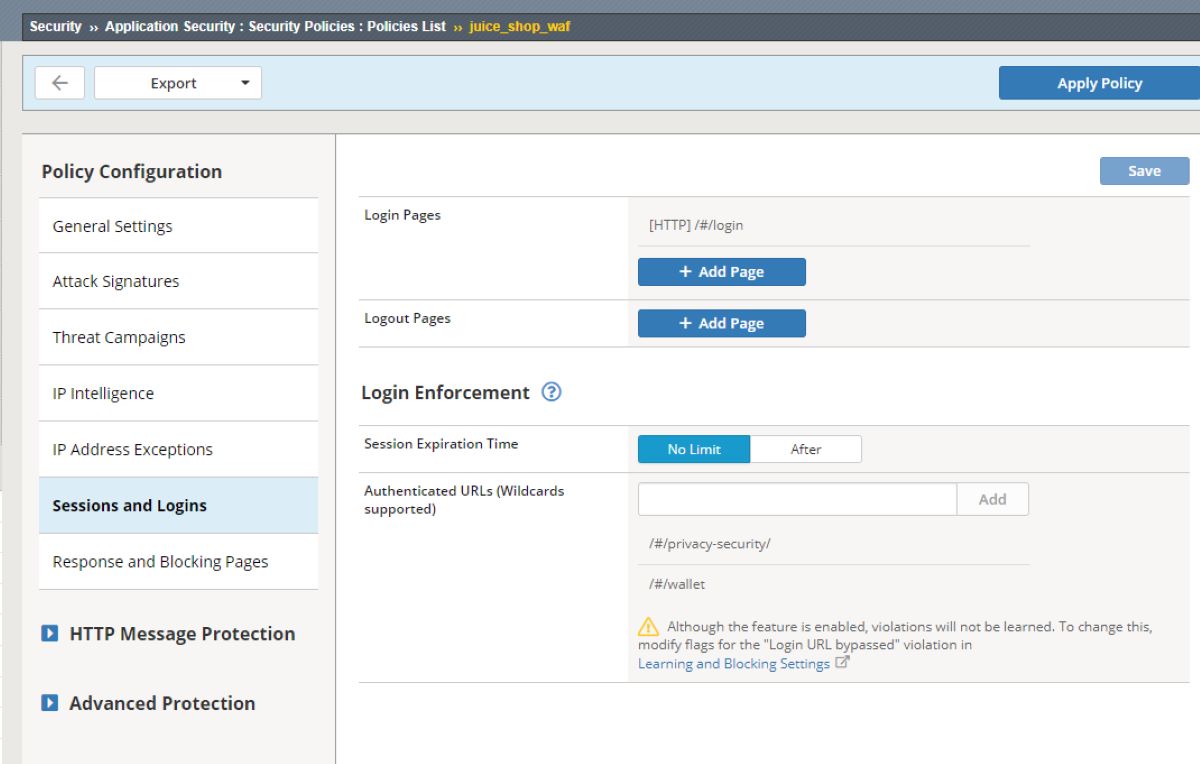
F5 BIG-IP Advanced WAF protects applications, APIs, and data against threats such as zero-day vulnerabilities, application-layer DoS attacks, threat campaigns, application takeover, bots, and credential theft. It combines behavioral analytics, machine learning, and threat intelligence services to detect attacks that bypass signature and reputation-based defenses. The product defends against OWASP Top 10 threats and can protect Model Context Protocol traffic against OWASP MCP Top 10 vulnerabilities.
BIG-IP Advanced WAF supports multiple deployment models, including software on hypervisors and private cloud, public cloud providers such as AWS, Azure, and Google Cloud, and high-performance hardware appliances. It provides a dynamic dashboard, guided configurations, a learning engine, and granular policies for microservices and APIs.
Key features include:
- Behavioral analytics and Layer 7 DoS mitigation: Behavioral DoS uses analytics and machine learning to provide application-layer DoS detection and mitigation. This is intended to identify attacks that evade traditional defenses.
- API protocol security: The product secures APIs using protocol validation for formats such as REST, JSON, XML, GraphQL, and GWT. It also extends protection to Model Context Protocol traffic used in agentic AI.
- In-browser data encryption: Sensitive data is encrypted at the application layer to protect against data-extracting malware and man-in-the-browser attacks. This helps protect information entered in the browser.
- Stolen credential and bot protection: The WAF protects against brute-force attacks that use stolen credentials and provides proactive bot defense. This targets automated attacks and account takeover attempts.
- Security as code: Declarative, API-based deployment and configuration enables delivering security as code. This supports integration into DevOps and CI/CD workflows.
- Flexible deployment options: BIG-IP Advanced WAF runs as software on leading hypervisors and private clouds, on major public cloud providers, and on high-performance hardware appliances. Consumption options include pay-as-you-go and bring-your-own-license.
Limitations (as reported by users on G2):
- Configuration complexity: Some users report that the configuration interface is complex and non-intuitive, requiring deep expertise to navigate.
- Cost: A number of users describe the product as expensive and positioned primarily for large enterprises.
- Licensing terms: Several users note changes to licensing, such as per-CPU models, and short evaluation license periods.
- Stability on updates: Some users mention stability issues such as appliances hanging or configurations reverting during operating system updates.
Source: F5
8. Fortinet FortiWeb

Best for: Teams wanting ML-based WAF across appliances and cloud.
Strengths: Dual-layer ML detection with bot and API protection.
Things to consider: Scaling and support response can need attention.
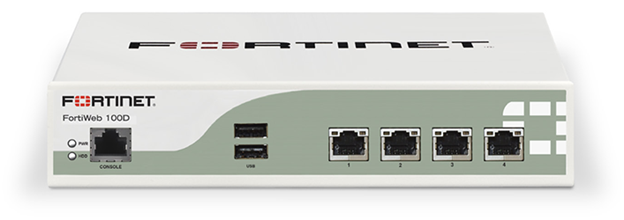
Fortinet FortiWeb is a web application firewall that protects web applications and APIs from threats such as OWASP Top 10 vulnerabilities, automated bot attacks, and application-layer DDoS attacks. It uses a dual-layer machine learning approach that models each application to detect malicious behavior, identify anomalies, and reduce false positives, including AI-generated zero-day attacks. The platform also leverages FortiAI-Assist and a built-in SOC agent to support security operations.
FortiWeb is available in multiple form factors, including hardware appliances with hardware-based acceleration, virtual machines, containers, public cloud, and FortiWeb Cloud WAF-as-a-Service. It integrates with the Fortinet Security Fabric, including FortiGate next-generation firewalls and FortiSandbox.
Key features include:
- Dual-layer machine learning detection: FortiWeb applies dual-layer machine learning models to each application to detect malicious behavior and anomalies. This approach is intended to identify zero-day attacks while reducing false positives.
- Bot mitigation: The platform detects and blocks malicious bot traffic using techniques such as bot deception, biometric detection, and machine learning. It is designed to allow legitimate bots while reducing reliance on CAPTCHAs.
- API discovery and protection: Machine learning automatically discovers APIs by continuously analyzing application traffic. FortiWeb then applies positive security model policies based on schema specifications such as OpenAPI, XML, and JSON.
- Client-side protection: FortiWeb monitors browser-side scripts and detects threats such as third-party script injection, DOM manipulation, and form hijacking. This addresses PCI DSS requirements to monitor scripts on payment pages.
- Security Fabric integration and analytics: FortiWeb integrates with FortiGate next-generation firewalls and FortiSandbox to defend against advanced persistent threats. Advanced analytics and FortiAI-Assist support threat hunting and forensics.
- Flexible form factors: The product is available as hardware appliances with hardware-based acceleration, virtual machines, containers, and public cloud. FortiWeb Cloud WAF-as-a-Service provides a SaaS option that requires no hardware or software.
Limitations (as reported by users on PeerSpot):
- Scalability and high availability: Some users report that scaling and high availability can require additional and costly hardware upgrades.
- Upgrades and firmware quality: A number of users note that frequent patches can introduce bugs and that upgrade procedures and centralized management could be improved.
- Support response: Several users indicate that technical support response times and expertise could be improved.
- Cloud service maturity: Some users mention that the cloud-based service is less mature than dedicated cloud providers and that the product remains more focused on on-premises deployment.
Source: Fortinet
Compatibility
Compatibility is a primary concern when choosing a WAF service. Organizations must ensure that the selected WAF integrates smoothly with their existing application infrastructure, including web servers, cloud platforms, content delivery networks, and APIs. Compatibility affects deployment speed and influences long-term system stability, minimizing disruption and reducing risk associated with integration.
Support for protocols, frameworks, and third-party services is essential. For instance, if your business relies on a mix of legacy and cloud-native applications or APIs, the WAF should accommodate both without extensive custom work. Evaluating the vendor's track record with your preferred platforms and considering the extensibility of the WAF will help future-proof your security investment.
Scalability
Scalability ensures the WAF can keep pace with changing business demands and fluctuating traffic loads. For growing organizations or those launching new applications, the ability to scale protection seamlessly is crucial to avoid bottlenecks or security blind spots. Cloud-based and distributed WAF services typically handle scale more gracefully, offering automatic resource allocation during peak periods or traffic surges.
Beyond handling higher traffic volumes, scalability also relates to policy management and automation. As the number of web assets grows, the WAF's management interface should allow easy expansion without adding administrative overhead. Options to clone policies, apply templates, or deploy updates across tens or hundreds of applications make enterprise-scale management feasible.
Deployment Options
WAF services offer several deployment models to accommodate different infrastructure and security needs. Cloud-based WAFs are delivered as a service, making them easy to deploy and scale with minimal infrastructure overhead. They are suitable for organizations with distributed applications or those seeking fast deployment and simplified management.
On-premises WAFs, installed directly within the organization's data center, provide full control over security configurations and data handling, which may be necessary for industries with strict regulatory or data sovereignty requirements. Hybrid deployments combine both approaches, helping protect some assets on-premises while leveraging cloud-based WAFs for others.
Management and Maintenance
Effective management and regular maintenance are critical for the ongoing effectiveness of a WAF. Organizations need tools and interfaces that simplify policy configuration, incident response, and performance monitoring. An ideal WAF solution offers dashboards, automated alerts, and comprehensive reporting, enabling teams to respond quickly to security incidents and maintain optimal configurations with minimal manual effort. Maintenance involves updating rulesets, applying patches, and staying current with threat intelligence.
Mature WAF services provide automated update mechanisms, reducing the labor and risk associated with manual updates. Regular maintenance ensures defenses remain effective against newly discovered vulnerabilities and evolving attack methods, ultimately sustaining the value and reliability of the security investment.
Compliance Requirements
Many organizations are governed by regulatory compliance standards, such as PCI DSS for payment processing or HIPAA for healthcare data. A WAF service must support the relevant compliance requirements by offering configurable logging, detailed audit trails, and proof of security controls. Failure to meet these standards can result in fines, reputational damage, or even loss of business relationships.
WAFs can help automate compliance by enforcing policies that meet or exceed regulatory requirements, generating reports that demonstrate adherence, and alerting administrators when deviations occur. Some vendors provide specialized compliance templates or pre-built rule sets to simplify implementation. When evaluating solutions, prioritize WAFs that provide clear compliance mapping and ongoing support for the certifications and standards critical to your business.
Conclusion
A well-chosen web application firewall is essential for defending against evolving web-based threats while ensuring application availability and data security. By evaluating WAF services against criteria like compatibility, scalability, deployment flexibility, management ease, and compliance support, organizations can align their security investments with operational needs and risk profiles.