What are AI-Powered Protection Solutions?
AI-powered protection solutions are security platforms that use artificial intelligence and machine learning to identify, analyze, and block cyber threats, particularly malicious bots. These solutions go beyond static rule-based methods by adapting to evolving attack techniques, learning from new data, and making real-time decisions.
They can detect subtle patterns of malicious activity, distinguish between legitimate and harmful automation, and respond accurately. This adaptability is critical as attackers increasingly use sophisticated bots to evade traditional defenses.
These solutions are deployed across various digital environments, including websites, APIs, and mobile applications. They provide automated protection without the need for constant manual updates or tuning. By leveraging large datasets and advanced algorithms, AI-powered systems can identify emerging threats, reduce false positives, and maintain a smooth user experience.
This is part of a series of articles about bot protection.
In this article:
Traditional bot protection solutions rely on static rules, signatures, and denylists to block known threats. These methods are effective against basic, well-known attack patterns but struggle to keep up with rapidly evolving bots. Attackers often modify their tactics to bypass these static defenses, leading to frequent manual rule updates and significant maintenance overhead. Traditional systems can also produce a high rate of false positives, mistakenly blocking legitimate users and creating friction for customers.
AI-powered bot protection uses machine learning and behavioral analysis to recognize new and unknown threats. These systems continuously adapt by analyzing large amounts of real-time data and learning from every interaction. As a result, they can detect subtle, novel attack patterns and respond to threats that traditional solutions miss. AI-driven platforms also reduce false positives by understanding user behavior in context, providing more accurate protection with less impact on legitimate traffic.
1. AI-Based Cross-Module Correlation
AI-powered bot protection platforms collect signals from multiple security and application layers, including web traffic, API requests, device fingerprints, authentication systems, network telemetry, and threat intelligence feeds. Instead of analyzing these signals in isolation, AI correlates them to identify relationships that indicate malicious activity. A request that appears legitimate when viewed alone may become suspicious when linked to unusual login behavior, abnormal API usage, or activity from known malicious infrastructure.
Machine learning models can process large volumes of correlated data in real time, uncovering attack patterns that traditional tools often miss. This approach is particularly effective against distributed and low-and-slow bot attacks, where malicious activity is spread across many IP addresses, devices, or accounts. Cross-module correlation improves detection accuracy while reducing false positives by evaluating behavior in a broader operational context.
2. Behavioral Analysis
Behavioral analysis focuses on how users and automated systems interact with an application rather than relying solely on identifiers such as IP addresses or user agents. AI models evaluate factors such as mouse movements, typing patterns, navigation sequences, request timing, session duration, and interaction frequency. These behavioral signals help distinguish legitimate users from automated bots, even when bots use residential proxies or attempt to mimic human activity.
Because behavioral models continuously learn from new interactions, they can adapt to changing attack techniques without requiring manual rule updates. The system establishes baselines for normal behavior and identifies deviations that may indicate credential stuffing, account takeover attempts, scraping, or automated abuse. This allows organizations to detect sophisticated bots that can evade traditional signature-based controls.
3. AI-Based Signature Generation
Traditional signatures are created manually after security teams identify a known threat pattern. AI-powered systems automate this process by analyzing malicious traffic and generating new detection signatures based on observed attack characteristics. These signatures can include combinations of behavioral indicators, request attributes, device properties, and other patterns associated with bot activity.
Automated signature generation significantly reduces the time required to respond to emerging threats. As new attack techniques appear, machine learning models can identify common characteristics and create detection rules with minimal human intervention. This enables security teams to block previously unseen bot campaigns faster while maintaining protection against evolving attack methods.
4. AI-Powered Incident Management (AI-Driven SOC)
AI-driven security operations centers (SOCs) use artificial intelligence to prioritize, investigate, and respond to bot-related security incidents. These systems analyze alerts from multiple security tools, correlate related events, and determine which incidents pose the greatest risk. By automating much of the investigation process, AI helps security teams focus on the most critical threats instead of manually reviewing large volumes of alerts.
AI can also recommend or execute response actions such as blocking malicious IP addresses, challenging suspicious sessions, rate limiting abusive traffic, or escalating incidents for further investigation. Continuous analysis of incident outcomes allows the system to improve future detection and response decisions. This reduces response times, improves operational efficiency, and strengthens overall protection against automated attacks.
Real-Time Detection and Mitigation
Real-time detection and mitigation are core features of AI-powered bot protection. These systems continuously monitor traffic and user interactions, identifying suspicious activity as it happens. When a potential threat is detected, automated mitigation steps, such as blocking, rate limiting, or presenting a CAPTCHA, are triggered instantly. This immediate response helps prevent bots from causing damage, stealing data, or overwhelming services.
By operating in real time, these solutions minimize the window of opportunity for attackers and reduce the risk of successful breaches. The speed and automation of AI-driven detection ensure that legitimate users are not impacted by slow manual interventions. Organizations benefit from reduced downtime and lower fraud rates, as threats are neutralized before they escalate.
Granular Bot Classification
Granular bot classification enables AI-powered solutions to distinguish between different types of bots, such as scrapers, credential stuffers, click fraud bots, and benign crawlers. Rather than applying blanket policies, these systems analyze behavioral, contextual, and fingerprint data to categorize each bot. This allows for tailored responses, blocking malicious bots while allowing beneficial ones like search engine crawlers to operate.
Fine-grained classification also helps organizations understand the specific threats they face and prioritize their security efforts. By providing detailed insights into the nature and intent of detected bots, AI-driven solutions support better decision-making and resource allocation. This targeted approach reduces false positives and supports business operations.
Automated Response
Automated response is a key advantage of AI-powered bot protection. When malicious activity is detected, the system can take predefined actions without human intervention. These actions may include blocking traffic, requiring additional authentication, or triggering alerts for further investigation. Automation reduces the time needed to contain threats and lowers the workload for security teams.
The ability to respond automatically also ensures consistency in enforcement and reduces the risk of human error. As bot attacks become more frequent and sophisticated, automated responses enable organizations to scale their defenses. This helps maintain service availability, protect sensitive data, and reduce operational costs associated with manual threat management.
API and Mobile App Protection
Modern bots frequently target APIs and mobile applications, seeking to exploit vulnerabilities or automate fraudulent actions. AI-powered solutions extend protection beyond web interfaces to cover these entry points. By analyzing API traffic and mobile app interactions, these systems can detect abnormal patterns, unauthorized access attempts, and suspicious automation.
Protecting APIs and mobile apps requires techniques such as monitoring API call rates, validating user tokens, and detecting emulators or rooted devices. AI-driven platforms adapt to the characteristics of these environments, providing protection across digital channels. This helps organizations stay secure as their digital footprint expands beyond traditional websites.
Dashboard and Analytics Visibility
Dashboards and analytics are important for monitoring and improving bot protection efforts. AI-powered solutions provide real-time visibility into traffic patterns, detected threats, and system responses through dashboards. Security teams can drill down into specific incidents, analyze trends, and assess the effectiveness of mitigation strategies.
Analytics also support ongoing optimization by highlighting emerging threats and identifying areas for improvement. By providing actionable insights, dashboards help organizations fine-tune their defenses and demonstrate the value of their security investments to stakeholders.
1. Radware
Radware Bot Manager is an AI-powered bot protection solution that detects and mitigates malicious bots and AI-driven automated threats across websites, mobile applications, and APIs. It uses a multi-layered approach that combines behavioral analysis, machine learning, fingerprinting, bot intelligence, and real-time mitigation to distinguish between legitimate users, good bots, malicious bots, AI crawlers, and AI agents. Radware Bot Manager helps protect against account takeover, credential stuffing, scraping, API abuse, ad fraud, form spam, payment fraud, and other automated attacks while preserving a low-friction user experience.
General features include:
- Bot protection across web, mobile, and APIs: Protects websites, native mobile applications, and APIs from automated threats and malicious bot activity.
- Real-time bot detection and mitigation: Identifies and blocks sophisticated malicious bots in real time while allowing legitimate users and approved bots to continue.
- Granular bot classification and visibility: Provides real-time visibility into different types of bots, AI crawlers, AI agents, and non-human traffic.
- Protection against common bot attacks: Defends against account takeover, credential stuffing, scraping, API abuse, ad fraud, form spam, payment fraud, and application-layer abuse.
- CAPTCHA-less mitigation options: Uses advanced mitigation techniques, including CAPTCHA-less challenges, to reduce friction for legitimate users.
AI/ML features include:
- AI-based behavioral algorithms: Uses behavioral algorithms to identify sophisticated bad bots, AI crawlers, and AI agents that mimic human behavior.
- Intent-based deep behavioral analysis: Analyzes visitor intent using behavioral signals such as browsing patterns, mouse movements, keystrokes, and URL traversal.
- Machine learning and fingerprinting: Combines machine learning, browser and device fingerprinting, and anomaly detection to distinguish genuine users from automated traffic.
- AI-based real-time signature generation: Generates signatures based on detected bot behavior to block attacks in real time.
- AI-based correlation engine: Correlates signals across applications and traffic patterns to identify and block malicious actors earlier in the attack lifecycle.
2. Cloudflare Bot Management

Cloudflare Bot Management is an AI-powered bot protection solution that identifies and stops malicious automated traffic while allowing legitimate users to pass without friction. It analyzes incoming requests across Cloudflare's global network, assigns a bot probability score to each request, and applies actions such as blocking or allowing traffic.
General features include:
- Real-time traffic inspection and mitigation: Continuously monitors every HTTP request and applies actions, block, allow, log, or rate limit, based on risk level
- Comprehensive attack protection: Defends against credential stuffing, content scraping, inventory hoarding, bot-driven fraud, and DDoS attacks
- Global network intelligence: Uses data from internet properties to improve detection accuracy and respond to emerging threats
- CAPTCHA-free user experience: Uses invisible verification methods, including privacy-first token mechanisms, to validate users
- Simple deployment and low maintenance: Provides out-of-the-box protection with automatic rule recommendations
AI/ML features include:
- Global machine learning models: Trained on large volumes of daily requests across Cloudflare's network to distinguish human and automated traffic
- Bot scoring system: Assigns each request a score from 1 to 99, indicating the likelihood of being a bot
- Behavioral anomaly detection: Uses unsupervised learning to establish normal traffic baselines and identify deviations
- Continuous model updates: Improves detection models using fresh network data
- Multi-layered detection engine: Combines machine learning, behavioral analysis, heuristics, and fingerprinting into a unified scoring system
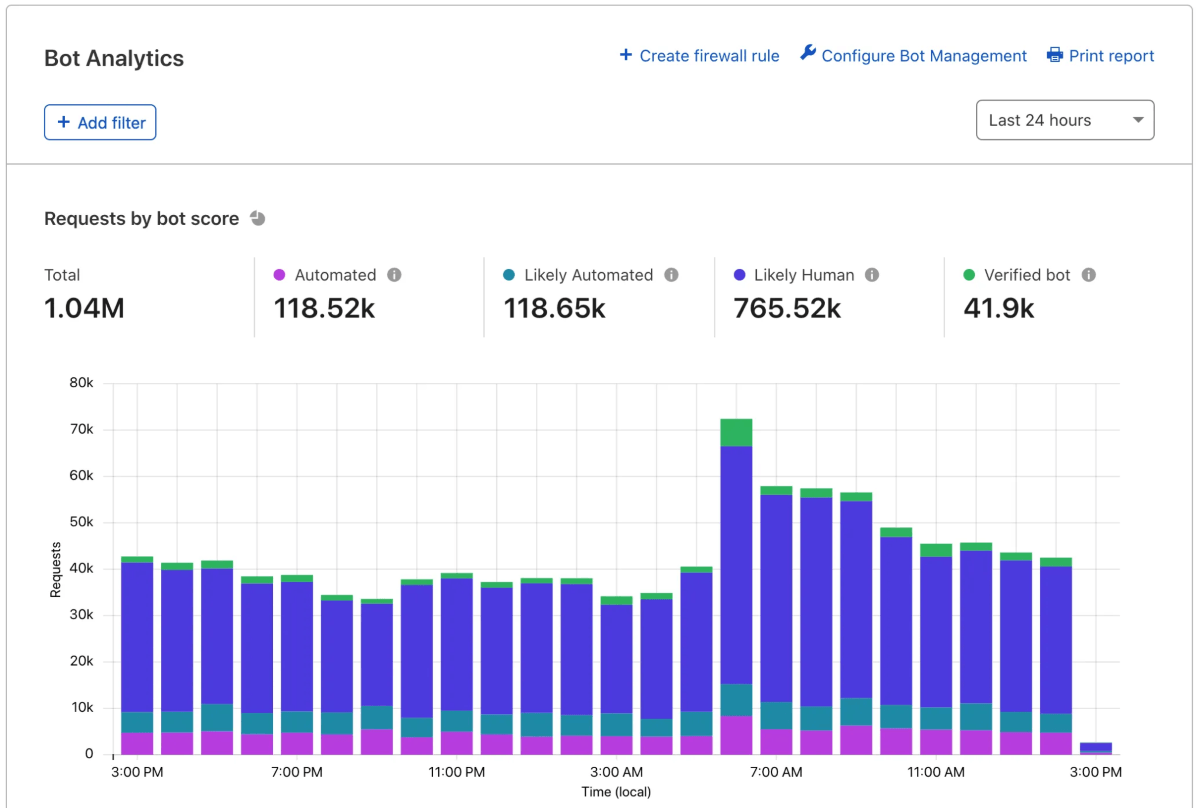
Source: Cloudflare
3. Imperva Advanced Bot Protection

Imperva Advanced Bot Protection is an AI-powered security solution that protects websites, APIs, and mobile applications from automated attacks while maintaining user experience. It uses a multi-layered detection approach that analyzes hundreds of signals to distinguish between human users, good bots, and malicious bots.
General features include:
- Bot protection coverage: Secures websites, APIs, and mobile applications against OWASP automated threats, including fraud and business logic abuse
- Multi-layered detection framework: Combines detection techniques to analyze traffic across many dimensions for classification
- Granular control and customization: Enables configuration of policies, thresholds, and mitigation strategies
- Real-time monitoring and response: Tracks traffic and allows action against suspicious or malicious activity
- Reporting and dashboards: Provides reports with visibility into traffic patterns, attack vectors, and mitigation outcomes
AI/ML features include:
- Machine learning-driven detection: Uses ML models to analyze traffic patterns and identify malicious bot behavior
- Behavioral analysis at scale: Monitors user interactions and request patterns to detect deviations from normal behavior
- High-dimensional fingerprinting: Evaluates over 700 attributes to create bot fingerprints
- Integrated threat intelligence: Incorporates threat feeds to identify known malicious actors and emerging attack techniques
- Continuous learning and validation: Improves detection models through testing against historical data and real-world traffic
4. HUMAN Security Bot Protection

HUMAN Security Bot Protection is an AI-driven platform that detects and mitigates malicious bots and automated fraud across digital channels while preserving a low-friction experience for legitimate users. It uses large-scale telemetry, machine learning, behavioral analysis, and fingerprinting to analyze each interaction.
General features include:
- Bot and fraud protection: Defends against credential stuffing, account takeover, scraping, carding, inventory hoarding, fake accounts, and API abuse
- Frictionless user experience: Mitigates malicious traffic using invisible or low-friction verification methods
- Edge-based mitigation: Blocks malicious bots at the first request
- Flexible response actions: Supports hard blocks, honeypots, misdirection, and verification challenges
- Full traffic visibility and control: Provides insight into known bots, crawlers, and AI agents with response options
AI/ML features include:
- Large-scale machine learning models: Uses adaptive models to analyze and classify interactions in real time
- High-dimensional signal analysis: Evaluates interaction signals to distinguish human and bot behavior
- Behavioral analysis engine: Detects anomalies in user activity patterns
- Intelligent fingerprinting: Builds device and interaction fingerprints to track bots across sessions
- Real-time decisioning: Processes and scores interactions to enable mitigation actions
5. F5 Distributed Cloud Bot Defense

F5 Distributed Cloud Bot Defense is an AI-powered bot protection solution that detects and mitigates automated threats across web, mobile, and API environments. It analyzes traffic using behavioral signals and device intelligence to uncover automation, even as attackers modify their tactics.
General features include:
- Advanced bot mitigation: Protects against bots that cause fraud, data theft, and service disruption
- Cross-channel protection: Secures web applications, APIs, and mobile apps
- Flexible deployment options: Supports on-premises, cloud, hybrid, and multi-cloud environments
- Prebuilt integrations and connectors: Enables deployment with platforms like Salesforce Commerce Cloud, Adobe Commerce, and CDNs
- WAAP integration: Operates as part of a web application and API protection platform
- High-efficacy detection: Focuses on identifying bots as attackers change tactics
AI/ML features include:
- Machine learning-based detection: Uses AI to process traffic data and identify bot activity
- Behavioral analytics engine: Analyzes user behavior patterns to distinguish between human and automated interactions
- Rich signal collection: Gathers device and interaction signals to improve detection
- Adaptive threat detection: Updates models to detect attacker retooling and new bot techniques
- Human-in-the-loop intelligence: Incorporates expert analysis to refine detection models and generate rulesets
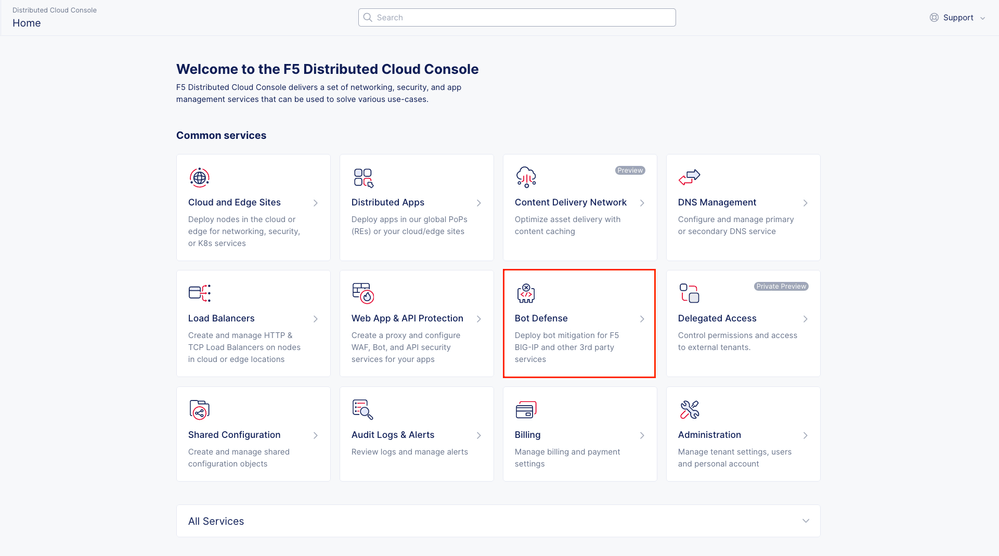
Source: F5
Conclusion
AI-powered bot protection solutions provide adaptive, real-time defense against increasingly sophisticated automated threats. By focusing on behavior, context, and continuous learning, they detect attacks that static systems miss while reducing false positives. As bots evolve and target multiple channels, these solutions help organizations maintain security, protect user experience, and scale defenses without relying on constant manual updates.