Summary: Botnet defense tools detect, block, and mitigate automated bot traffic across apps, APIs, and networks. Best overall: Radware Bot Manager; also strong: DataDome, Cloudflare Bot Management, and Imperva Advanced Bot Protection.
What Are Botnet Defense Tools?
Botnet defense tools are specialized security solutions designed to detect, prevent, and mitigate the risks posed by botnets. A botnet is a network of compromised devices controlled remotely by malicious actors, and it can be used for a range of malicious activities such as distributed denial of service (DDoS) attacks, data theft, or spreading malware.
Organizations deploy botnet defense tools to identify infected devices, disrupt command-and-control (C&C) communications, and block malicious traffic originating from these networks. These tools use a combination of detection techniques such as traffic analysis, behavioral analytics, signature matching, and machine learning to spot botnet-related activities.
Their role is critical in modern cybersecurity strategy, given the prevalence and sophistication of current botnet operations. Botnet defense tools work both at the network perimeter and within endpoints to monitor activity patterns, analyze anomalies, and respond quickly to emerging threats, helping organizations enforce security and maintain system integrity.
Editor’s note: This article has been updated to cover recent market trends and current information about tools to reflect features and capabilities in 2026.
This is part of a series of articles about bot protection.
In this article:
The table below summarizes the key differences between the botnet defense tools covered in this article. We explore each of them in more detail in the sections that follow.
| Category |
Solution |
Best For |
Key Strengths |
Things to Consider |
| Dedicated Bot Management Solutions |
Radware Bot Manager |
Protecting web apps, mobile apps, and APIs from AI-driven bots |
AI behavioral detection with CAPTCHA-less crypto challenges |
Interface and setup can feel less streamlined than some rivals |
| Dedicated Bot Management Solutions |
DataDome |
Real-time bot and fraud protection for sites, apps, and APIs |
Edge detection under 2 ms with a very low false-positive rate |
Setup and tuning can take effort in complex environments |
| Dedicated Bot Management Solutions |
HUMAN Sightline Cyberfraud Defense |
Bot, AI agent, and human fraud defense across apps and APIs |
Layered AI decisioning correlated across the full session |
Rule management and setup can be complex for some teams |
| WAAP and CDN-Integrated Bot Management |
Cloudflare Bot Management |
Stopping malicious bots at the edge of Cloudflare’s network |
ML trained on a large share of global internet traffic |
Advanced features and analytics sit on higher tiers |
| WAAP and CDN-Integrated Bot Management |
Akamai Bot Manager |
Detecting and managing bots at the edge at large scale |
Bot scoring informed by tens of billions of daily requests |
Higher pricing, onboarding fees, and a UI learning curve |
| WAAP and CDN-Integrated Bot Management |
Imperva Advanced Bot Protection |
Stopping all OWASP 21 automated threats on apps and APIs |
Multi-layered detection across 700+ signals with tuning |
Policies can need ongoing manual configuration and tuning |
| WAAP and CDN-Integrated Bot Management |
F5 Distributed Cloud Bot Defense |
Defending login, checkout, and APIs from human-like bots |
Adaptive behavioral analysis and client-side telemetry |
Better suited to larger organizations; integration effort |
| WAAP and CDN-Integrated Bot Management |
AppTrana Bot Management |
Fully managed bot protection for websites and APIs |
AI/ML detection with expert-managed custom policies |
Dashboards and reporting offer limited customization |
The global botnet detection market is expanding rapidly as organizations increase investments in cybersecurity. The market is valued at USD 1.80 billion and expected to grow to USD 2.30 billion in 2026 and reach USD 16.18 billion by 2034, representing a compound annual growth rate (CAGR) of 27.64%.
Several factors are accelerating demand for botnet detection solutions:
- The rapid growth of digital services and online platforms: which increases the attack surface for automated threats.
- The expanding number of IoT and connected devices: which are frequently targeted and exploited to build botnets. As attackers use more sophisticated bot techniques, organizations must adopt stronger detection and prevention tools.
- The increasing use of AI, cloud platforms, and IoT technologies: These technologies expand digital infrastructure but also introduce new attack vectors that botnets can exploit.
Cloud-based botnet detection solutions are becoming particularly popular because they provide high scalability, improved security capabilities, faster deployment, and continuous accessibility.
Anomaly‑Based Traffic Monitoring
Anomaly-based traffic monitoring uses the identification of irregular network patterns to detect bot activity. This method establishes a baseline of normal network behavior and continuously scans for statistical deviations such as an unexpected spike in outgoing traffic, unusual access times, or odd protocol usages. By flagging these anomalies, security teams can identify new or previously unknown threats that signatures or simple blacklists may miss.
Such monitoring can quickly highlight large-scale botnet attacks, like coordinated DDoS campaigns, as well as stealthier threats that fly under the radar by mimicking normal user actions. Advanced anomaly-based systems also correlate events across multiple sources and apply contextual analysis to reduce false positives.
Signature and Heuristic Detection
Signature-based detection involves matching observed network or host behaviors against a database of known malware indicators, command-and-control (C&C) server IPs, or other established botnet patterns. This approach is efficient for rapidly identifying threats that have been previously documented. As malware signatures are updated continually, signature-based defense provides a first line of detection against well-known and widely distributed botnets.
However, as cyber threats constantly evolve, attackers often modify their tools to evade signature checks. To address this limitation, botnet defense solutions implement heuristic detection as a complementary feature. Heuristics analyze behaviors and characteristics to infer malicious intent, such as scripts attempting to auto-propagate, communicate with suspicious endpoints, or manipulate system processes.
DNS Traffic Analysis and DGA Detection
Botnet operators often use Domain Generation Algorithms (DGAs) to create a large number of random domain names for their C&C servers, complicating static blocking by security teams. DNS traffic analysis and DGA detection enable security solutions to identify patterns typical of DGA-based communication, such as repeated failed DNS queries, unpredictable domain syntax, or rapid shifts in the domains being accessed by devices within a network.
By inspecting DNS queries and responses, these tools can associate abnormal behaviors with botnet activity and block malicious lookups before the compromised system establishes contact with its controller. Effective DGA detection helps halt the spread and coordination of botnets, especially those that rapidly switch C&C addresses to avoid takedown.
Machine Learning-Powered Detection
Machine learning (ML)-powered detection leverages algorithms to analyze vast amounts of network and endpoint data, identifying botnet activity based on learned patterns and behaviors. Unlike static rules or predefined signatures, ML models learn to recognize subtle indicators of compromise by training on both benign and malicious datasets. This enables real-time identification of zero-day botnets and those using sophisticated evasion techniques.
ML-powered detection systems can adapt over time, continuously refining their analytical models as new data emerges. This dynamic adaptation increases detection accuracy and helps reduce false positives compared to manual rule setting. As botnet tactics rapidly evolve, machine learning provides a scalable framework capable of adjusting to new attacker methods.
DNS Filtering and Sinkholing
DNS filtering and sinkholing are preemptive techniques used to disrupt botnet functionality. DNS filtering blocks users or devices from resolving known malicious domains associated with botnets, preventing the initial infection or command lookup. Security teams maintain continuously updated blocklists of harmful domains, and DNS filters apply these at the network’s perimeter.
Sinkholing further augments this defense by redirecting malicious traffic—destined for C&C servers—to a controlled environment, or sinkhole, operated by security professionals. This not only prevents successful botnet communication but also allows researchers to study botnet behaviors and track infected devices. Sinkholing aids in mapping the size and scope of botnet infections and provides opportunities for network clean-up and victim notification.
Threat Intelligence Integration
Integration with external threat intelligence feeds improves the defense capabilities of botnet detection tools. These feeds deliver up-to-date information on active botnet infrastructure, new malware signatures, suspicious domains, and C&C IP ranges. Incorporating this intelligence into security platforms enables automated blocking of emerging threats.
Threat intelligence integration allows defenders to stay ahead of adversaries by responding quickly to indicators of compromise found in the wild. Automated enrichment of alerts with contextual data enables faster prioritization and investigation, helping security teams determine the extent of a botnet’s impact and the proper remediation steps.
How we selected these tools: We shortlisted botnet defense tools based on their ability to detect, mitigate, and manage automated bot traffic across web applications, mobile apps, and APIs—using techniques such as behavioral analysis, machine learning, fingerprinting, and real-time mitigation.
Dedicated Bot Management Solutions
1. Radware Bot Manager

Best for: Protecting web apps, mobile apps, and APIs from AI-driven bots
Strengths: AI behavioral detection with CAPTCHA-less crypto challenges
Things to consider: Interface and setup can feel less streamlined than some rivals
Radware Bot Manager is a real-time, AI-powered bot management product that protects web applications, mobile apps, and APIs from automated threats. It uses a multi-layered approach that combines AI-based behavioral algorithms, device detection, and real-time signature generation to identify sophisticated bad bots, AI crawlers, and AI agents that mimic human behavior.
The solution is delivered with Radware’s Cloud Application Protection Service and is designed to stop the OWASP Top 21 automated threats, including account takeover, payment fraud, content scraping, and Layer 7 attacks, without disrupting legitimate users. It provides real-time visibility into non-human traffic and classifies different bot types so teams can manage AI crawlers and agents alongside traditional bots.
Key features include:
- AI-based behavioral detection: Uses proprietary AI detection algorithms to analyze behavior and identify malicious bots in real time, aiming for minimal false positives across web, mobile, and API traffic.
- Advanced detection modules: Identifies sophisticated bots that manipulate identities and IP addresses, uncovers distributed bot attacks, and detects CAPTCHA farm services used to defeat challenges.
- CAPTCHA-less mitigation: Blocks sophisticated bots with a blockchain-based crypto challenge, delivering a CAPTCHA-free experience for legitimate users while raising the cost of attacks.
- AI crawler and agent management: Provides real-time visibility and intent-based classification of AI crawler and AI agent traffic, with flexible options to block, allow, or manage that activity.
- Native mobile app protection: Uses Integrated Device Authentication for Android and iOS plus Secure Identity to verify devices and apps and validate requests before bot attacks materialize.
- Auto cross-module correlation: Analyzes and cross-correlates threats across other security modules with AI to automatically and preemptively block malicious sources, with transparent reporting and a real-time dashboard.
Limitations (as reported by users on G2):
- User interface and dashboards: Some users feel the interface could be more user-friendly and offer more customizable dashboard options.
- Initial setup: A few reviewers note the setup process is less straightforward than that of some competing solutions.
- Tuning at scale: Some users would like lower latency under very high-traffic conditions and easier policy management across hybrid and multi-cloud environments.
2. DataDome

Best for: Real-time bot and fraud protection for sites, apps, and APIs
Strengths: Edge detection under 2 ms with a very low false-positive rate
Things to consider: Setup and tuning can take effort in complex environments
DataDome Bot Protect is a real-time bot detection and mitigation solution that protects websites, mobile apps, APIs, and MCP servers. It analyzes every request, evaluating hundreds of client-side and server-side signals, and processes more than 5 trillion signals per day through AI models to distinguish human users, legitimate AI agents, and malicious bots.
The solution runs at the edge across 35+ global points of presence, mitigating attacks in under 2 milliseconds, and operates on “autopilot” with automated responses aligned to business logic. It addresses use cases including content and LLM scraping, account takeover, scalping, carding, and Layer 7 DDoS, and adds Agent Trust capabilities to verify and govern AI agent traffic.
Key features include:
- Continuous request analysis: Evaluates every request rather than a sample, assessing intent-based behavior throughout the user journey from page visits to logins and cart actions.
- AI-powered detection engine: Applies 1,000+ out-of-the-box and customer-specific models plus collective threat intelligence to classify human, trusted agent, and malicious traffic.
- Edge mitigation with low latency: Operates across 35+ points of presence and responds in under 2 milliseconds, so protection does not slow legitimate traffic.
- Agent Trust management: Identifies, classifies, scores, and governs AI agent traffic, validating the identity and intent of agents in real time before allowing interactions.
- Threat dashboard and reporting: Provides endpoint discovery via Watchtower, threat views by type over time, AI-generated takeaways, and custom dashboards, saved views, and reports.
- 24/7 SOC and data privacy: Backs detection with a dedicated 24/7 SOC team and expert-supervised models, and uses two-layer PII encryption to meet GDPR and CCPA requirements.
Limitations (as reported by users on G2):
- Onboarding effort: Initial setup and fine-tuning can require effort, particularly for more complex environments.
- Integrations and support: Some users found certain integrations initially difficult to configure and reported variability in support knowledge and continuity.
- Allowlist management: A few users would like easier management of whitelisted IP ranges.
3. HUMAN Sightline Cyberfraud Defense

Best for: Bot, AI agent, and human fraud defense across apps and APIs
Strengths: Layered AI decisioning correlated across the full session
Things to consider: Rule management and setup can be complex for some teams
HUMAN Sightline Cyberfraud Defense (formerly HUMAN Bot Defender) is a bot management and fraud defense solution that governs traffic across web, mobile, and API channels. It uses machine learning, behavioral analysis, and intelligent fingerprinting to separate legitimate visitors from automated, AI-driven, and human-led fraud. Rather than evaluating individual requests, it continuously analyzes and correlates session activity across each authentication stage, such as login and checkout.
The platform applies customizable mitigations—hard blocks, soft challenges, silent controls, and investigation triggers—and integrates with WAF, CDN, IAM, and fraud operations tools. It also provides visibility into crawlers, LLM scrapers, and AI agents so organizations can block, allow, limit, or monetize automated traffic.
Key features include:
- High-fidelity decisioning: Correlates session activity across authentication stages rather than scoring single requests in isolation, improving accuracy at points such as login and checkout.
- Adaptive learning: Layered AI models learn from each detection and mitigation event to automatically detect and respond to specific threat adaptations over time.
- Customizable mitigation and governance: Applies hard blocks, soft challenges, silent controls, and investigation triggers, and integrates into WAF, CDN, IAM, and fraud operations stacks.
- Crawler and AI agent control: Gives visibility into known bots, LLM scrapers, and AI agents and applies policies to block, allow, limit, or monetize automated activity.
- Reporting and investigation: Provides AI-generated insights, pattern analysis, and automated reports, with secondary detection to uncover fraud networks and distinct threat profiles.
- Satori threat intelligence: Draws on the Satori research team, which uncovers, analyzes, and disrupts cyberthreats and fraud schemes to strengthen protection for customers.
Limitations (as reported by users on G2):
- Rule management: Some users want more autonomy and more sophisticated logic when building rules, such as VPN blocking and conditions across multiple parameters.
- Historical data access: Reviewers would like longer access to historical logs for analysis and investigation.
- False positives: Occasional false positives can be difficult to evaluate, and remote employees are sometimes caught by rules.
WAAP and CDN-Integrated Bot Management
4. Cloudflare Bot Management

Best for: Stopping malicious bots at the edge of Cloudflare’s network
Strengths: ML trained on a large share of global internet traffic
Things to consider: Advanced features and analytics sit on higher tiers
Cloudflare Bot Management is a bot mitigation solution built into the Cloudflare network. It uses machine learning and behavioral analysis to automatically detect and stop malicious bot traffic before it reaches an application. Because its models are trained on the traffic of a large portion of the internet, Cloudflare aims to identify novel attacks early and deploy protection across its customer base.
Mitigation happens at the edge, close to the user, to limit added latency, and the product works with Cloudflare Turnstile, a CAPTCHA alternative, to reduce friction for legitimate users. Common uses include protecting login endpoints from credential stuffing, securing APIs from scraping and abuse, and defending e-commerce sites from inventory-hoarding bots.
Key features include:
- Network-scale ML detection: Trains machine learning models on the traffic of a large portion of the internet to detect novel attacks and deploy protection quickly across customers.
- Behavioral analysis and fingerprinting: Identifies bots based on request patterns and client characteristics rather than relying solely on static rules or IP lists.
- Edge mitigation: Enforces decisions at the edge, close to the user, so malicious traffic is stopped without adding latency for legitimate visitors.
- Turnstile CAPTCHA alternative: Offers Turnstile, a privacy-preserving challenge, as an alternative to traditional CAPTCHA for validating questionable requests.
- Credential and API protection: Protects login endpoints from credential stuffing and secures APIs from scraping, resource abuse, and automated probing.
- E-commerce bot defense: Protects against inventory-hoarding bots and can turn bot detection into a real-time signal for user-experience and marketing-spend optimization.
Limitations (as reported by users on G2):
- Configuration complexity: Advanced WAF, bot, and rate-limiting rules can feel unintuitive and carry a learning curve for those less familiar with networking.
- Limited transparency: It is not always clear why a particular request was blocked or challenged, which can slow troubleshooting and tuning.
- Tiered features: Some bot management capabilities and deeper analytics or log retention are reserved for higher-tier and Enterprise plans.
- False positives: Legitimate bots can be mistakenly blocked without careful configuration.
5. Akamai Bot Manager

Best for: Detecting and managing bots at the edge at large scale
Strengths: Bot scoring informed by tens of billions of daily requests
Things to consider: Higher pricing, onboarding fees, and a UI learning curve
Akamai Bot Manager is a bot detection and management service that identifies and mitigates malicious bots at the edge while managing “good” bots. It injects a script into monitored pages to perform behavior-anomaly detection and uses patented technologies with an AI framework to assign each request a Bot Score from 0 (human) to 100 (bot), refining the score as more requests arrive.
Administrators configure response strategies—cautious, strict, or aggressive—and can tune both the score thresholds and the actions applied. Akamai draws on visibility into more than 40 billion bots per day and a continuously updated directory of known bots. The service also provides reporting and visualization tools and extends the same detections to mobile apps and APIs.
Key features include:
- Bot Score model: Scores each request from 0 to 100 and supports configurable cautious, strict, and aggressive response segments with tunable thresholds and actions.
- AI-based detection: Combines user-behavior analysis, browser fingerprinting, and analysis of terabytes of new attack data each day to identify automation.
- Stealthy responses: Offers responses that go beyond simple block-and-allow actions, slowing attacks without tipping off bot operators that they were detected.
- Known bot directory and good bot management: Maintains a library of known bots and lets organizations create custom categories so useful bots are allowed through.
- Reporting and visibility: Provides real-time trend reporting and detailed analysis of bot traffic and can feed Bot Score insights into SIEM tools.
- API and mobile coverage: Makes functionality available via APIs for DevSecOps integration and applies the same detections to native mobile apps.
Limitations (as reported by users on G2):
- Pricing: Pricing is higher than some alternatives, and onboarding or service fees are noted when new products are activated.
- UI learning curve: First-time users may need several weeks to become familiar with the interface and navigation.
- Manual involvement: Some traffic surges may not be blocked automatically and can require Akamai involvement to mitigate.
- Support ramp-up: Some users found it harder to get technical support early in the onboarding process.
Imperva Advanced Bot Protection

Best for: Stopping all OWASP 21 automated threats on apps and APIs
Strengths: Multi-layered detection across 700+ signals with tuning
Things to consider: Policies can need ongoing manual configuration and tuning
Imperva Advanced Bot Protection (offered under Thales) safeguards websites, mobile apps, and APIs from sophisticated bots, including all OWASP 21 Automated Threats. It uses a multi-layered detection approach that combines direct client interrogation, behavioral analysis, machine learning, connection characteristics, and threat intelligence, analyzing more than 700 dimensions to separate human, good-bot, and bad-bot traffic and to build a fingerprint designed to withstand evasion.
The product emphasizes granular controls and explainable reporting, allowing real-time monitoring, false-positive analysis, and policy tuning rather than relying on opaque risk scores. Imperva pairs the technology with access to bot analysts for setup, reviews, and ongoing fine-tuning, and positions the solution to reduce fraud, content scraping, and Layer 7 DDoS.
Key features include:
- Multi-layered detection: Combines client interrogation, behavioral analysis, machine learning, connection characteristics, and threat intelligence across 700+ dimensions.
- Focus on efficacy: Tests detections against historical data and hundreds of browsers and uses feedback loops to minimize false positives and false negatives.
- Granular controls and transparency: Provides full visibility and granular tuning instead of black-box risk scores, supporting customized defenses and incident response.
- Real-time monitoring and reporting: Analyzes trends across applications or by path and rule, with customizable dashboards built from hundreds of dimensions.
- OWASP threat coverage: Protects against all OWASP 21 automated threats and helps defend against Layer 7 DDoS and business-logic abuse.
- Expert support: Gives access to experienced bot analysts for setup, ongoing reviews, alerting, and policy fine-tuning.
Limitations (as reported by users on G2):
- Manual tuning: Configuring policies can require notable human fine-tuning and ongoing intervention by the team.
- Pricing: Some reviewers cite pricing as a consideration when evaluating the product.
- Recent review volume: Relatively few recent reviews are available for the product compared with some competitors.
7. F5 Distributed Cloud Bot Defense

Best for: Defending login, checkout, and APIs from human-like bots
Strengths: Adaptive behavioral analysis and client-side telemetry
Things to consider: Better suited to larger organizations; integration effort
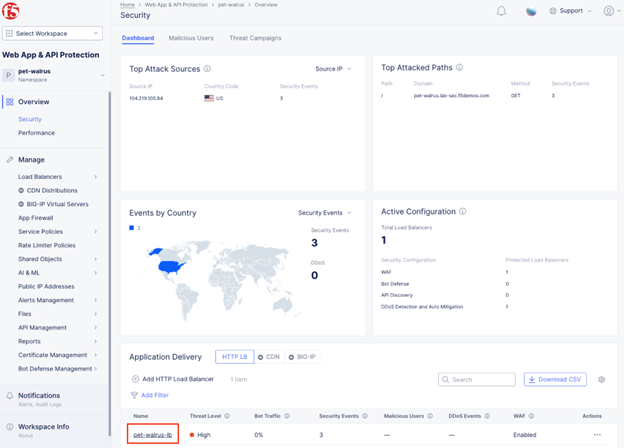
F5 Distributed Cloud Bot Defense detects and stops malicious automation across web apps, mobile apps, and APIs while allowing trusted users and approved AI agents through. It uses real-time behavioral analysis, client-side intelligence, and platform-wide telemetry to identify automation at the application-interaction layer and to distinguish humans, trusted AI agents, and harmful automation by behavior and intent rather than static signatures.
The service applies allow, block, rate-limit, or step-up controls only where risk is present, aiming to protect revenue-critical workflows such as login, checkout, and account recovery without adding friction for legitimate users. It is delivered on the F5 Application Delivery and Security Platform and deploys across hybrid, multi-cloud, and on-premises environments, including via BIG-IP.
Key features include:
- Agent-aware classification: Separates humans, trusted agents, and malicious automation based on behavior and intent rather than static signatures or identity claims.
- Behavioral analysis: Detects human-like bots beyond signatures using behavioral models and high-fidelity client-side telemetry that resists evasion.
- Continuous adaptation: Automatically adjusts defenses as attacker techniques and AI behaviors change, reducing the need for constant manual rule tuning.
- Risk-based enforcement: Applies allow, block, rate-limit, or step-up controls precisely where abuse occurs, limiting friction for low-risk users.
- Business-logic protection: Detects abuse of workflows such as login, checkout, and account recovery, not just technical exploits, even when traffic appears human.
- Platform-native deployment: Runs across hybrid, multi-cloud, and on-premises environments via the F5 platform and BIG-IP, with SIEM integration and centralized control.
Limitations (as reported by users on G2):
- Integration: Integrating with other F5 products, such as on-premises WAF, can be challenging for some deployments.
- Fit for smaller organizations: The service is generally oriented to larger organizations and can be costly for smaller players.
- Ease of use: Some users find it less intuitive than certain competing solutions in day-to-day operation.
Source: F5
8. AppTrana Bot Management

Best for: Fully managed bot protection for websites and APIs
Strengths: AI/ML detection with expert-managed custom policies
Things to consider: Dashboards and reporting offer limited customization
AppTrana Bot Management, from Indusface, is a fully managed bot protection module within the AppTrana WAAP platform that secures websites and APIs. It uses AI/ML behavioral analysis across parameters such as IP addresses, user agents, URIs, and bounce rates to detect and block malicious bot activity in real time, and it combines several techniques—correlated risk scoring, fingerprinting, behavior-anomaly detection, and workflow validation—to derive a confidence score for each request. Because no single technique is used in isolation, the modules work together and are continuously monitored and fine-tuned by Indusface security experts, who can build workflow-based custom policies for complex attacks. The service targets account takeover, brute force, scalping, card cracking, and credential stuffing, and provides real-time visibility into bot-versus-human traffic.
Key features include:
- Behavioral and real-time analysis: Detects and blocks malicious bot activity in real time using AI/ML behavioral patterns across IPs, user agents, URIs, bounce rates, and more.
- Correlated risk scoring: Combines risk scores from multiple bot modules and correlates them to block an identity once it crosses a defined threshold.
- Fingerprinting: Captures internet properties to uniquely identify and categorize bots so different mitigation techniques can be applied per category.
- Workflow validation: Defines rules for normal user workflows so bots that fail to follow expected paths are identified and blocked.
- Custom and granular controls: Lets teams adjust risk tolerance and the aggressiveness of each bot module to fit the application.
- Managed service: Provides 24/7 monitoring and fine-tuning by security experts who build custom policies as an extension of the customer team.
Limitations (as reported by users on PeerSpot):
- Performance: Some users find it slower than certain other cloud solutions, with occasional synchronization issues between front-end and back-end.
- Dashboard navigation: Reviewers suggest an enhanced, more intuitive dashboard would make the product easier to navigate.
- Reporting flexibility: Reporting and dashboards are detailed but offer limited customization for SOC and management-level views.
Conclusion
Botnet defense tools aid in protecting networks and applications against large-scale automated threats. By combining traffic analysis, behavioral detection, DNS monitoring, and threat intelligence, they help organizations quickly identify compromised systems and disrupt malicious operations. As botnets evolve in scale and sophistication, effective defense requires adaptive, multi-layered solutions capable of detecting both known and emerging threats in real time.